
Apex Helios MT5 Review: Partial Exits, Backtests and Minimum Lots
- Developer source link: Apex Helios EA MT5
- Live signal link: no directly linked public live signal found in the current description.
A selective gold setup with partial exits and an explicit small-account warning. Favourable developer test statistics still need independent forward validation.
This review is based on public developer material checked on 23 September 2026. We have not independently traded or backtested the executable.
View Apex Helios EA MT5 pricing and product details

Two opening-range situations
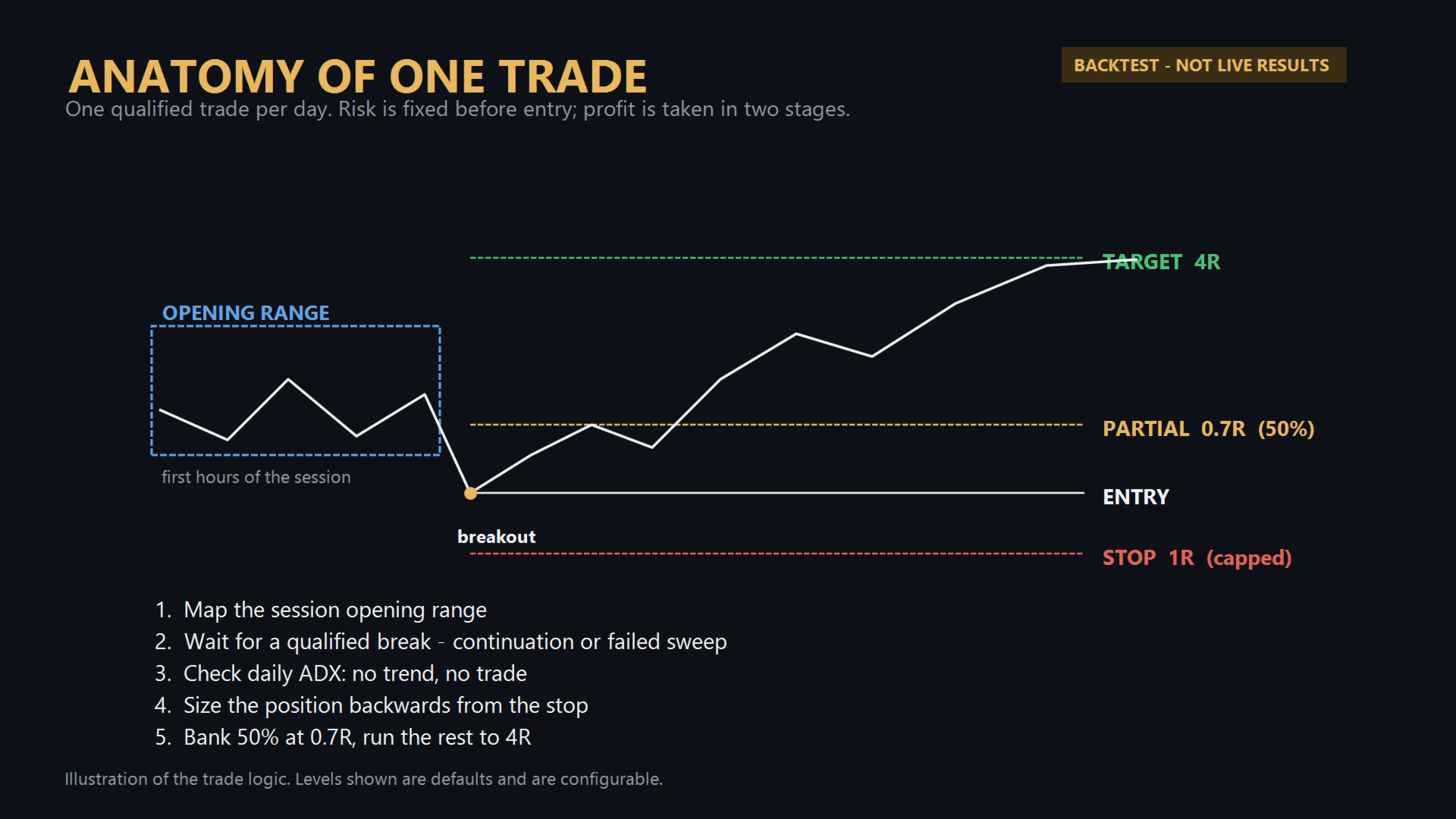
A continuation closes convincingly beyond the range; a sweep crosses a boundary and returns inside. Helios qualifies setups using trend bias, candle shape, range size, session timing and spread. Its daily ADX check looks for a trend regime rather than simply choosing direction.
A selective design can skip unsuitable days, but produces fewer observations. A quiet fortnight cannot establish that a system is broken or robust. Loosening filters to create more activity changes the system being evaluated.
Why staged profit-taking matters
The developer describes analysing earlier trades that frequently returned to break-even. Partial exits aim to retain some gain while leaving a runner. This is a coherent design response, but the test is the full distribution of realised outcomes after costs.
A high win rate can coexist with weak expectancy when winners are small relative to losses. Partial closes depend on volume increments. Verify that the broker can split the intended lot and that the remainder receives the expected stop and target.
Backtest and modelling sensitivity
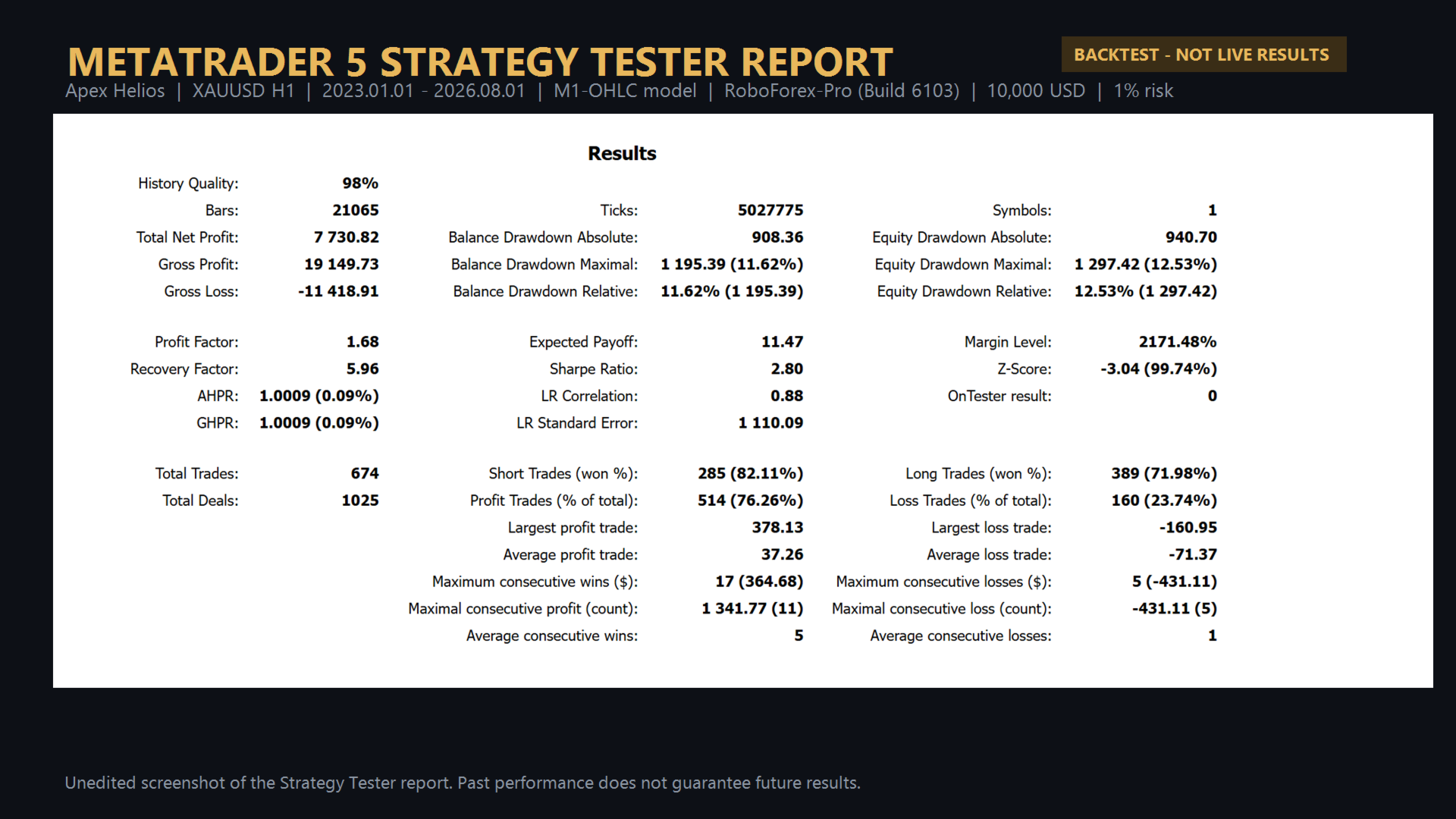
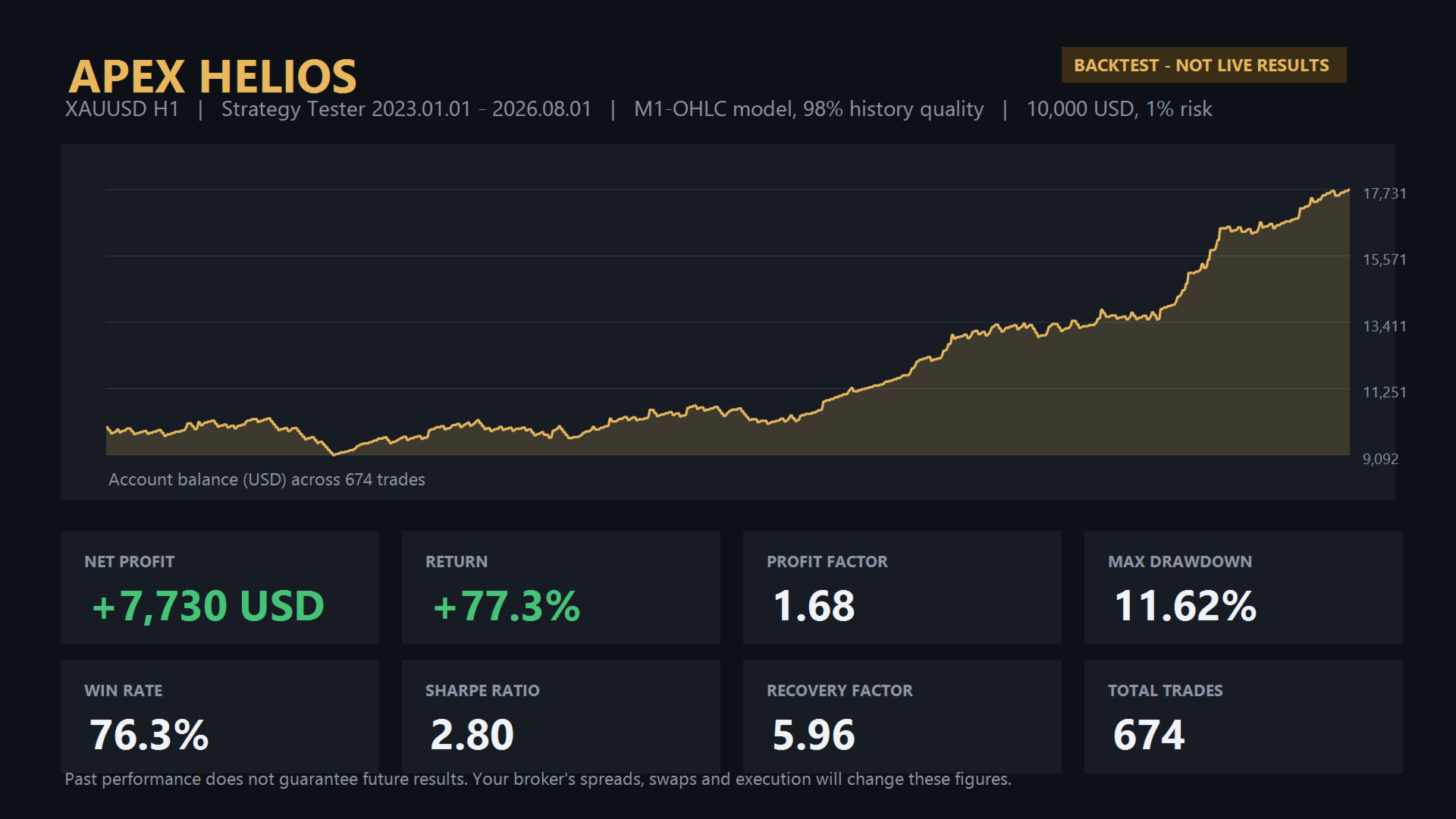
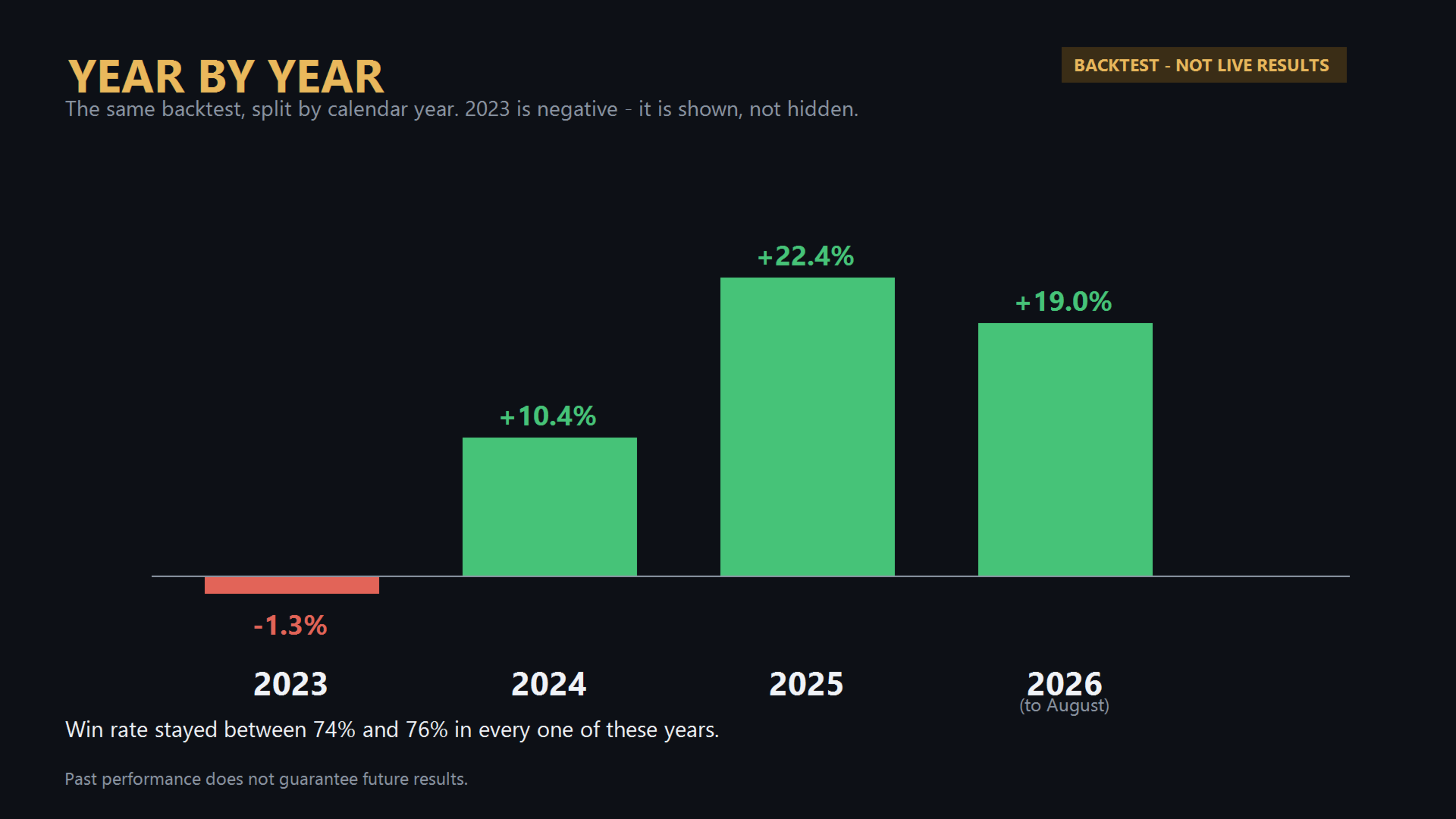
The January 2023–August 2026 simulation reports 674 trades, 77.3% net growth, a 1.68 profit factor and 11.62% maximum drawdown. It uses M1-OHLC modelling and includes a negative 2023.
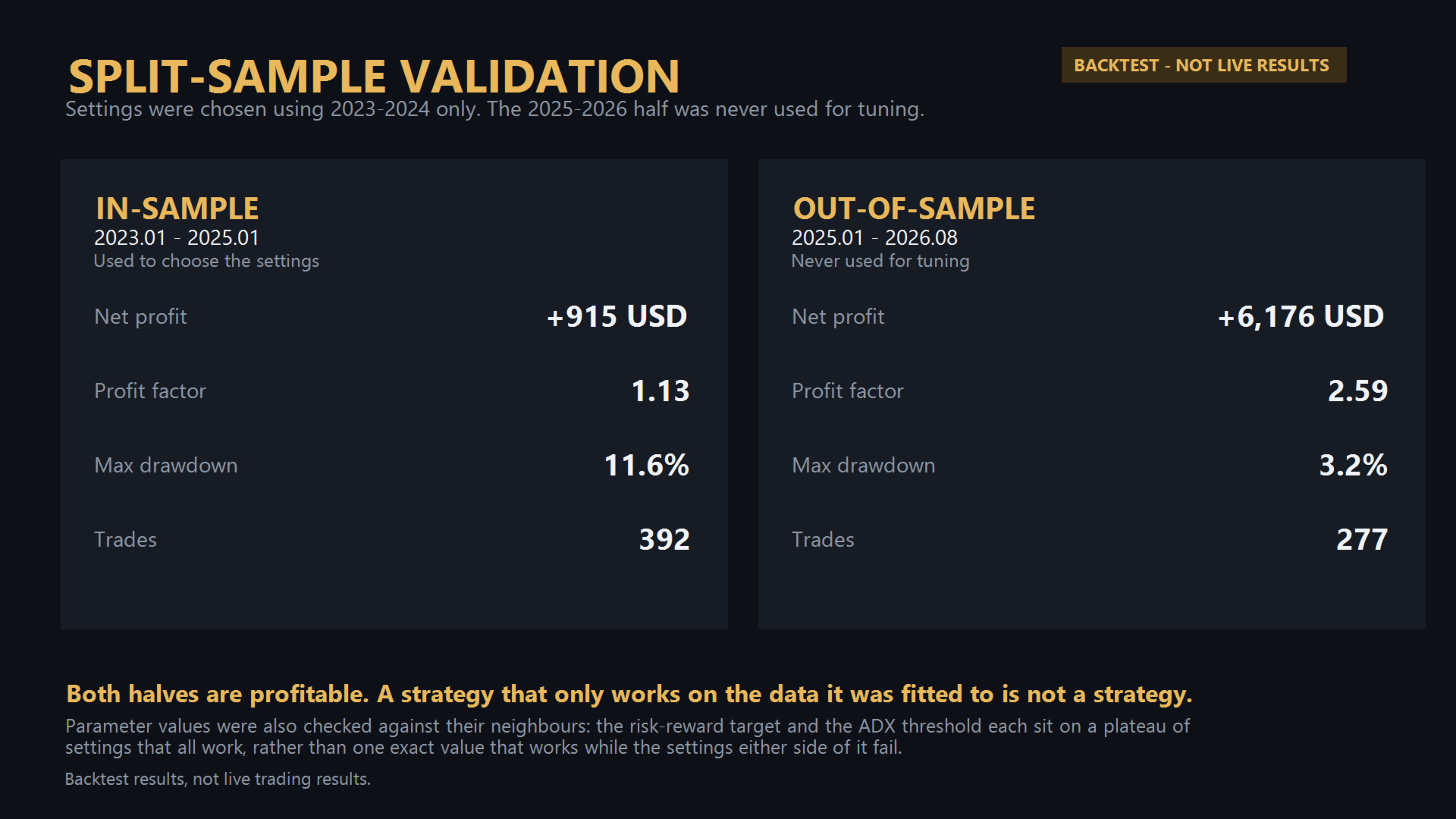
The developer also presents a split-sample exercise and an every-tick cross-check with lower profit. These comparisons are more useful than one headline return, but we have not reproduced them. Intrabar modelling matters when stops, partial targets and break-even may be reached within the same bar.
The minimum-lot problem
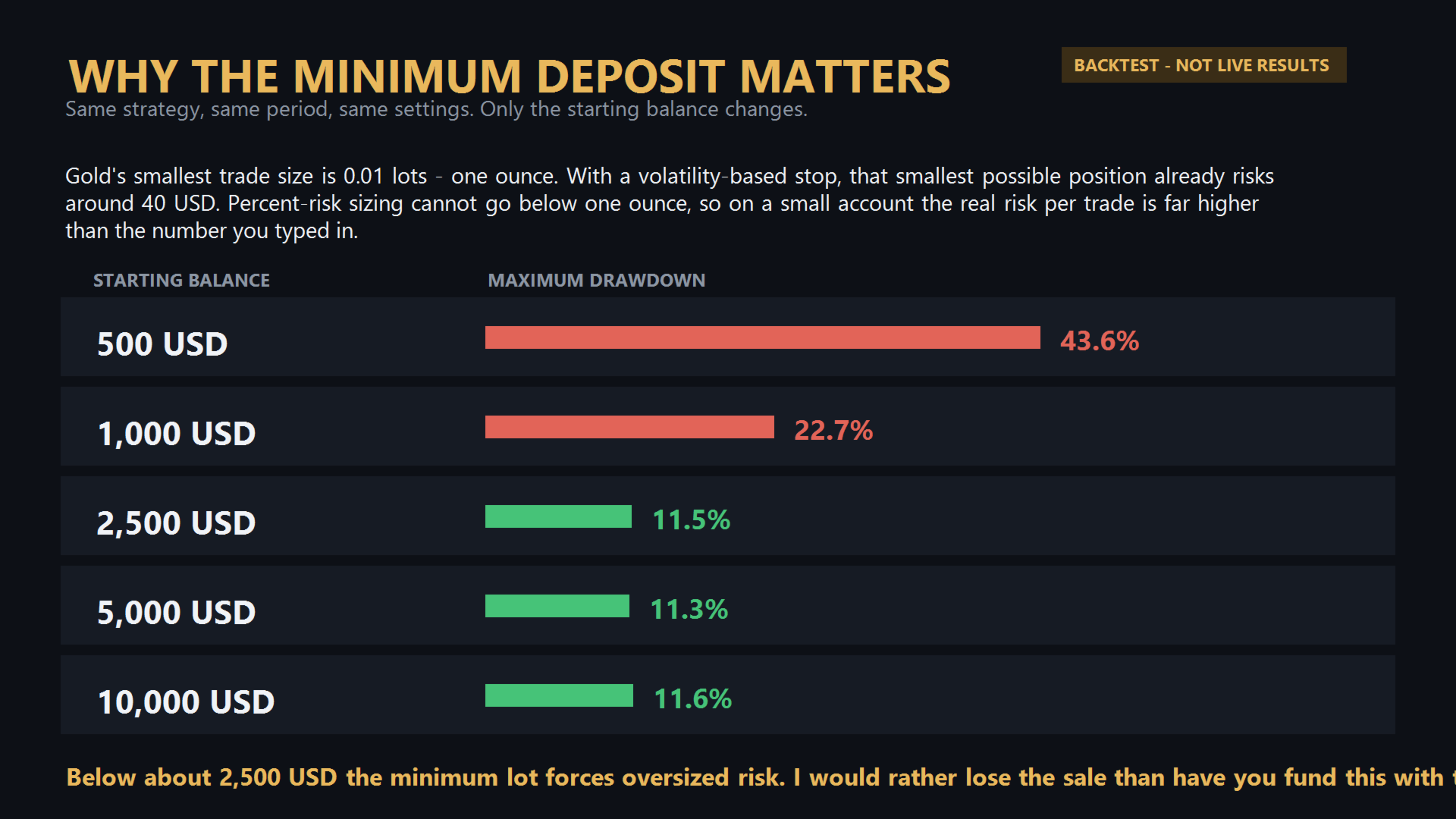
The balance comparison shows substantially higher simulated drawdown at $500 and $1,000 than at larger deposits. The explanation is minimum volume: a requested risk percentage cannot be achieved when the smallest permitted position already exceeds it.
Calculate risk from your broker’s contract and proposed stop distance. The example’s relationship between 0.01 lots and an ounce is not a universal specification. Micro gold contracts may differ from the standard contract shown.
Limits of the safeguards and evidence
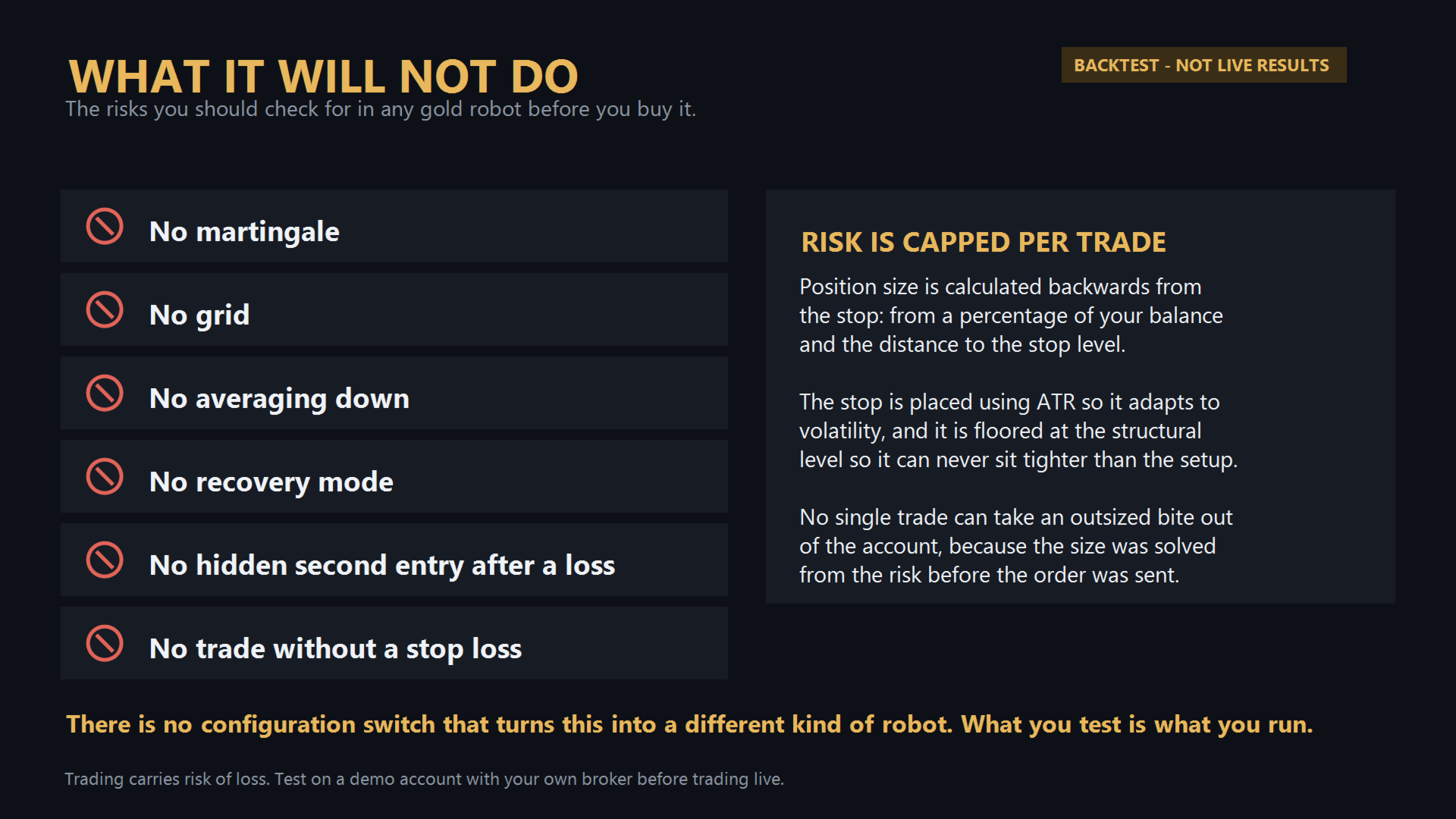
The drawdown guard reduces subsequent size; it does not necessarily close an existing position or prevent the next loss. ATR stops can widen with volatility, requiring lot size to adjust. Gaps can still produce worse exits.
No customer reviews or directly linked public live signal were available. A supplied guide is mentioned, but no public downloadable manual was linked. This review assesses the explanation and original gallery, not an independently tested executable.
More from Tshivhidzo Moss Mbedzi
Compare the strategies before combining them on one account. Products from the same author do not automatically diversify risk.