
The Forex Exchanger MT5 Review: Signals, Averaging and Drawdown
- Developer source link: The Forex Exchanger MT5
- Live signal links: Main account · Second account
The Forex Exchanger is a reversal-and-averaging EA whose long public record deserves attention, but its floating-loss history changes how that record should be read. The attraction is a configurable Forex portfolio with inspectable results. The main drawback is deep equity drawdown while baskets wait for recovery. This review is based on public material checked on 22 September 2026; we have not independently traded or backtested the executable.
View The Forex Exchanger MT5 pricing and product details

What the strategy is trying to capture
The developer’s explanation describes buying oversold currencies and selling overbought ones, with confirmation intended to avoid entering too early. It also describes additional entries to improve a basket’s average price, volatility-based targets and tests across multiple currencies. The author favours evaluating concepts rather than searching for the best-looking single indicator setting.
Our interpretation: averaging changes the recovery price, but does not eliminate the original loss. A basket can recover eventually and still pass through an account-threatening drawdown first. A trader needs enough margin and an explicit loss budget to survive the path, not merely confidence in the eventual direction. A reversal is not guaranteed to arrive before available capital runs out.
Source: Developer’s strategy explanation.
Main signal: growth and floating risk together
The main record shows 1,887.88% growth over 247 weeks, with 887 trades and a profit factor of 3.50. MQL5 identifies it as a real account on ICMarkets-MT5, at 1:500 leverage. The displayed monitoring start is 25 February 2022, while its growth history includes earlier activity.
The critical comparison is 11.81% relative balance drawdown versus 73.37% relative equity drawdown. MQL5 also displays a warning about another large drawdown. At capture, balance and equity were both €12,270.03; that flat floating position does not erase the historical loss excursion.
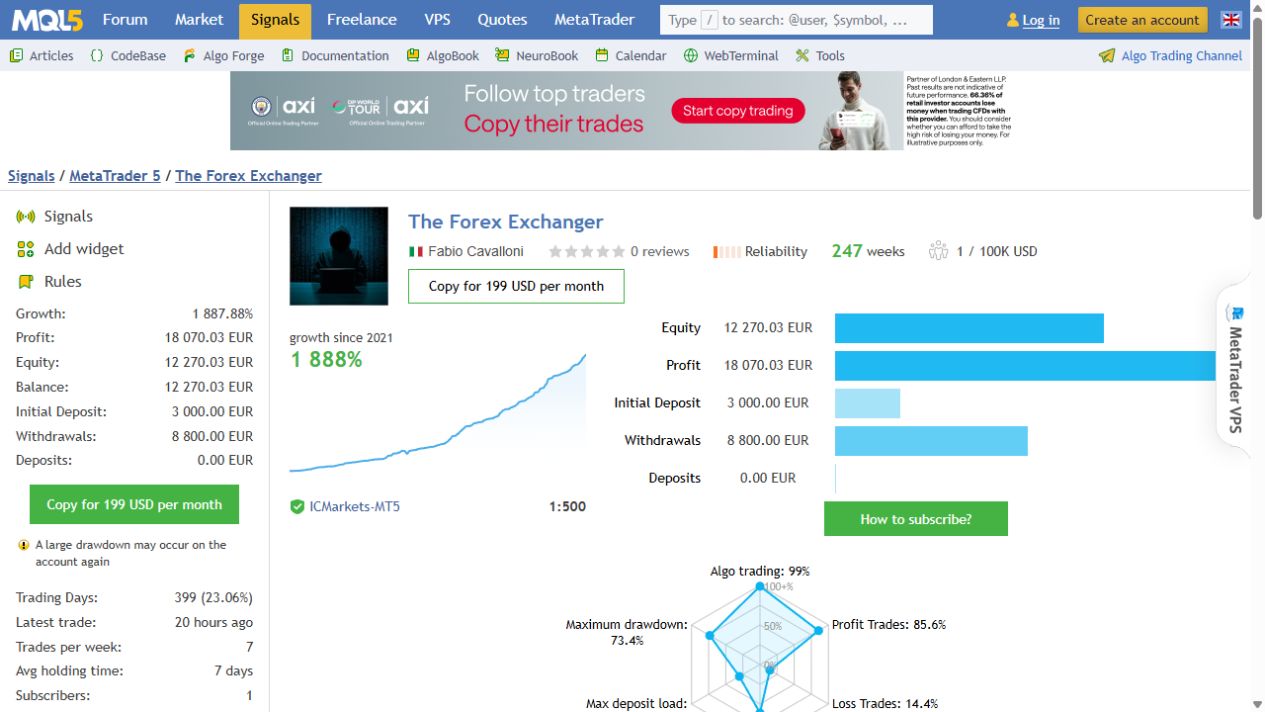
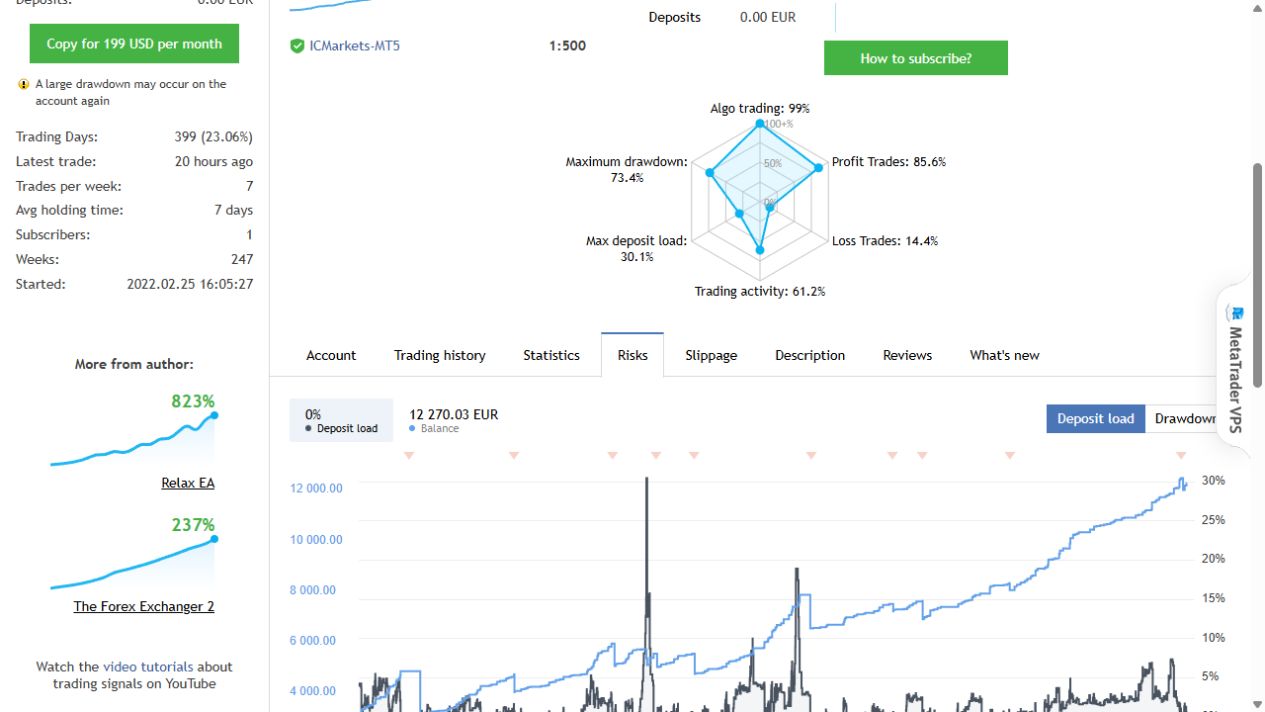
For scale, a 73.37% fall from a peak leaves 26.63% of that peak. Recovering from there requires roughly 276% growth on the remainder. This arithmetic is why a high long-term return and an uncomfortable risk profile can both be true. It is not a forecast of the next drawdown.
Second signal: useful corroboration, not an independent strategy
The second account reports 237.45% growth over 151 weeks and 369 trades. It is displayed as a real account on ICMarkets-MT5-4, also at 1:500. Relative balance drawdown is 6.70%; relative equity drawdown is 66.08%. Its average holding period is ten days. The public monitoring start is 29 October 2023.
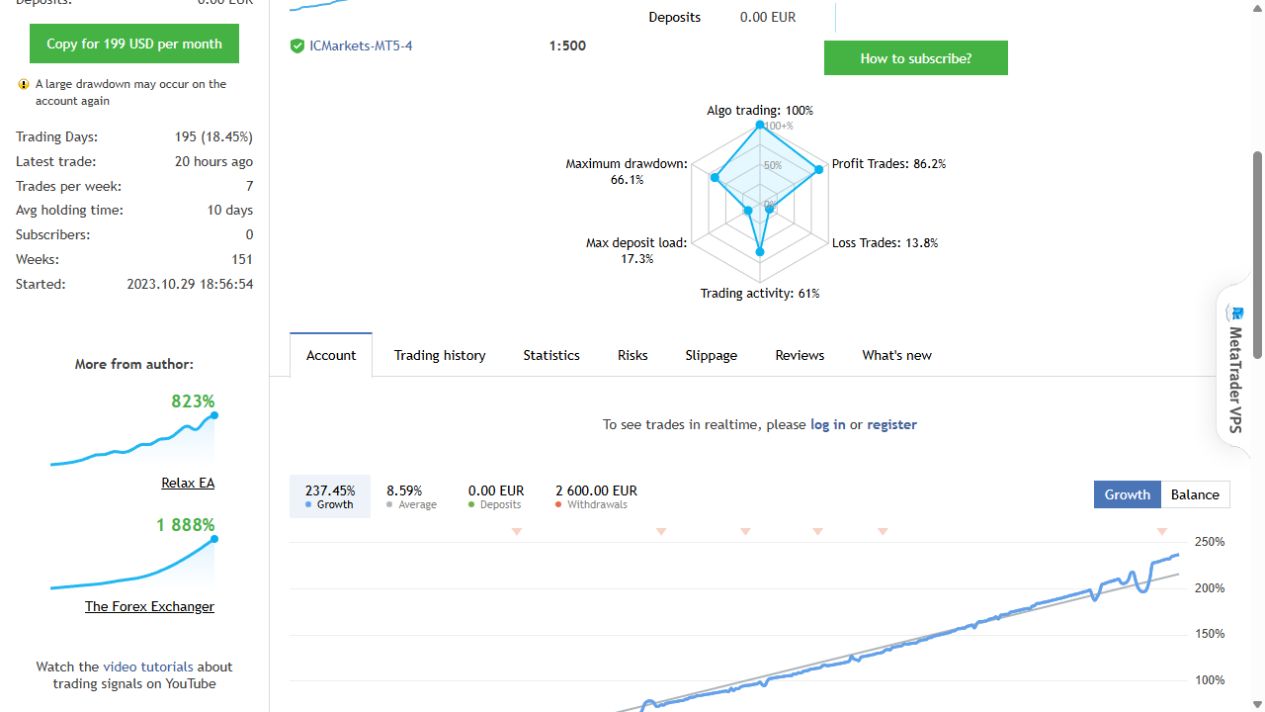
Two accounts can show the same underlying vulnerability. They are not two uncorrelated sources of return simply because they have different account numbers. Their shared strategy and currency exposures matter more than their names. Neither record establishes what a different broker, risk setting, deposit timing or intervention policy will produce.
What the old backtests can and cannot establish
The developer’s 2022 article includes the historical reports below. Its summary displays a 7.82% simulated drawdown, substantially below the later live equity drawdowns. The article’s monthly and yearly return estimates are the author’s historical expectations, not commitments attached to this offer.
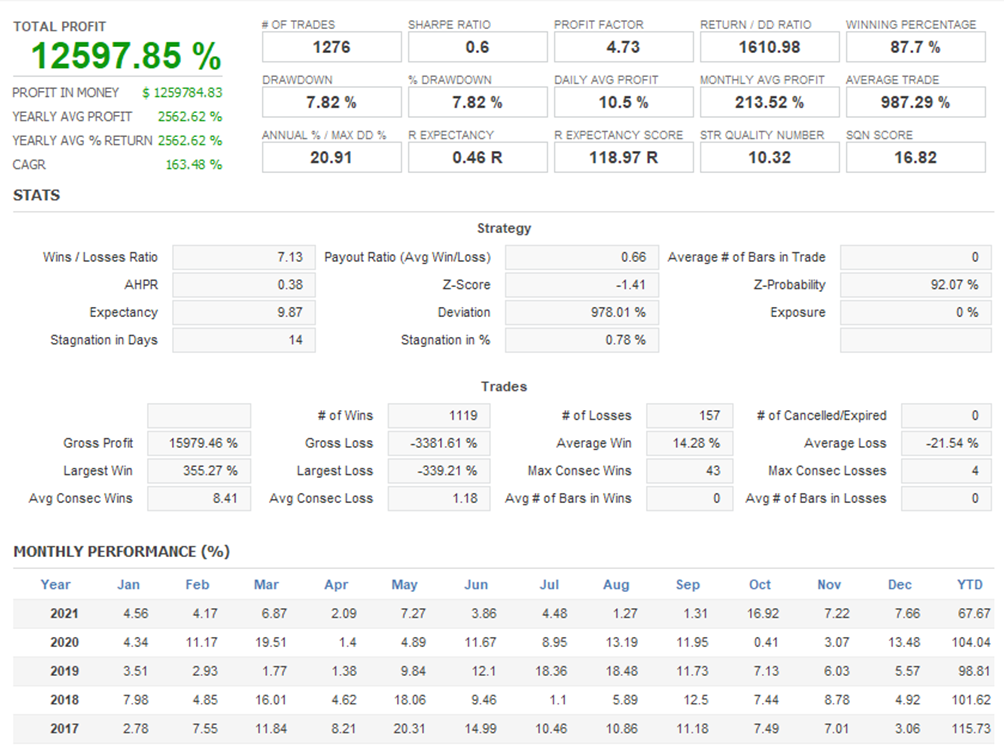
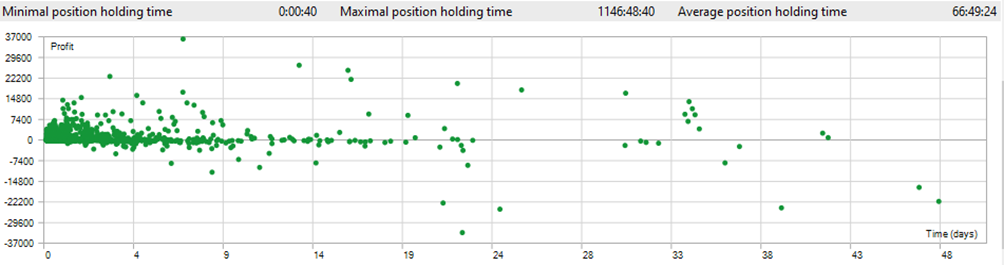
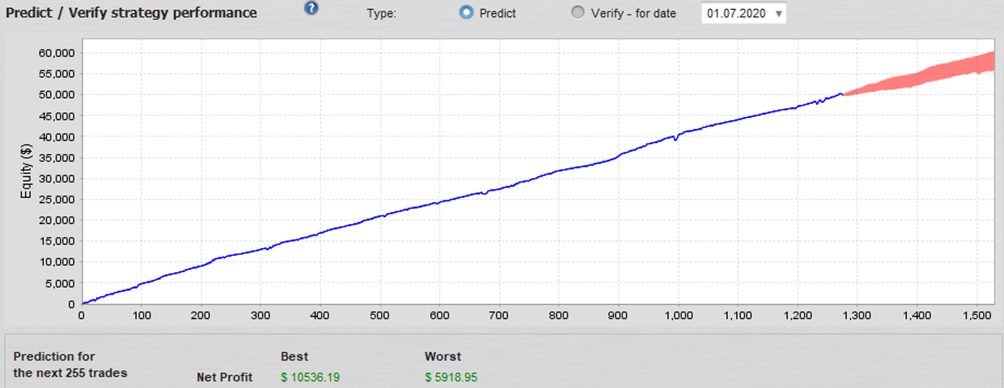
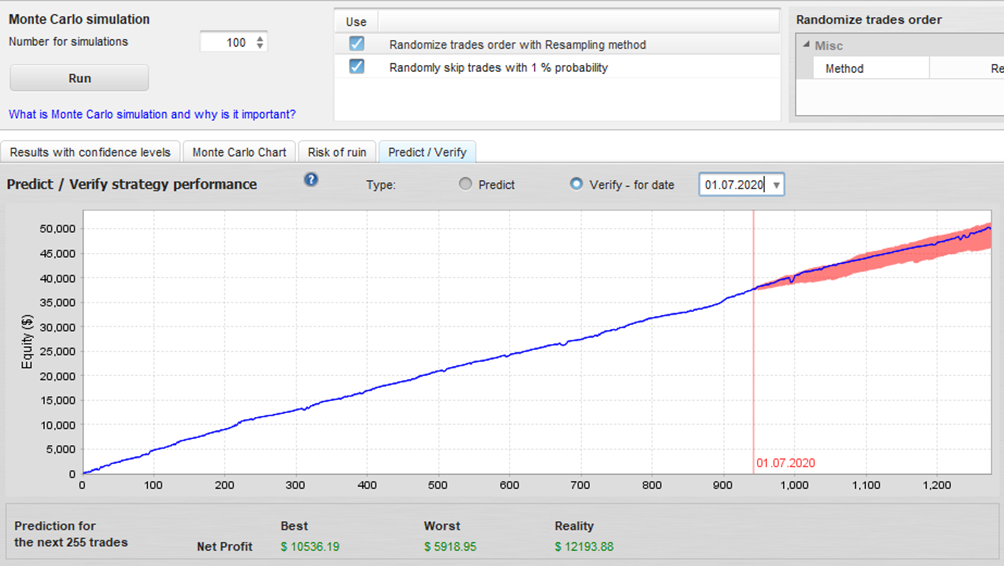
A simulation only evaluates the data and assumptions included. It cannot establish that future spreads, swaps, liquidity and trends will be represented adequately. For a recovery system, inspect the worst open loss and margin usage, not just completed trades. A smooth closed-balance curve can hide a very different equity journey.
Customer feedback: positive, but dated
The listing showed nine reviews with a five-star aggregate when checked. The short example below, dated January 2023, reports a positive experience after a few months. Other visible feedback praises the author’s responses. These are MQL5 users’ opinions, not CheaperForex verified-purchase reviews or an independent performance audit.

Feedback posted early in an account’s life is necessarily incomplete. The useful question is not whether a reviewer liked the EA, but whether the later risk history matches the tolerance of the person buying it today. No third-party ratings have been imported into this shop’s customer score.
A sensible evaluation sequence
- Choose your maximum loss first. Work backwards to exposure; do not start with a desired monthly return.
- Test the basket together. Separate pair tests can miss simultaneous currency exposure and margin pressure.
- Record execution costs. Compare spread, commission and overnight financing under your broker’s actual account conditions.
- Inspect the open positions during stress. Winning-trade frequency is not enough to assess the size of unresolved losses.
- Write down when you will intervene. An unplanned manual close can produce a very different outcome from the published record.
Who should consider it?
The Forex Exchanger merits research by experienced MT5 users who can evaluate a multi-currency recovery system and tolerate substantial uncertainty. The public history is more useful than an isolated marketing backtest, but it does not make this a conservative product. Traders requiring a small, predictable drawdown should give the equity record particular weight before proceeding.
For another approach to configurable baskets, compare Harmonizer MT5 and its platform and signal review. This is a different developer’s product, not another Forex Exchanger edition.