
Solitaire EA MT5 Review: Gold Exits, New Settings and Live Losses
Solitaire EA MT5 trades gold using multiple entry models, configurable entry protection and three exit methods: virtual trailing, broker trailing or fixed take profit. Its appeal is configurable trade-level exits and entry screening. Its main consideration is a fast-changing design: older sales wording conflicts with the manual, and neither public account currently establishes profitable forward performance.
View Solitaire features and pricing

- Developer source link: Solitaire on MQL5
- Live signal link: Solitaire public account
- Public manual: Solitaire configuration and limitations
Source-based review checked 16 September 2026, using the current listing, release notes, original gallery, public account and customer reviews. We have not independently traded the executable or reproduced its simulations. Developer release notes.
The one-position description is out of date
The overview still frames Solitaire as one gold position without averaging. The 7 September release introduced concurrent original trades and an optional recovery ladder. The public manual, headed with an earlier September build, describes four originals by default on a hedging account and one managed book on netting. A 16 September update adds H4 alignment and removes an entry model. This is why a fixed strategy count or blanket no-recovery claim would misrepresent the available documentation.
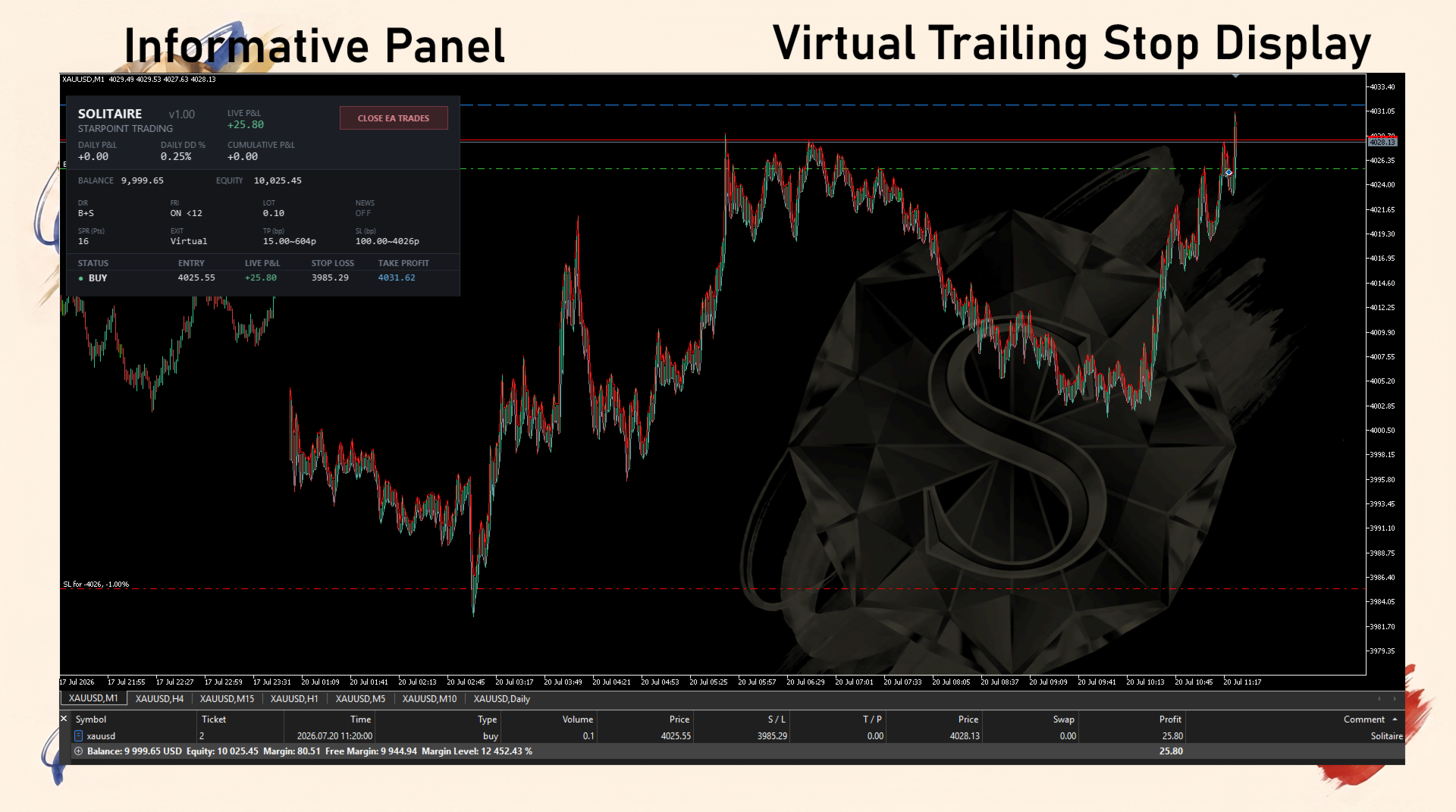
Entry protection, profit profiles and cash exposure
Standard/Safer entry screening is separate from Standard/Safer profit-target selection and from lot sizing. The manual gives profile targets of 15 and 8 basis points, with a positive manual override taking precedence. Basis points scale with entry price: at fixed lots, a larger gold price can increase the dollar amount at risk. Concurrent entries add exposure; choosing a profile called Safer does not automatically cut lots.
Three exits, and what happens if the terminal stops
Virtual trailing is managed by the EA and needs a running connection. Broker trailing moves real stops, respecting the broker’s minimum distances; already accepted stops remain if the terminal stops, but further updates do not. Fixed take profit places a broker target. All methods remain exposed to spreads, slippage and gaps. The default stale-position rule waits for breakeven after its age threshold, rather than guaranteeing every trade closes after 90 minutes.
There is also a cost-accounting conflict: the older overview promises commission-adjusted net targets, while the public manual describes price profit plus swap without adding commission for relevant arming/breakeven calculations. A nominal breakeven exit can therefore still be negative after commission. We do not repeat the overview’s promise of an always-profitable armed exit.
Recovery is optional, increases exposure and has a documented limitation
The manual describes additions at fractions of the original stop distance, normally 0.33 and 0.67, with equal requested units. These additions do not count toward the original-entry cap. Its known order-confirmation warning says to keep recovery disabled on live accounts. The subsequent release notes checked do not explicitly confirm a fix, so we cannot treat that limitation as resolved. Hedging is required for the documented recovery mode; netting should not be assumed equivalent.
Read the developer’s recovery warning and full settings guide
Current signal: three trades and a negative start
The new VantageGlobalPrimeAU-Live account, publicly labelled real, started monitoring on 14 September 2026. At the 16 September capture it showed −31.82% growth, −$159.10 profit and $340.90 balance/equity from a $500 initial deposit, without further flows. There were only three trades: one winner and two losers, with profit factor 0.07.
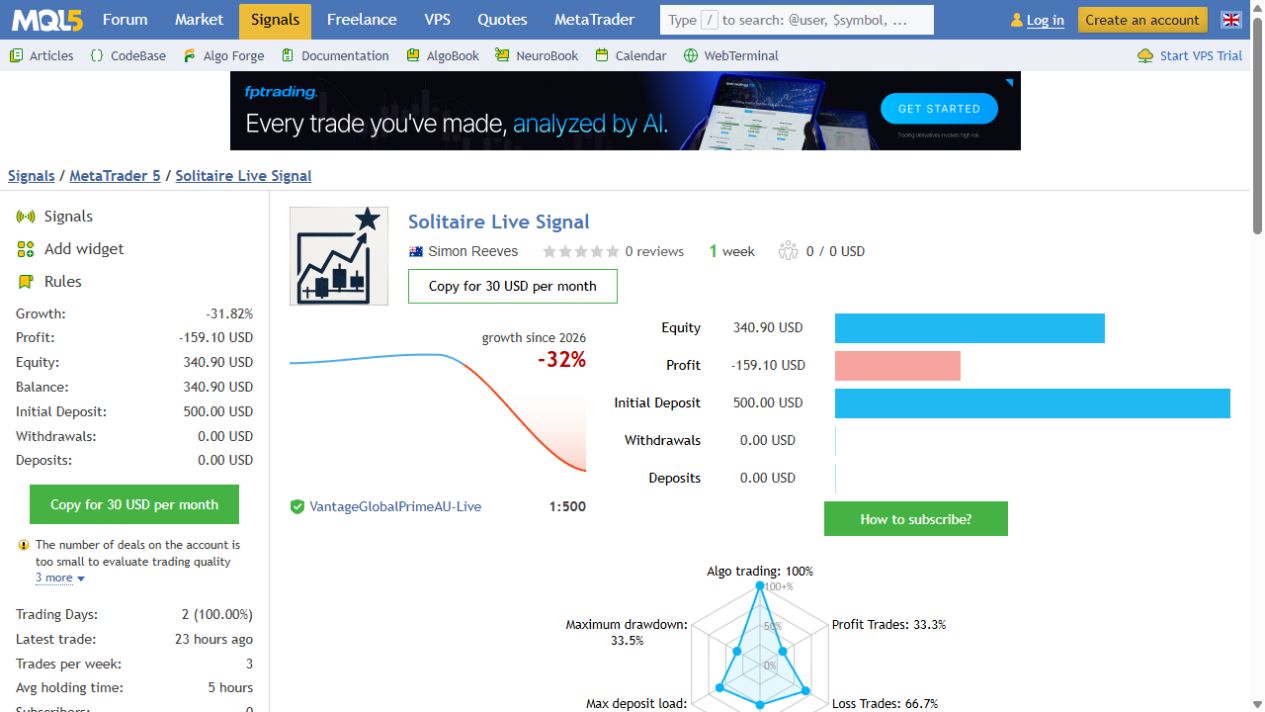
Average win was $12.54 versus an average loss of $85.82. MQL5 reported 33.49% relative balance drawdown and 19.12% relative equity drawdown; these are distinct fields. Maximum deposit load was 58.78%. The sample is far too small to establish long-term expectancy, and it began before the latest release date. We cannot attribute every trade to the newly published build.
The earlier account should not disappear from the assessment
The previous Solitaire account showed −38.02% growth over a displayed seven-week history, 95 trades and profit factor 0.58. Its 82.10% win rate did not prevent losses: average win was $6.93 versus average loss $54.78. Relative balance drawdown was 44.33%, and relative equity drawdown 18.35%. A $500 initial deposit plus a further $500 left $609.07 balance/equity. This is a separate account and evolving configuration, not a continuation to splice into the new curve.
Historical tests are not the live record
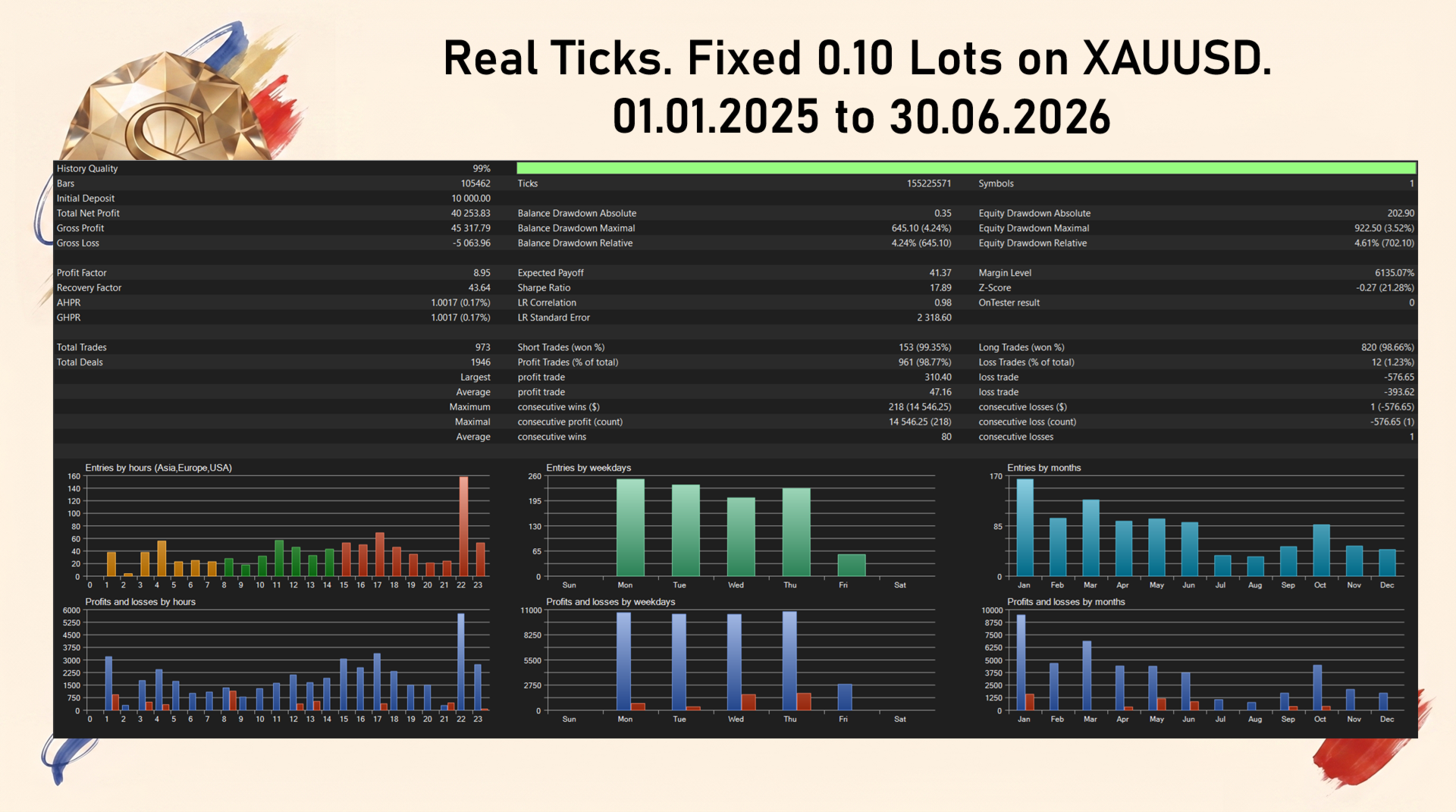
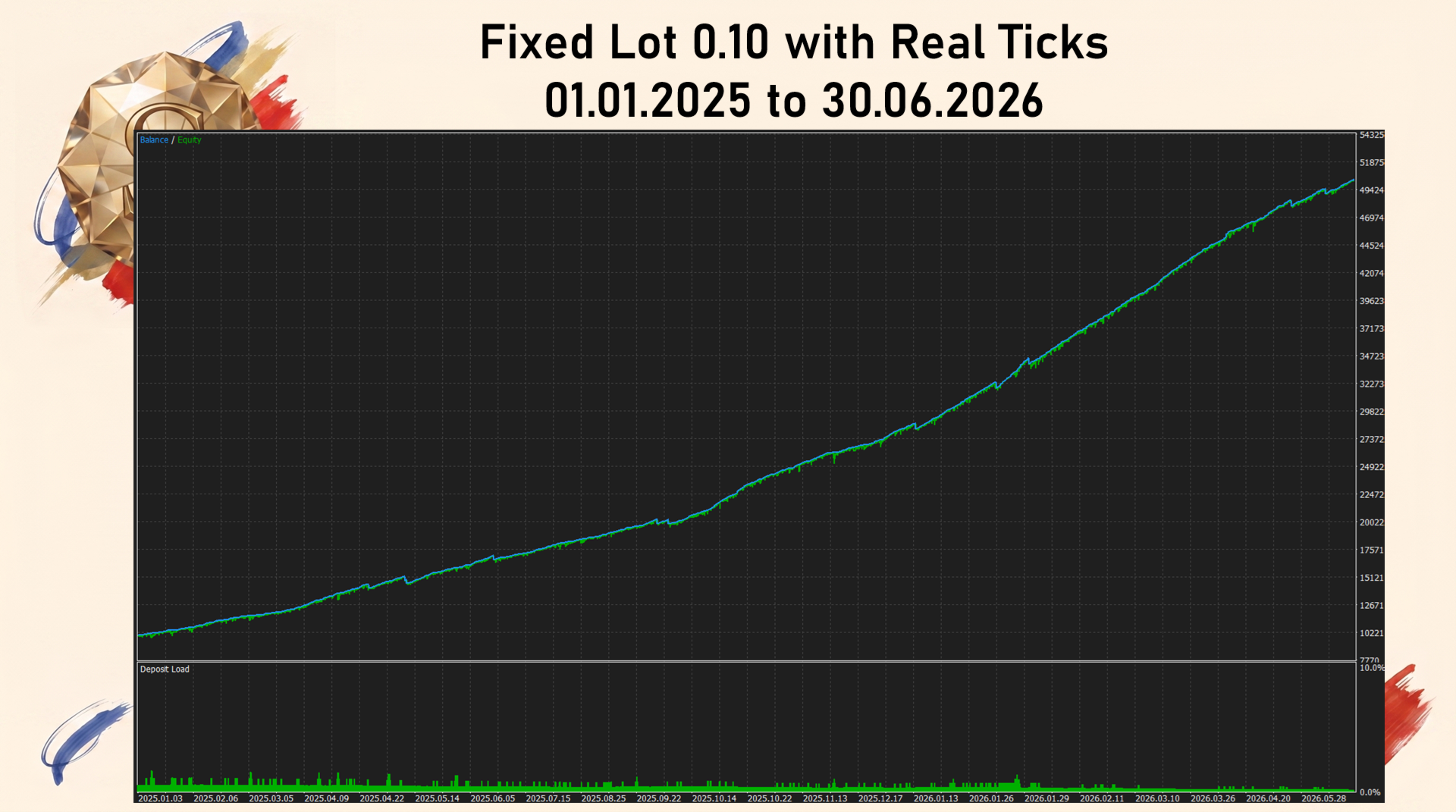
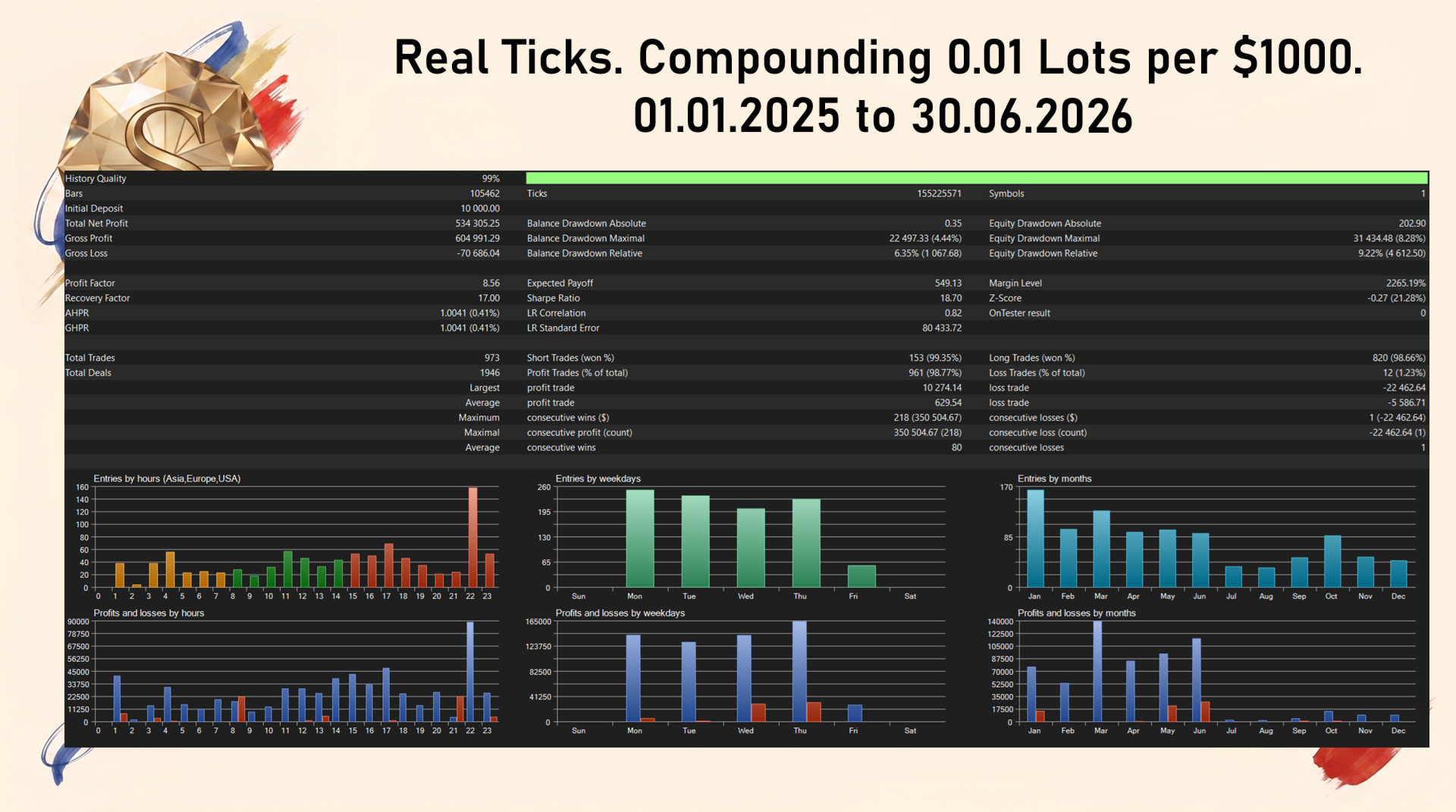
The original gallery provides fixed-lot real-tick tests for January 2025 through June 2026, plus a compounding report. These are historical simulations with different sizing assumptions, not proof that today’s entry models or recovery settings will repeat those results. The older one-position promotional image has deliberately not been reused as a current feature diagram.
Customer feedback and its timing
The listing showed three ratings. May KIM’s brief September comment approved the update, while Dani12555 praised support and reported nine winners out of ten trades. That small sample and those dates precede subsequent concurrency and entry-model changes. Another rating contained no written explanation. Positive support feedback does not offset the negative public-account statistics.

Setup and assessment
Use XAUUSD, verify account mode and actual protective orders, and keep recovery disabled in line with the published limitation. The optional news filter requires its documented feed access and can fall back to the MT5 calendar; it ships disabled. Friday and spread controls limit new entries but do not erase exposure already open. Solitaire offers a configurable design, but the current evidence supports careful demo evaluation rather than a claim of proven profitable performance.
More from Simon Reeves / Starpoint Trading
Compare the developer’s gold, multi-symbol and AUDCAD systems. Their strategies and account histories differ; results from one do not validate the others.