
Aura Neuron EA is a gold H1 trading robot for MT4 and MT5, combining a multilayer perceptron (MLP) neural network with classic trading methods. Individual stop losses and take profits, Moderate/Intense trading modes and later range, time and news controls distinguish it from an unrestricted basket system.
Our assessment: selectable gold entries, individual exits and flexible sizing appeal to traders willing to inspect settings and execution. The main consideration is the overview’s conservative language alongside the guide’s 30% per-trade risk warning and an optional Recovery mode. These features do not establish low-risk future returns.

Reviewed 2 October 2026 against both MQL5 listings, the public setup guide, release histories and current customer feedback. This is an independent editorial assessment of the available material, not an audited trading test. CheaperForex sells the two editions linked above.
How the strategy is described
Stanislav Tomilov describes an MLP model combined with classic trading methods. Its layered architecture does not establish out-of-sample accuracy; the public description lacks the training pipeline, weights and implementation needed to reproduce entry decisions independently.
The overview declares no grid, martingale, averaging or scalping, with a hard stop and target on each position. Those base-strategy distinctions do not establish small stops, favorable risk/reward or identical exposure across optional settings.
Moderate makes fewer trades; Intense can open several simultaneously. Frequency and volume are separate choices, and overlapping gold positions can lose together.
MT4 or MT5: the practical differences
- Market and chart
- Both current listings and the setup guide specify XAUUSD / GOLD on H1.
- Terminal edition
- The MT4 and MT5 products require their corresponding platforms. They are separate purchases, not interchangeable executables.
- News connection
- The guide requires MT4 WebRequest access to
https://sslecal2.forexprostools.com/. It explicitly says this external URL is not required for MT5. - Documented controls
- Both release histories include a range filter, spread/time/day filters, balance-step sizing, timed closing and Daily Loss Limit.
- Current market headers
- At the 2 October 2026 check, MT4 was listed as 2.5 and MT5 as 2.51, both updated 19 July 2026. These dated source labels do not establish which build is supplied in a particular order.
Older EURUSD stop/target labels remain in the guide, but current working-symbol guidance is gold-only. Those historical labels do not establish a ready-made EURUSD configuration.
The guide’s 100 USD minimum deposit, 1:20 leverage, ECN recommendation and VPS suggestion are operating guidance. They do not establish adequate risk capacity; leverage alone does not determine cash loss at a stop.
Risk settings need more attention than the headline
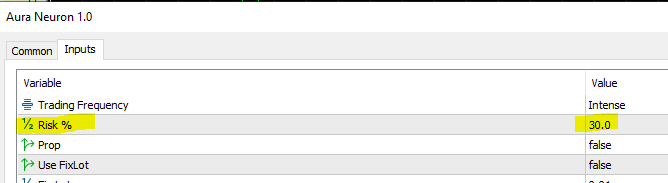
The developer’s public setup guide warns of a 30% per-trade default. That is high and differs from an account drawdown ceiling. This October 2024 guide predates later controls: inspect the supplied inputs instead of assuming unchanged defaults.
Risk Percents sizes by percentage; Use FixLot and Fix Lot allow fixed volume. April 2025 adds balance-step sizing: balance divided by Balance Step, multiplied by Volume for Balance. That formula is not automatically stop-based percentage risk. Broker contract sizes and minimum lots also affect cash exposure.
Daily Loss Limit, added in March 2025, was disabled by default. Configure and test it; the notes do not establish how it matches a firm’s equity calculation, reset time or open-position rules.
Disabling Hedging is the guide’s FIFO setting and restricts Intense trades to one direction. It does not certify compliance with every prop firm’s rules.
Recovery and timed exits qualify the original description
MT5 added Recovery mode in October 2024, disabled by default, then a recovery trade-count limit in December. Both platforms’ July 2025 notes mention a Recovery/forced-close fix. Public notes do not fully explain its volume or entry mechanics, so we cannot extend the overview’s no-martingale claim to every optional configuration.
April 2025’s Force Close in Hours addresses trades remaining in drawdown overnight, accruing swaps and potentially reaching wide stops. The author says timed closing can realize more smaller losses and reduce the winning percentage. Evaluate that tradeoff alongside reward and loss size.
Weekday filtering arrived in August 2025 and Range Filter in January 2026, with later core changes through July. Older results may reflect different entries and exits.
What the original performance material can establish
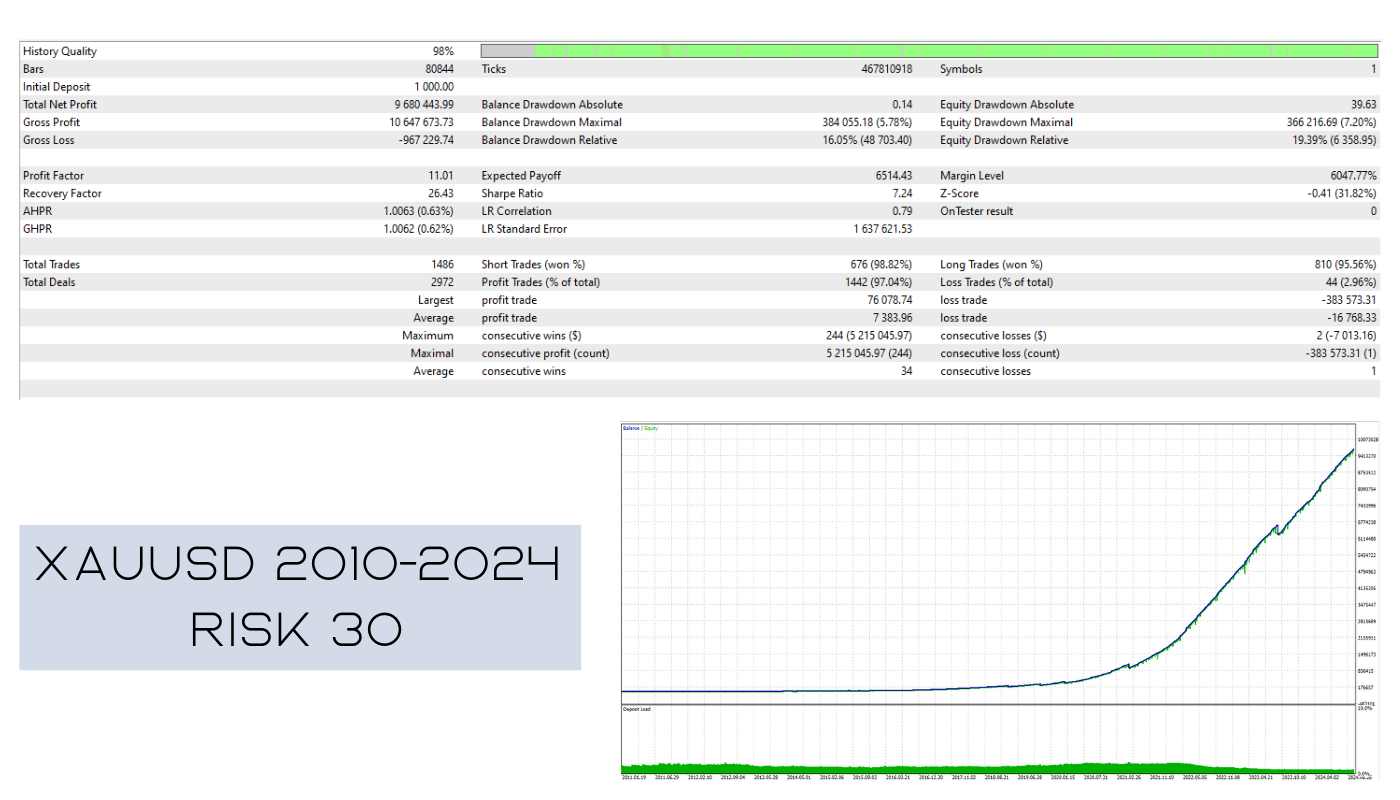
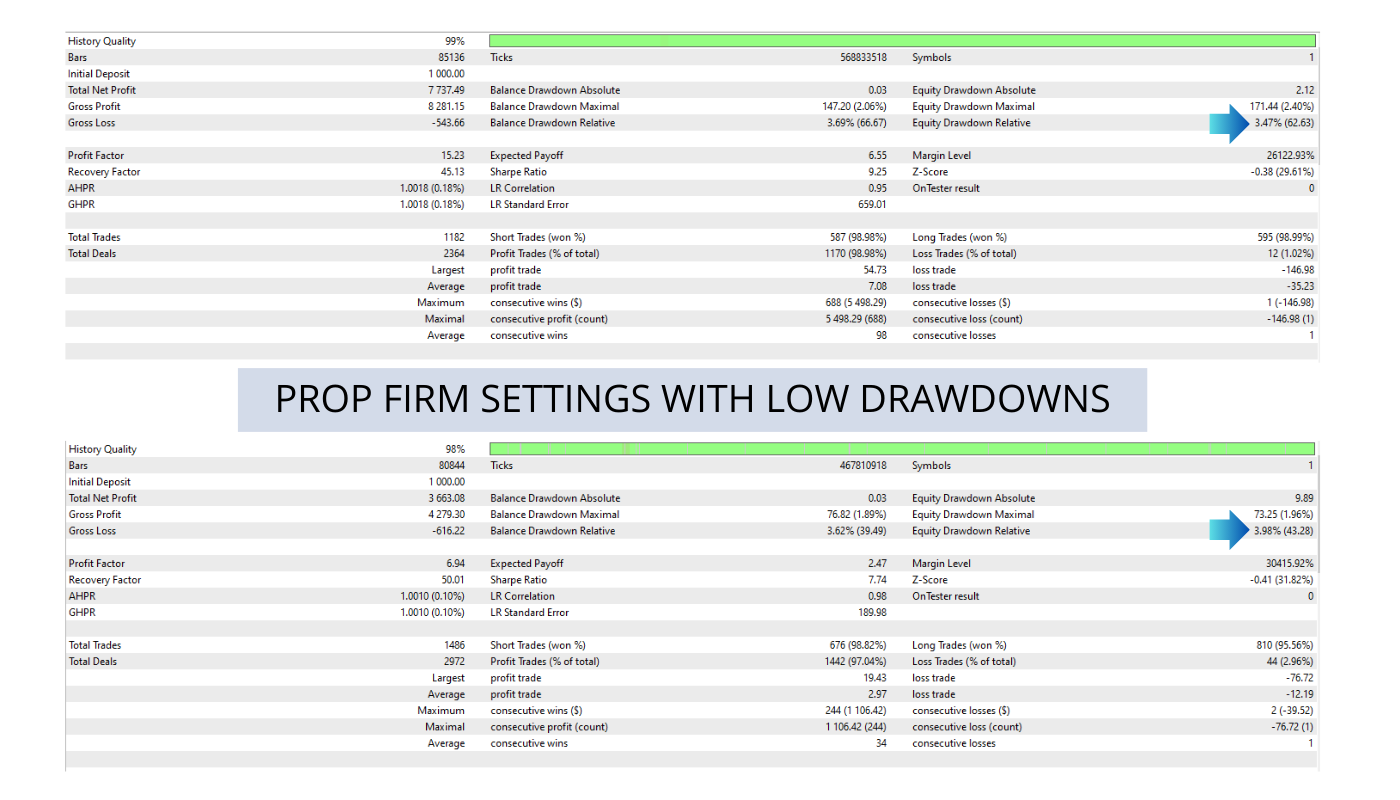
The developer describes 1999–2023 testing, walk-forward optimization, noise and parameter-stability checks. Reproducible train/test splits, costs and presets remain necessary to assess those claims. The selected tester images show 98–99% history quality, rather than the overview’s blanket 99.9% figure.
Read equity drawdown alongside growth, dates, sizing and exits. Historical curves cannot establish another broker’s spread, swap, slippage or gap behavior, particularly after changes to the model.
Developer-linked account and historical signal images
A recently indexed copy of the developer’s signals page links Aura Neuron Normal Risk on Myfxbook. Fresh visits to both pages restricted access, so current growth, drawdown, open positions and monitoring status remain unverified. No other Aura product’s signal has been substituted.
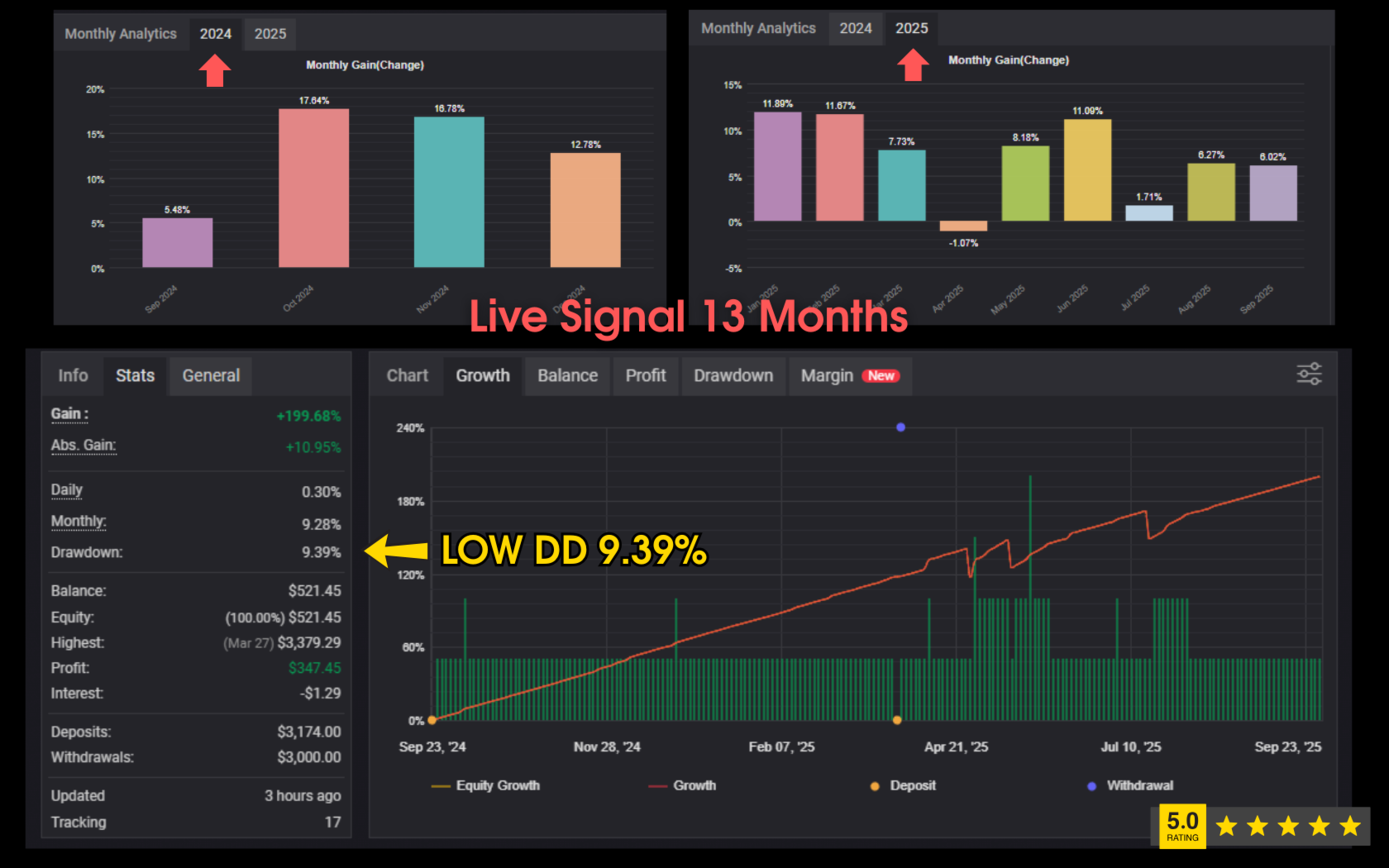
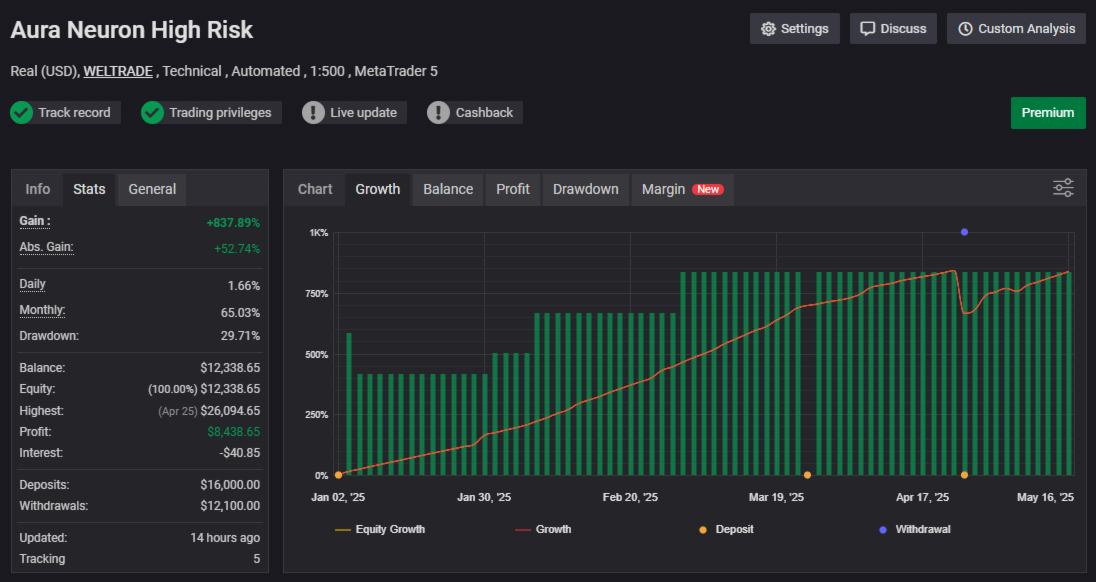
These images show different histories and cash flows. Gain and absolute gain are separate measures; deposits and withdrawals make comparison with final balance misleading. The high-risk image shows materially greater drawdown. Neither snapshot establishes that a present build and preset will reproduce those results.
In a 21 July 2025 comment, the author explains that retraining can change backtests and losing trades. A regenerated historical curve is not an unchanged record of prior live decisions.
Customer feedback: support praise and execution questions




jotabf7’s 16 March 2026 review praises support after two weeks using Neuron. caimano93’s 16 February review describes ten days of infrequent trading on a conservative configuration. Those short impressions do not establish long-term expectancy or maximum loss.
Bin Li’s 22 April 2026 review questions backtest/live parity and wide-stop risk/reward. John Villaizan’s 13 August 2025 review reports differing trades across brokers and a full-stop challenge-account loss. These opinions raise useful execution questions; they do not independently prove overfitting or universal broker differences.
The author’s 24 August 2026 broker guidance also acknowledges quote and execution differences. MQL5 opinions and stars remain separate from CheaperForex verified-purchase ratings.
Before choosing an edition
Choose the matching platform and document the build, gold contract, sizing and frequency. Check overlapping risk, Recovery, Daily Loss Limit, timed exits and calendar operation on demo. Compare forward execution with matching tester settings and realistic costs.
Individual exits and configurable filters are useful reasons to investigate Aura Neuron. Its optional modes and evidence need closer assessment before describing it as conservative or broker-independent.
Frequently asked questions
What does Aura Neuron trade?
The current MT4 and MT5 listings specify XAUUSD / GOLD on H1. Older material and input labels refer to EURUSD, but that does not establish a current ready-made EURUSD configuration.
Do the MT4 and MT5 versions use the same setup?
Both list gold H1 and share the principal risk and frequency controls, but they require different terminals. For the news filter, the public guide requires an external WebRequest URL on MT4 and explicitly says it is not required on MT5. Check the actual build and inputs instead of assuming identical defaults.
Why does the review highlight 30% risk?
The developer’s public setup guide warns of a 30% per-trade default. This is materially different from an account drawdown ceiling. The guide predates later releases, so verify the supplied settings rather than assuming that the newest build must have that same default.
Does no grid or martingale apply to Recovery mode?
The overview states no grid, martingale or averaging, but later release notes also add a Recovery mode and recovery trade-count controls. Its complete mechanics are not described publicly. We do not infer a particular multiplier or extend the base-strategy claim to every optional configuration.
Is a hard stop enough to make the EA low risk?
No. Position size, stop distance, gold contract value and simultaneous trades determine cash exposure. Daily Loss Limit was introduced disabled by default, and the guide’s per-trade risk warning needs an explicit sizing check.
Are the customer reviews proof of performance?
No. They are attributed MQL5 customer opinions about their own configurations, support and execution. Short positive samples, criticism of backtest/live parity and broker differences are useful questions to investigate, not audited results or CheaperForex verified-purchase ratings.
Primary sources: MT4 listing and feedback; MT5 listing and feedback; setup/input guide; MT4 release history; MT5 release history. Sources and genuine captures checked 2 October 2026.