
Martinangle Scalper Pro MT5 Review: RSI Basket Scalping & Lot Controls
Martinangle Scalper Pro uses RSI reversal entries, configurable grid spacing and multiplied recovery lots, then closes a profitable basket and pauses until the next trading day.
Our assessment: An explicit RSI martingale basket strategy. Its appeal is configurable recovery and a daily profit pause; the main consideration is the potentially large loss of a sequence that does not retrace.
View Martinangle Scalper Pro MT5 features and pricing

- Developer source link: Martinangle Scalper Pro on MQL5
- Live signal link: no product-specific public signal linked at our 17 September 2026 check.
RSI starts the sequence; the grid manages adversity
An overbought or oversold condition provides the initial reversal opportunity. If price keeps moving against that entry, the system adds orders at the configured distance and increases their size. The resulting basket can reach a profit target after a smaller retracement, but at the cost of greater exposure while the move continues.
The multiplier matters more than the initial lot alone
Small initial lots can become a large sequence when multiplied repeatedly. Review the maximum aggregate lots, not just the first order or maximum trade count. Wider spacing changes the price range needed for additional entries, while narrower spacing can fill the sequence sooner. These inputs interact rather than provide independent safety guarantees.
Daily stop after profit
After the combined-profit target is reached, the EA closes its basket and halts trading for the rest of the calendar day, resuming in the next session. This is a profit-side pause, not a documented daily maximum-loss mechanism. Confirm the reset timing on the broker’s server clock and test how an unfinished basket behaves across a day boundary.
Eight-month and longer tests
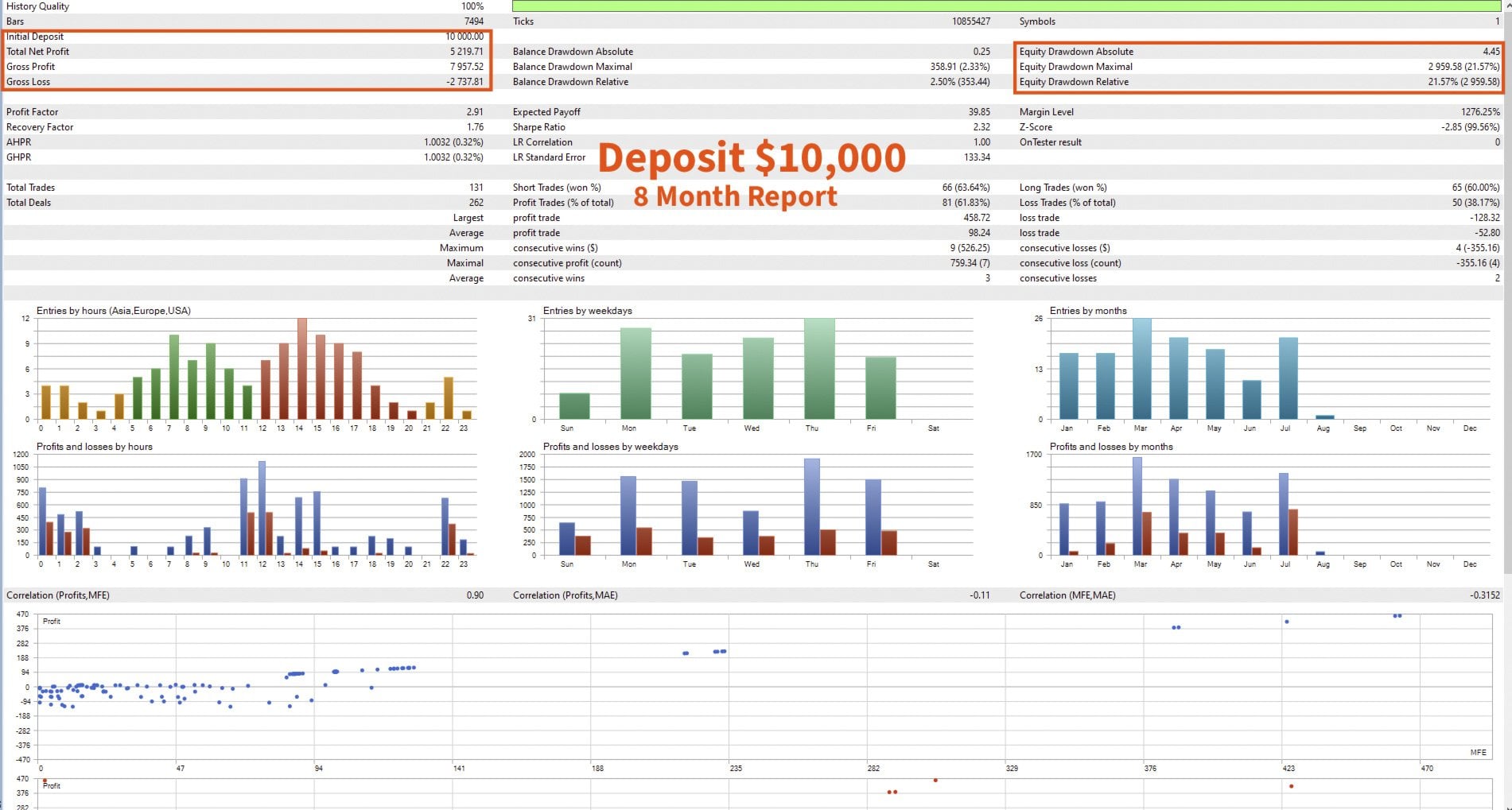
The original gallery shows several eight-month reports with different deposit labels and a report labelled 32 months. These are simulated histories, not years of public live monitoring. The balance/equity curves show sharp floating-equity dips despite generally rising balance. Different deposit sizes and settings mean the examples cannot be treated as interchangeable risk levels.
Execution details to test
Broker lot normalization, margin checks and magic-number isolation are described. During testing, inspect behaviour at the maximum trade count and when an additional order fails. Those are important failure cases for a recovery sequence, even when normal-order execution looks consistent.
Original developer images — checked 17 September 2026
Eight original tester images are reproduced in the expandable evidence section. No public product-specific live signal or written customer feedback was visible on 17 September 2026.
Open the remaining original test images

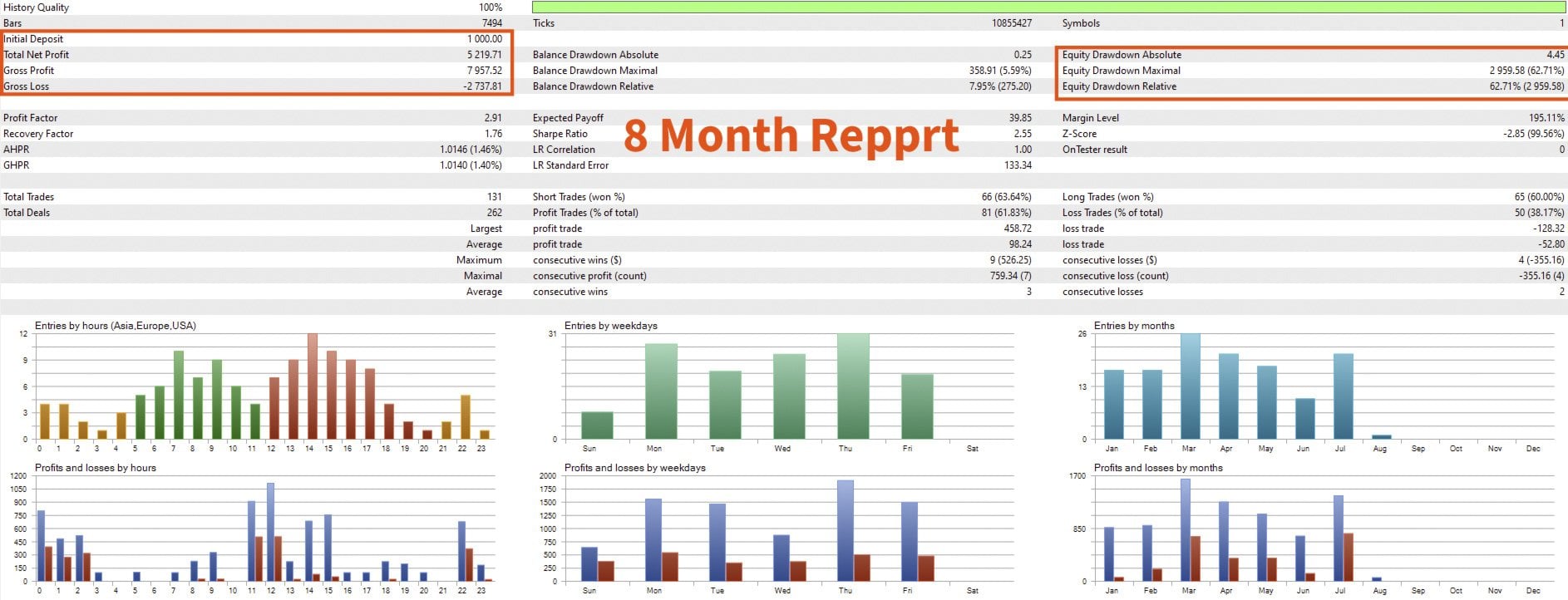

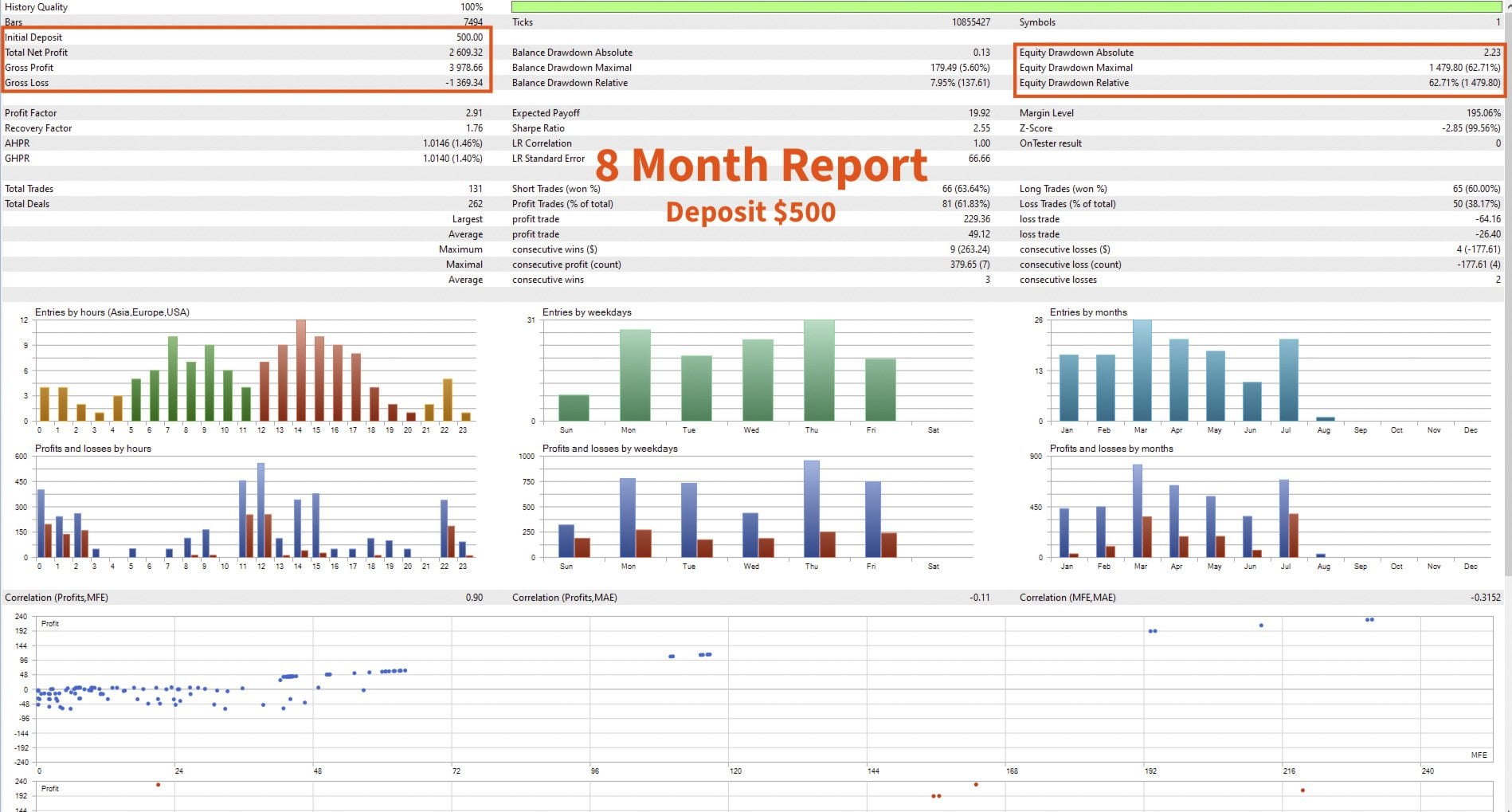

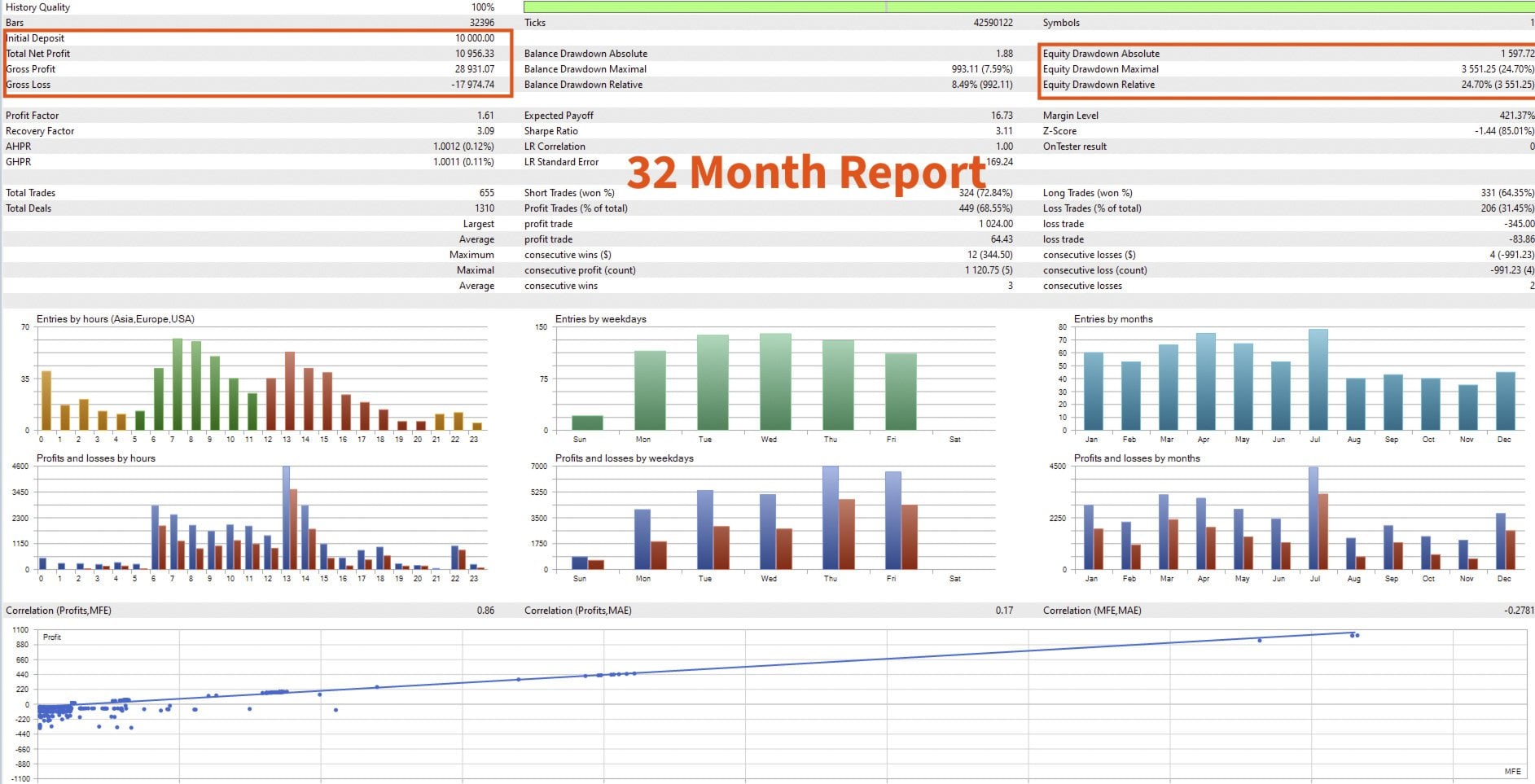

These are original developer-supplied images, retained without changing their figures. A Strategy Tester report models a selected history and configuration; it does not establish live execution, future returns or independent verification. Click an image to inspect its full-size detail.
Customer feedback and source scope
The MQL5 page showed no customer reviews at our 17 September 2026 check, so there are no customer-review screenshots or third-party star ratings to reproduce. No separate public manual or product-specific signal was linked. The analysis is based on the developer description and gallery, with assumptions kept separate from confirmed features.
Check the current developer listing and feedback
Practical setup
Configure the RSI thresholds, initial lot, order spacing, multiplier and trade-count limit together. The public description does not establish a single mandatory market, timeframe or minimum balance. Verify the broker’s symbol and account behaviour in the MT5 tester and demo environment before choosing a live setup.
Decision points
The EA adds larger positions when price moves adversely. This is martingale-style recovery, not a capped-risk single entry. A maximum number of trades limits additions but does not cap the floating loss of the final basket. The description does not document a hard loss cutoff.