
Polar Star EA MT5 trades nighttime Forex mean reversion using limit orders, moving-average/standard-deviation calculations and a volatility filter. Wei Tu’s published setup covers GBPUSD, USDCAD, AUDUSD, EURCHF and EURUSD, with optional counter-trend additions and volume-weighted targets.
Our assessment: its appeal is a documented multi-pair night strategy with explicit sizing, session and grid controls. It may suit traders prepared to test those choices on their broker. The main consideration is exposure after adverse moves: the initial-entry window does not contain all grid activity, and the native tester report shows 38.77% relative equity drawdown.
View Polar Star EA MT5 features and pricing

This source-based review was prepared October 12, 2026 from the listing, developer’s October 11 manual, linked 5pairs.set, public signal and four original gallery images. The listing displayed version 1.54 and a public launch date of October 11. We have not independently traded the EA or reproduced its tests.
Pending entries and chart-driven processing
Initial calculations use M15 data internally; ticks from the attached chart drive the EA. An empty Inp_symbols trades only that chart’s symbol. The published preset explicitly fills the five-pair list, so adapt it to the broker’s exact prefixes/suffixes rather than assuming every installation starts with five active markets.
The manual describes Buy Limit and Sell Limit prices, a volatility filter, a spread-based pending-distance buffer and a maximum quote-age check. An invalid request is skipped rather than moving the planned entry price to force acceptance. A valid signal can still remain unfilled. Broker spreads, liquidity and quote timing affect execution.
Session closure does not end grid exposure
The default initial-entry window is two hours. New entries stop five minutes before its end; relevant unfilled pending orders are cancelled at closure. Existing-position management and eligible grid additions can continue. The entry start is internally defined, not a separate user setting.
Grid additions follow adverse price movement. Inp_maxGrid uses the current position count for the symbol, Magic Number and direction; its default 5 should not be read as “five guaranteed additional orders.” Zero or below disables additions. The manual describes no grid-level lot doubling, but additional positions still increase exposure. Targets are recalculated around the same-direction group’s volume-weighted entry.
Sizing and exits in the published preset
The preset selects AutoLot, with balancePerLot 100. The manual’s raw formula is balance ÷ balancePerLot ÷ 100: a USD 1,000 balance produces 0.10 lots before broker constraints. baseLot 0.01 applies to FixedLot, so changing that field alone does not reduce AutoLot sizing. This is not a fixed percentage risked at the stop.
maxTradingSymbol 4 limits initial entries according to held symbols under this Magic Number; it is not a strict cap on all unfilled pending orders. Multiple symbols, multiple initial orders and grids can compound exposure.
The preset’s SL is 600 points, or 60 pips on a five-digit Forex quote. Its Inp_maxFloating 1.0 is not a practical routine loss cap. A lower setting triggers an attempted exit using whole-account equity versus balance, while the action targets this EA’s Magic Number. ClosewithProfit likewise uses an account-wide equity condition. Other account activity can affect these triggers.
The four-hour holding input is a conditional attempted exit, not an exact holding guarantee. Check GMT manually in the tester; automatic detection is disabled there. Friday and December 15–January 15 filters govern initial entries rather than all position/grid management. They are not an economic-news calendar. The preset omits the two pending-safety inputs in the manual; check their active values after loading it.
Four source images, different evidence scopes
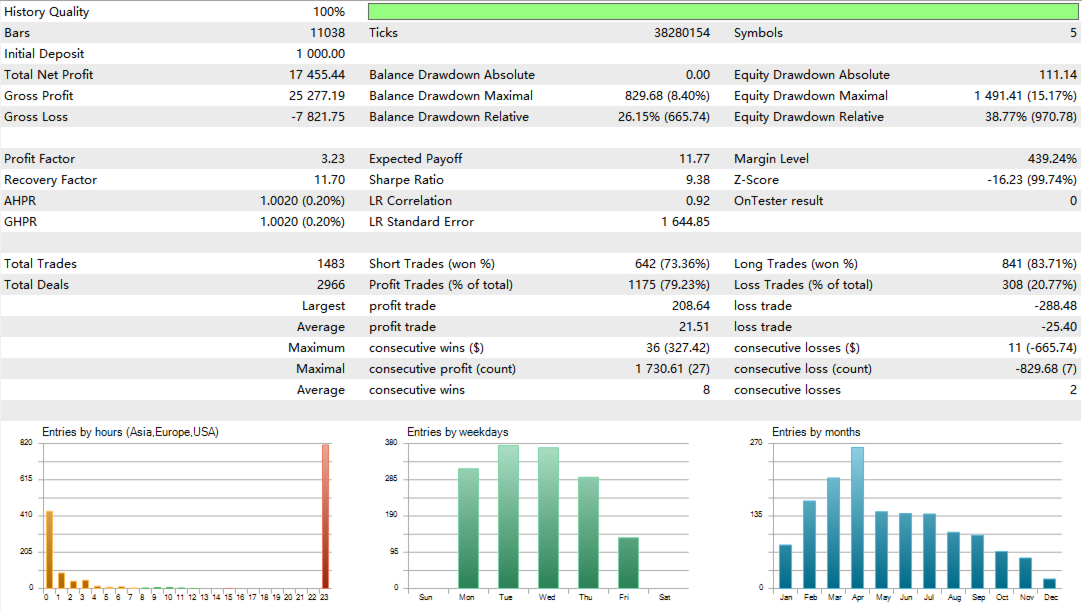
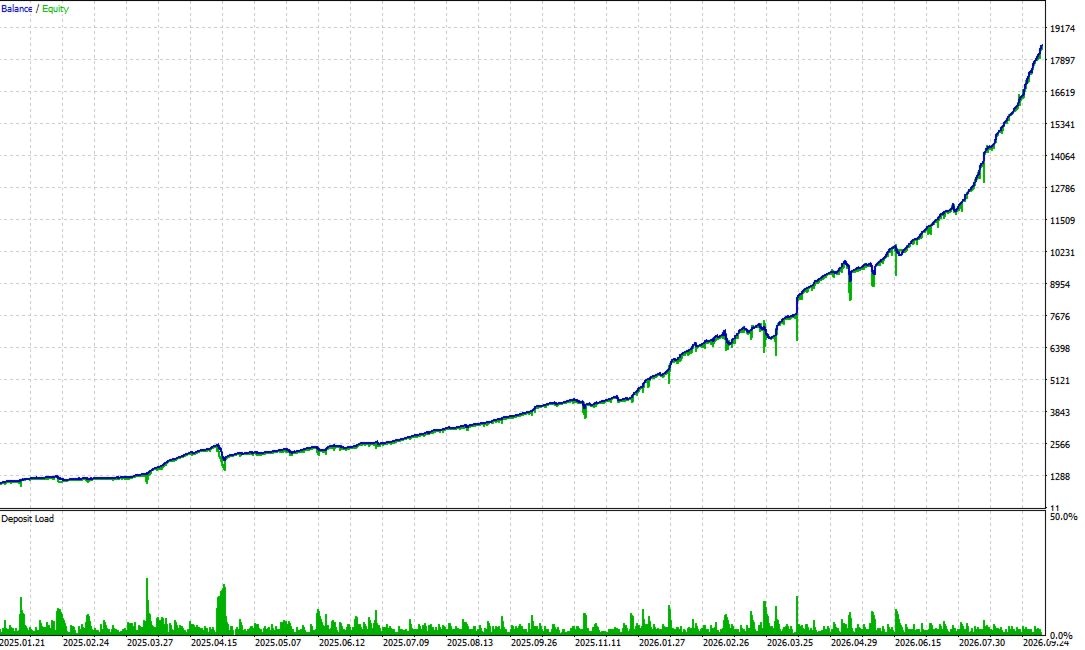
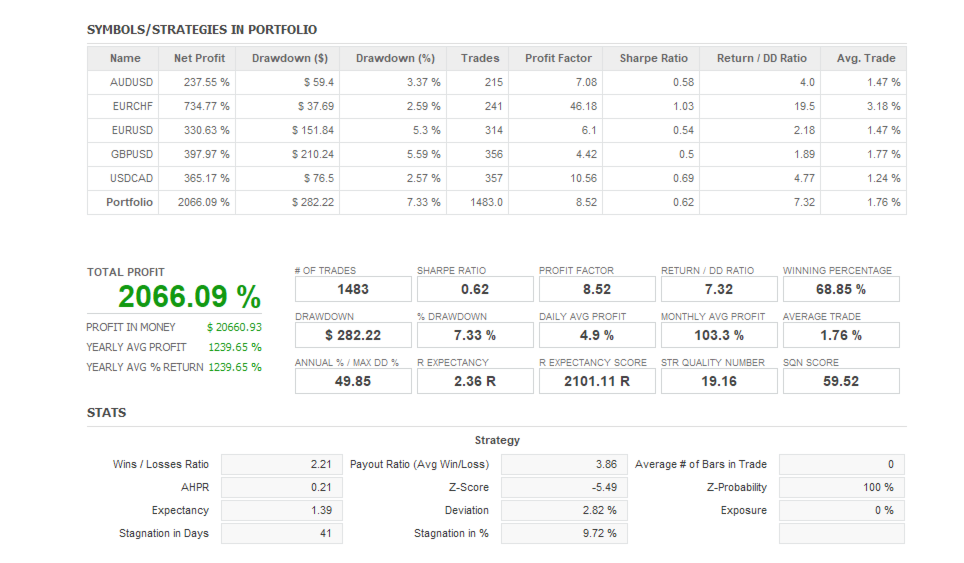
The portfolio summary and native report both list 1,483 trades, but their profit factors and drawdowns differ: 8.52/7.33% in the summary versus 3.23/38.77% relative equity drawdown in the tester report. We cannot reconcile their calculation methods or configurations. Use neither as a live return forecast, and do not substitute the lower summary drawdown for demonstrated account risk.
The linked MQL5 account
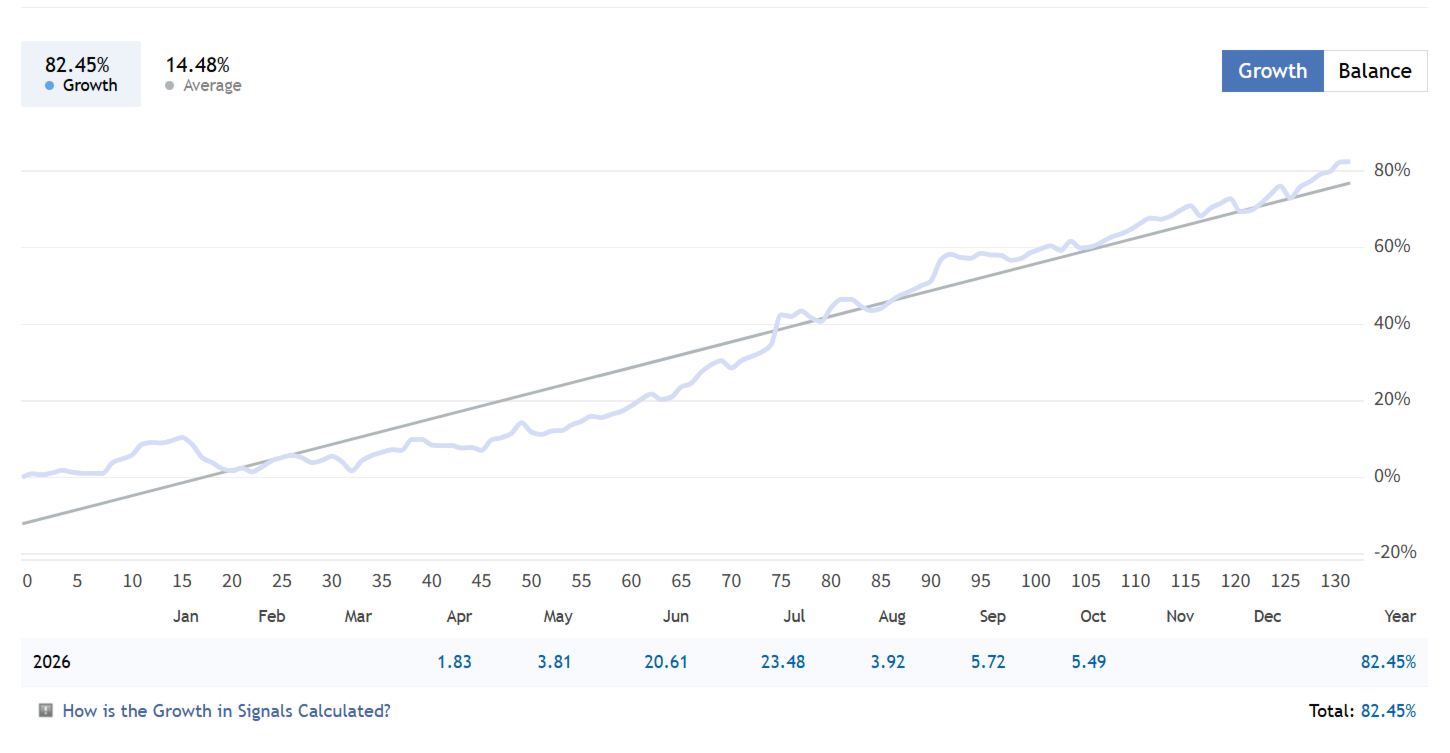
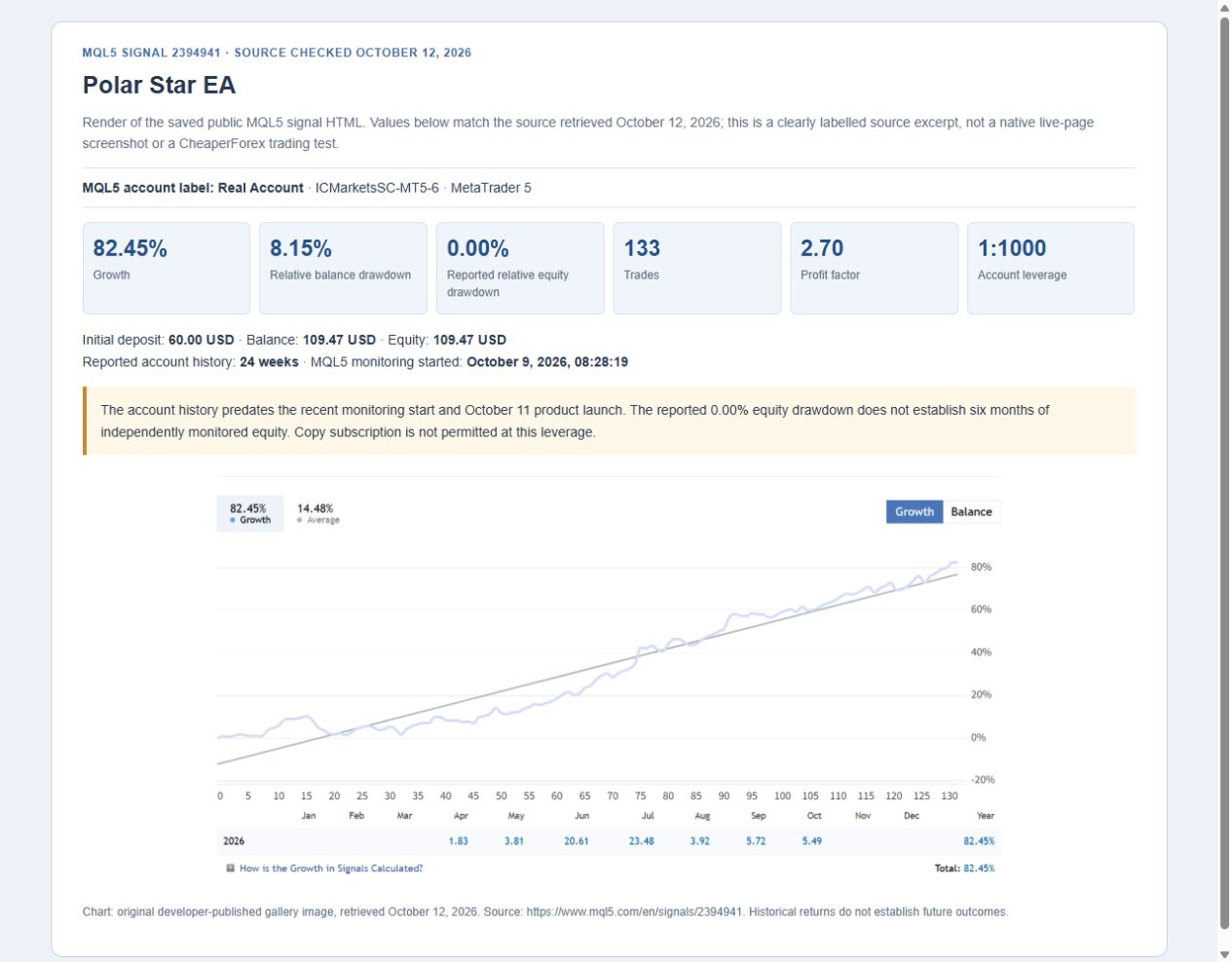
| Account observation | October 12 source snapshot |
|---|---|
| Platform label | MQL5 “Real Account”; ICMarketsSC-MT5-6, leverage 1:1000. |
| Account amounts | Initial deposit USD 60; balance and equity USD 109.47; growth 82.45%. |
| Closed-trade statistics | 133 trades; profit factor 2.70; balance drawdown 8.15%. |
| Monitoring scope | Started October 9, 2026; 24 weeks of displayed imported history, extending back to April 2026. |
| Floating-risk visibility | Reported equity drawdown and maximum deposit load 0.00%; short monitoring window. |
The zero equity/deposit-load figures do not prove that earlier grid exposure was zero: monitoring is young and does not establish the historical floating-loss path. The last trade was displayed as four days ago. We have not independently audited the account or established that its entire imported history used the current build and preset. MQL5 subscription was not permitted at this snapshot, including its leverage limitation; that concerns the copying service.
Customer feedback and a same-developer comparison
No Polar Star customer reviews were present in the checked listing. Its one public comment was Wei Tu’s October 11 “backtest set file” attachment, matching the linked preset. Developer-profile ratings are not product reviews and are not imported into CheaperForex purchase ratings.
Compare the separate Eternal Engine EA MT4 and Eternal Engine MT4/MT5 review for another Wei Tu system. Platform and strategy differences matter; its results and settings are not Polar Star evidence.
Verify it yourself
Read the official listing, public manual, five-pair preset and currently linked MQL5 signal. The product requires a hedging account; evaluate exposure, broker execution and conditional exits in testing.