
HFT Spike EA MT5 trades gold spike/pullback setups with panel-based sizing, timed exits and optional recovery. Its appeal is a defined market focus and accessible controls; the main concern is that the current public signal is losing money despite the older attractive backtests.
Our assessment: treat this as a strategy to evaluate carefully on your broker, particularly the recovery setting. The available live sample is too small to establish durability and already shows material drawdown.
View product details and current pricing.

Sources checked 13 September 2026. We examined public evidence, release notes and developer explanations; we have not independently run this EA.
How the entry logic is described
The developer’s June comments explain a pullback approach after an unusually fast move. That is more informative than the overview’s broad quantum and neural labels. A strong move that keeps trending is an obvious challenge for a reversal entry; the developer identifies sustained directional momentum and thin liquidity as difficult conditions.
The EA uses M1 internally. Its name does not mean thousands of trades or a need for colocated infrastructure: the observed signal averaged about one trade per week and ten minutes per position at the review date.
The live signal: current results and their limits
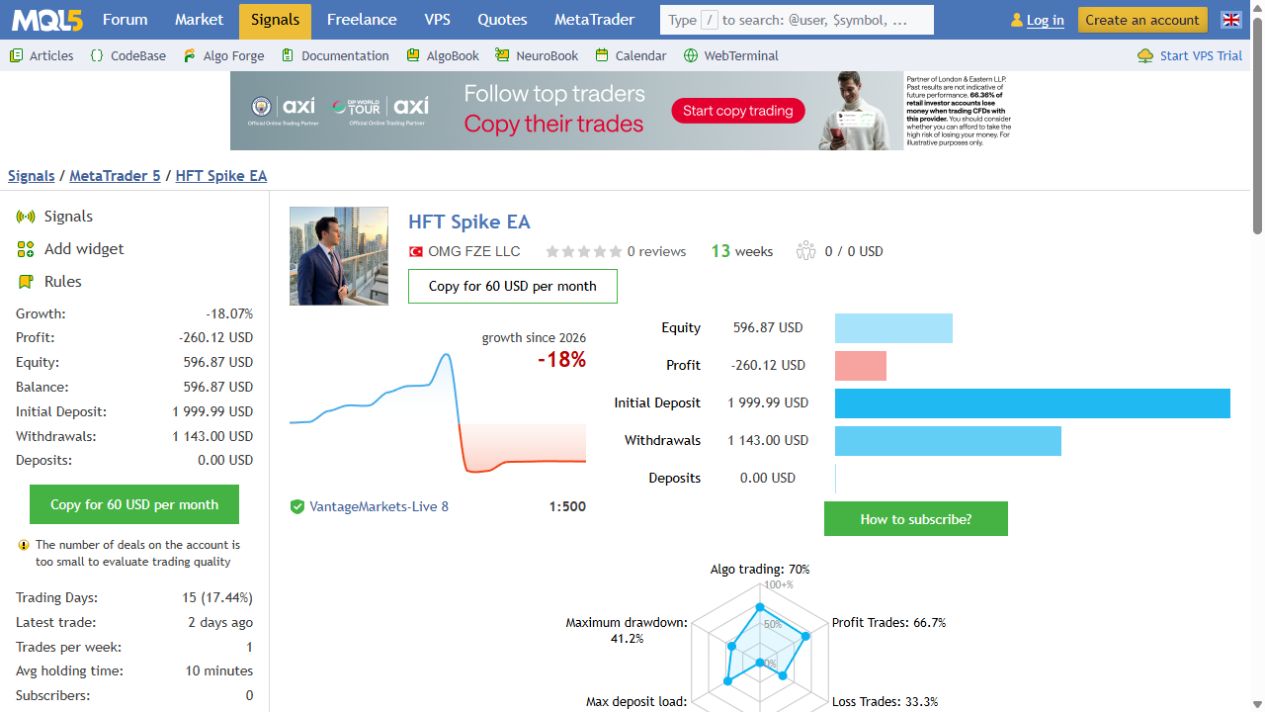
- Growth: -18.07%; net profit -$260.12.
- Relative drawdown: 30.62% by equity and 41.16% by balance. These are different measures.
- Sample: 24 trades across 15 trading days; displayed history 13 weeks, signal started 26 June 2026.
- Profit factor: 0.72, with 16 winning and eight losing trades.
- Account flows: initial deposit $1,999.99, withdrawals $1,143, ending balance/equity $596.87.
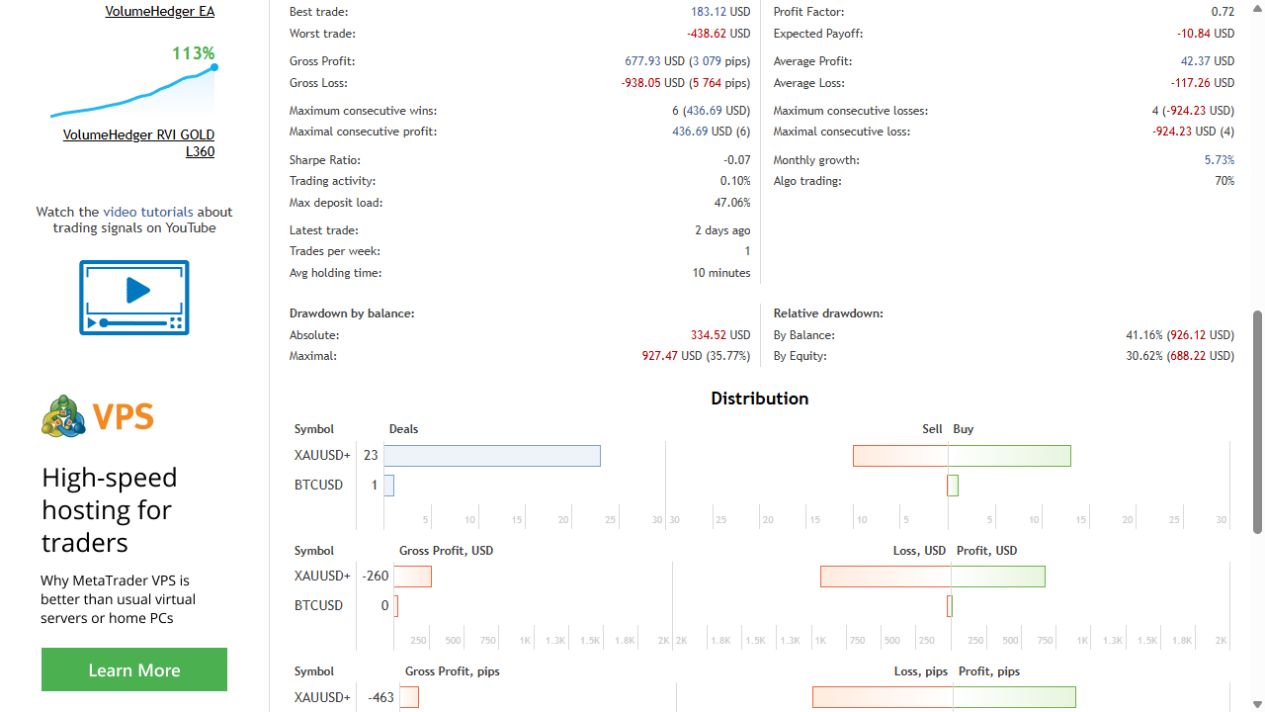
Withdrawals explain part of the reduced balance; they are not trading losses. Conversely, a majority of winning trades does not establish profitability: the reported average loss exceeded the average win. MQL5 warns that the trade count is too small to evaluate quality.
The account reports 70% algorithmic trading and includes 23 gold trades plus one Bitcoin trade. It is the developer-linked record, but not proof that every trade came from an unchanged HFT Spike configuration. No full current-settings record was established.
Inspect the current HFT Spike MQL5 signal
Recovery/grid mode: the important correction
Version 4.50, released 5 June, added a recovery/grid system and integrated it with PropFirm Mode. This supersedes a blanket single-position/no-grid description. The developer also states that grid mode limits the highest panel risk selection to 40%, even if the display shows 80%.
Recovery increases the importance of combined exposure and margin. A stop on each position does not turn a multi-position configuration into a low-risk system. Confirm the actual input state before comparing tests or using it live.
What the backtest images show
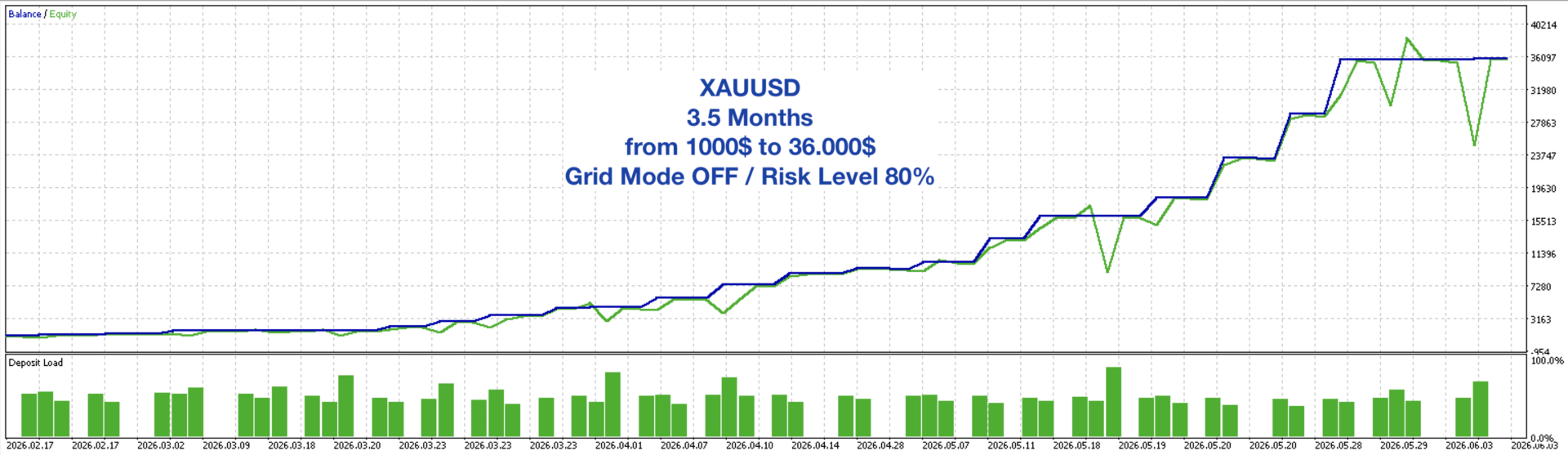
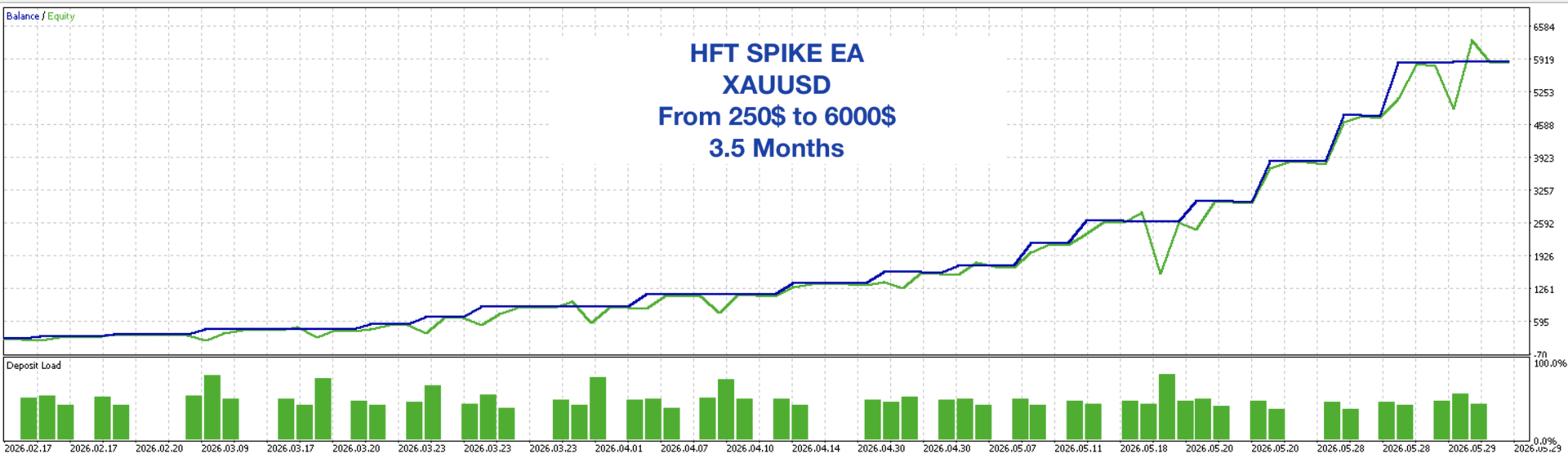
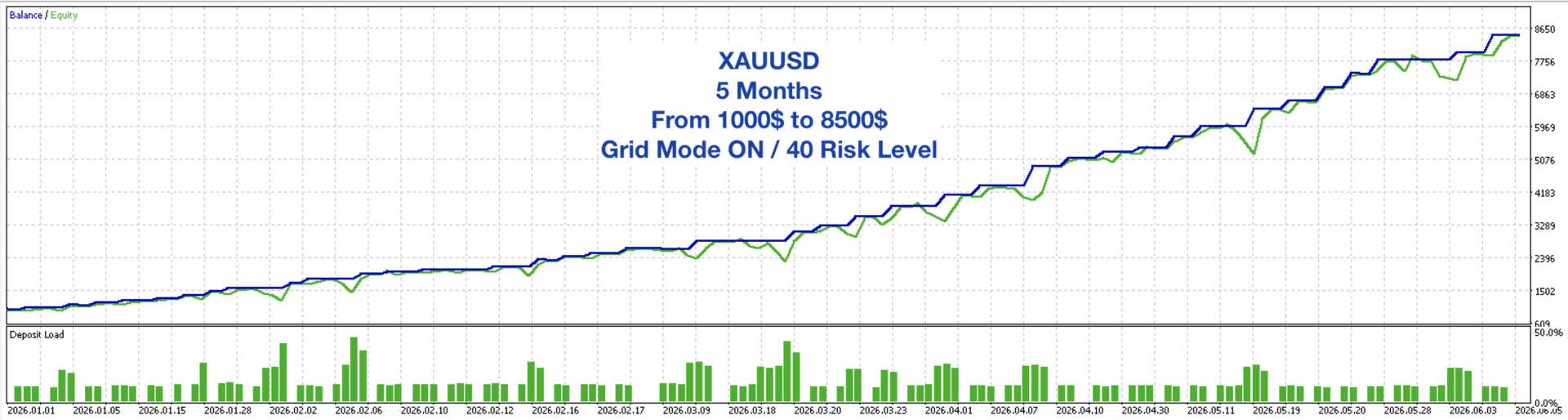
All five original gallery images are used across these pages: the panel below and four test curves. The curves use different balances, periods and risk settings; none should be presented as the current live result.
Grid OFF: risk level 80%
Earlier $250 starting-balance test
Grid ON: risk level 40
Grid OFF: risk level 40%
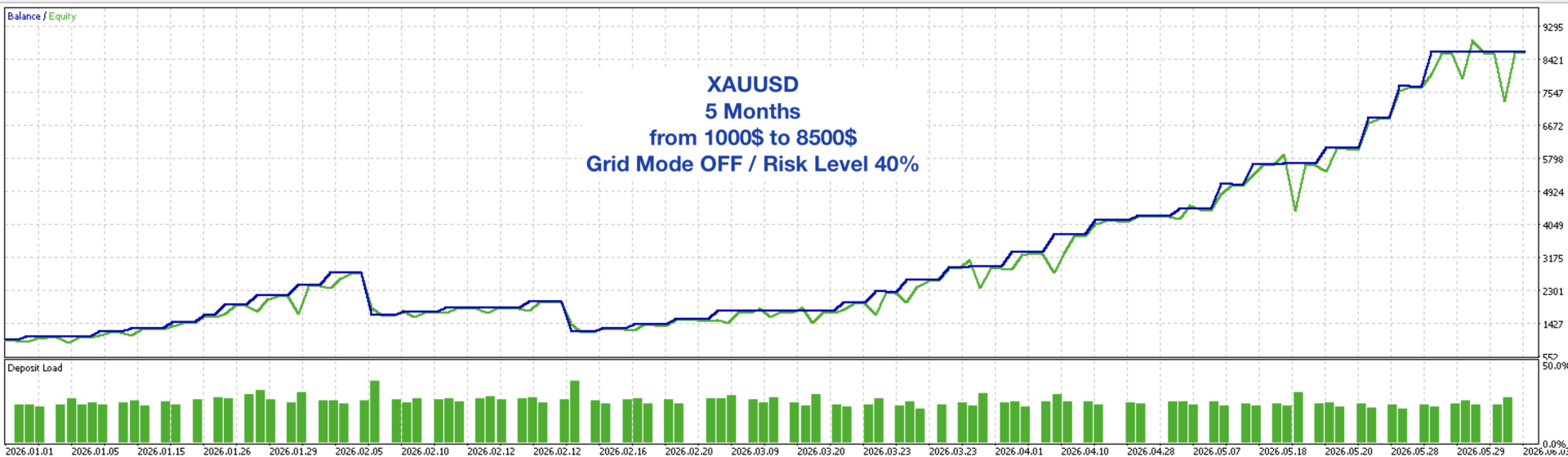
The grid-on and grid-off curves illustrate why configuration matters. The 80% example uses extraordinarily aggressive sizing. A steep historical balance line is not a reasonable expectation for a new account, particularly when the later public record is negative.
Risk panel and daily-loss mode
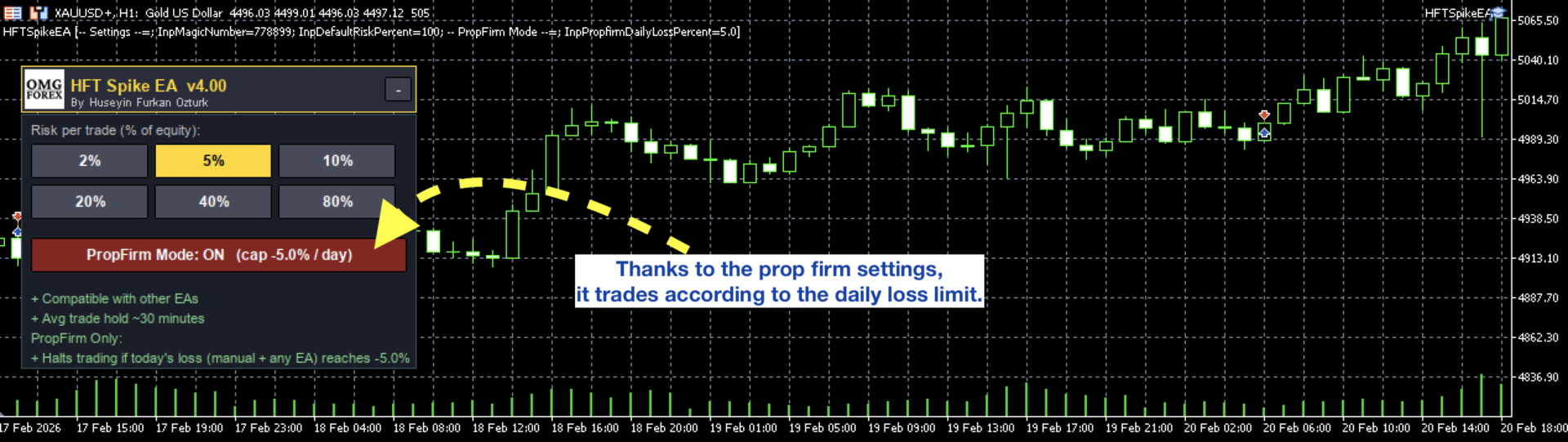
The daily calculation uses the entire account’s P&L while the entry block applies to this EA. Existing trades and other robots can continue changing equity. The developer’s explanations also reference a UTC day boundary; that may differ from a provider’s reset time. PropFirm Mode is a software control, not approval from every firm.
The June explanation says the USD Index filter is optional and initially disabled. Broker index names and precision matter. It reacts to index movement; it should not be described as guaranteed protection from scheduled or unexpected news.
Customer reviews: praise with context
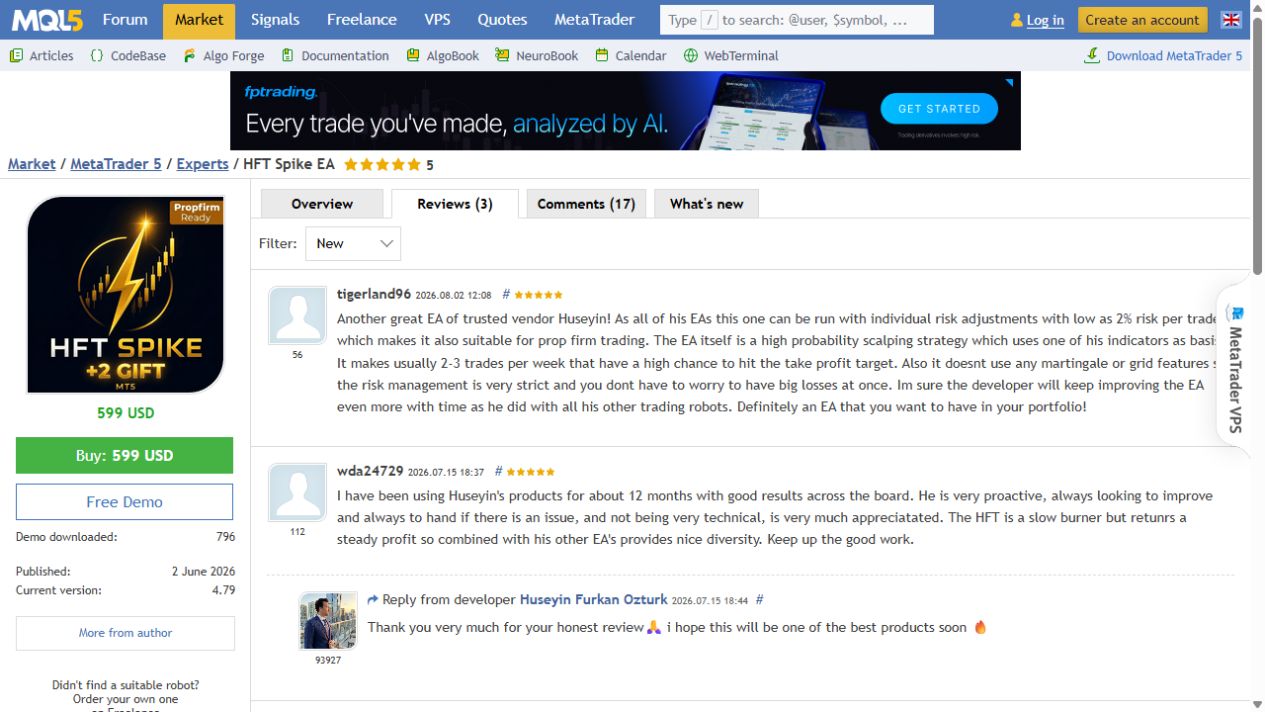
Three positive reviews were visible. Buyers praise the developer’s responsiveness and describe HFT Spike as a slower addition to a wider EA portfolio. One reviewer explicitly calls it higher risk and reports only ten live trades at that time.
The August review says it does not use grid. That may describe the reviewer’s configuration, but the June release notes show that grid is available. Reviews posted before the later signal drawdown cannot establish that the current account is profitable.
Recent execution fixes
The inspected version was 4.79, dated 17 June 2026. It changed spread handling for stops and improved the panel. Version 4.78 added repeated attempts to update a recovery trade’s take-profit after a failure; earlier updates addressed candle synchronization and margin-aware sizing. These are useful details when evaluating old screenshots against the current build.
No separate public HFT Spike manual was linked in the overview. The public comments provide substantial operational explanations; the linked developer channel opens a sign-in page.
HFT Spike or VolumeHedger?
VolumeHedger EA MT5 is the same developer’s broader hedging-loop system with configurable entry methods. HFT Spike has a more specific gold spike/pullback entry. Choosing between them means comparing exposure management and evidence, not assuming a shared author gives them identical performance.
Verdict
HFT Spike has identifiable entry logic and useful controls, but the present evidence does not support describing it as a proven steady-profit or low-drawdown EA. The losing live record, small sample and optional recovery mode deserve at least as much attention as the promotional test curves.
View HFT Spike EA MT5 and pricing
Frequently asked questions
What does HFT Spike trade?
It targets short-lived XAUUSD/gold spikes and a possible pullback. The developer states that M1 is used internally, so the attached chart timeframe is not the strategy timeframe.
Does HFT Spike have a grid option?
Yes. Version 4.50 added recovery/grid mode, including integration with PropFirm Mode. Older no-grid descriptions do not describe every available configuration. Check whether recovery is enabled in your inputs.
Does PropFirm Mode guarantee a daily loss limit?
No. It uses account-wide profit and loss to restrict its own new entries. Slippage and existing trades, including trades from other EAs, can still move account equity. Match the settings and time boundary to the provider’s actual rules.
Is the USD Index filter automatic?
The developer describes this as optional and disabled by default in the June explanation. Broker symbol names and quote precision matter; confirm the current input and available index feed before relying on it.
Which version is supplied and how do updates work?
Free lifetime updates are included. Follow the delivery README supplied with the order.
Official listing and reviews · Developer explanations · Release history · Public signal