
Spartan Gold Sniper AI MT5 combines XAUUSD box-breakout scalping with an H1 trend-following mode. Quoc Dung Le’s published design emphasizes adaptive spread handling, automatic sizing and a minimum-lot mechanism that keeps trading enabled when calculated volume is below the broker’s minimum.
Our assessment: the two modes offer a choice of trading pace, while the spread and volume controls deserve close testing. In particular, a forced minimum lot can exceed the intended risk budget, and the public description does not resolve how its “hidden” exits operate. This is an assessment of the published specification and original developer images, not a hands-on test. CheaperForex sells the product.
Ready to Buy Spartan Gold Sniper AI MT5?
$639.99 with crypto · $799.99 by card
Official version · Instant download · Free lifetime updates · 7-day money-back guarantee

Scalping and H1 swing trading
The official listing describes a scalping mode for M5/M15 that targets short-term box breakouts and a swing mode on H1 that follows trends. The parameter guide specifically labels the choices SCALP_GOLD and SWING_H1, naming M5 for the scalp input. Confirm the chart and mode together rather than assuming that changing the chart alone changes the strategy.
The source calls scalp execution “high-frequency,” but that label does not by itself define an exchange-style HFT system or prove latency arbitrage. The practical requirement is more concrete: the developer specifies a VPS with less than 20 ms latency to the broker and recommends an ECN, RAW or zero-spread account. Commissions remain part of trading cost even when the quoted spread is low.
How the adaptive spread filter changes an entry decision
A fixed filter rejects entries above a set spread. Spartan’s smart filter instead considers expected reward relative to cost and can permit a wider spread when the calculation supports it. This can alter which trades qualify during volatile periods, but it does not make wider spreads free or guarantee the expected target will be reached.
The public guide names InpUseSmartSpread as the switch but does not publish the full formula or numerical acceptance thresholds. A useful evaluation therefore compares which entries pass, the resulting fill prices and the realized costs with the filter enabled and disabled on the same broker conditions. No such independent comparison is claimed in this review.
The minimum-lot tradeoff
The “MinLot Enforcer” is designed to send a trade even when the risk calculation yields a volume below the permitted minimum. That is an execution decision, not an assurance of small-account safety. If the requested risk would produce a volume below the enforced lot size, the actual position can risk more than the intended percentage.
Automatic sizing also changes exposure as the account changes. Inspect the resulting volume, stop distance, symbol contract size and margin requirement together. A maximum-total-volume input adds a ceiling, but lot caps alone do not establish the amount that could be lost.
- InpMode
- Selects the scalp or H1 swing strategy.
- InpUseSmartSpread
- Enables adaptive spread acceptance.
- InpMinLots
- Controls the minimum volume used by the EA; check its effect on small balances.
- InpMaxTotalVolume
- Defines the permitted total lot exposure in the strategy settings.
- InpUseTimeFilter
- Enables the trading-hour restriction.
Hidden exits and account rules
The listing places “hard stop loss” beside a statement that trades have hidden SL and TP. Those terms leave the implementation unclear: the page does not establish whether a broker-side protective order, terminal-managed exit or a combination is used. Do not assume a hidden stop will remain effective when MT5, the VPS or its connection is unavailable. Confirm the actual behavior before relying on it.
The developer also promotes prop-firm compatibility and volume-limit handling. That describes available controls, not approval from a particular firm. Strategy permissions, daily equity calculations, holding rules and news restrictions must be checked separately. The public description does not specify a universal minimum capital figure that could be used as a safety threshold.
Original developer images and their limits
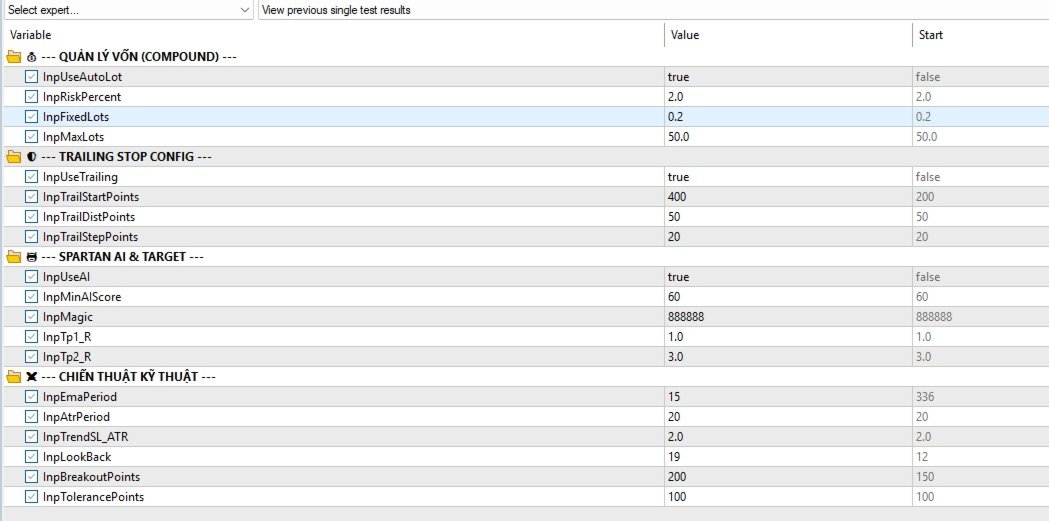
The inputs image includes automatic sizing, risk percentage, fixed lots, a lot ceiling, trailing settings and technical filters. It also has optimization columns, so the pictured values should not be copied into an account as current recommendations. They describe one published configuration, whose precise build is not shown in that crop.
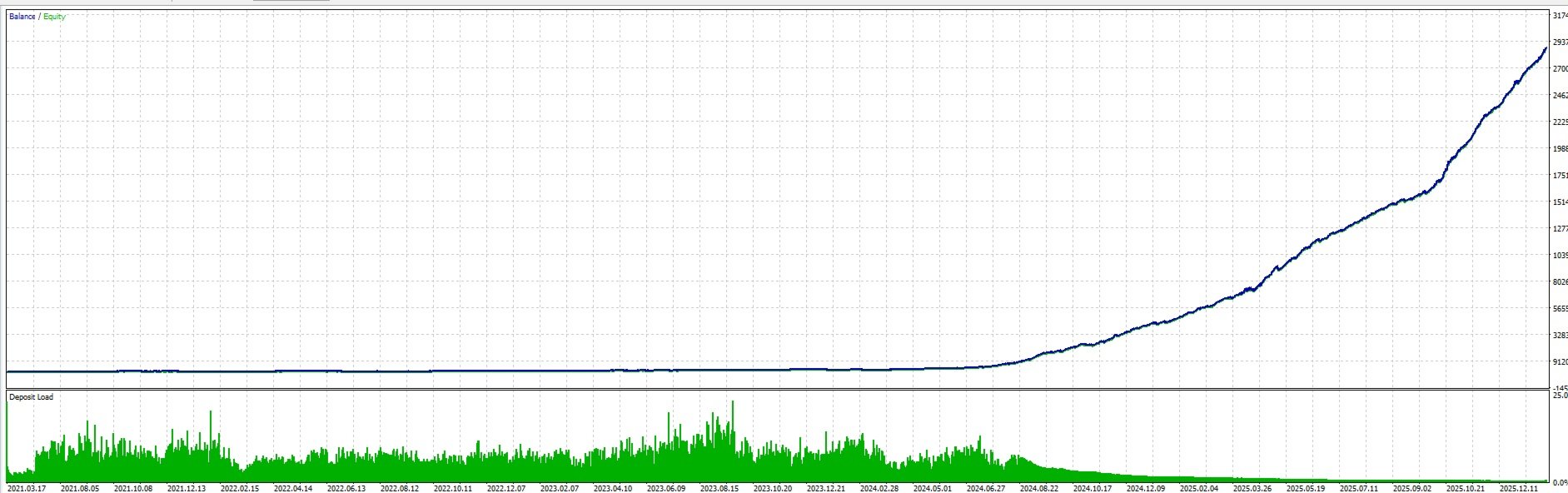
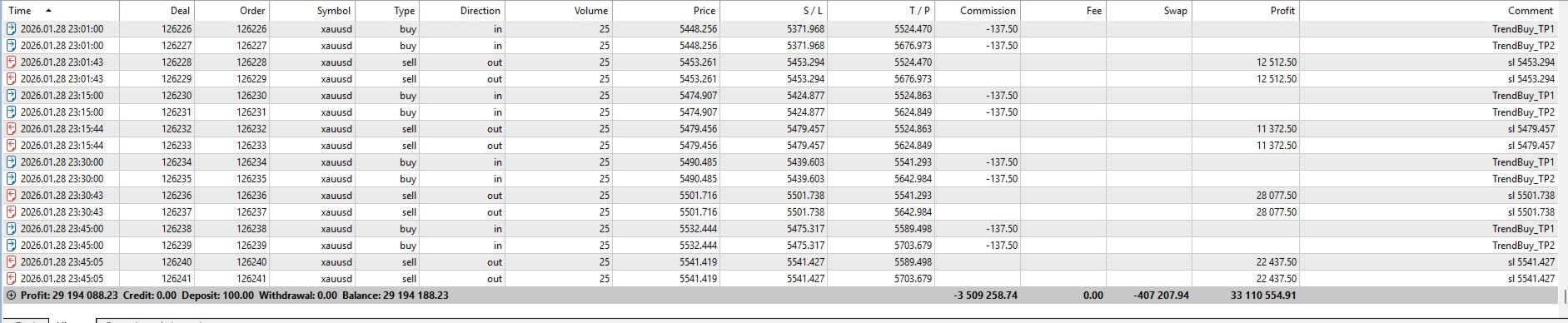
The equity image becomes much steeper toward its later dates. The separate trade-history crop includes paired 25-lot gold entries, commissions and different profit targets. These images need the sizing and testing context to be meaningful: a rapidly rising account figure with changing exposure is not evidence that a small account can safely reproduce it.
The trade crop contains stop-loss and take-profit columns, but it does not resolve the current listing’s ambiguous “hidden” stop description or prove how protection behaves during an outage. It also lacks a verifiable live-account identity. We do not label these results as audited or live.
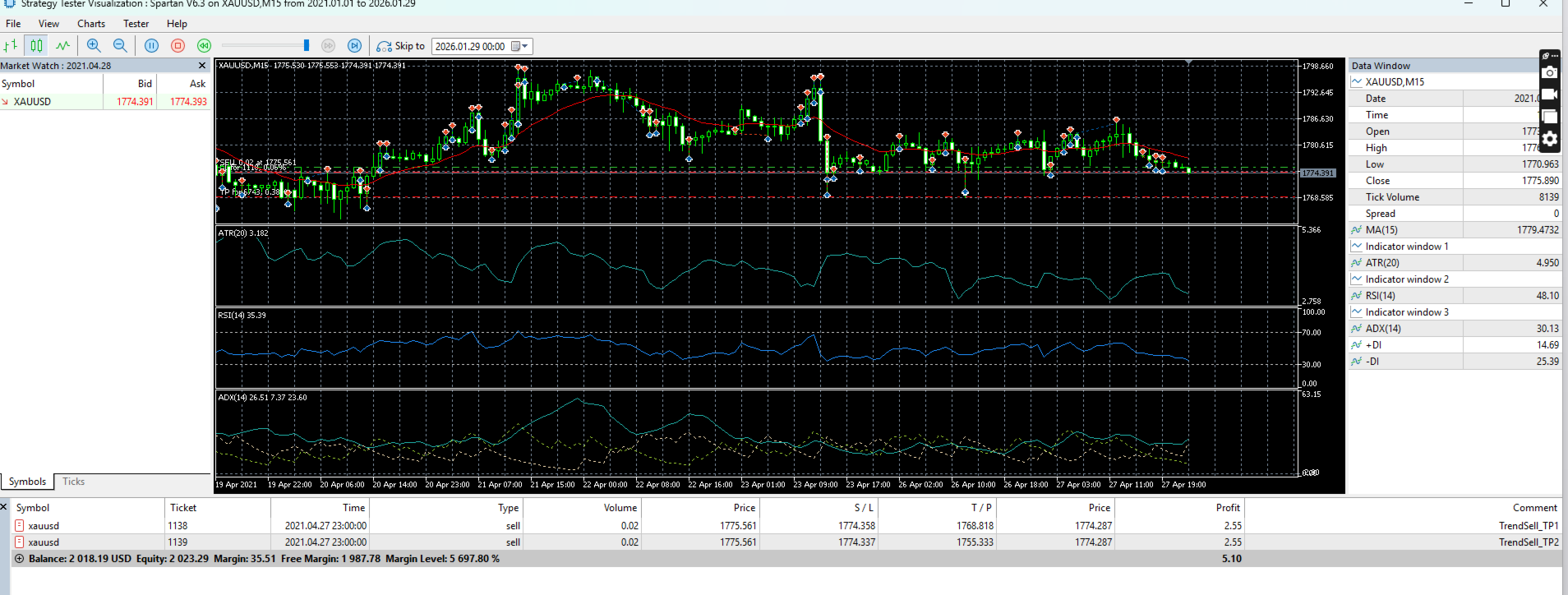
The final image explicitly names Spartan V6.3 in Strategy Tester on XAUUSD M15, with a January 1, 2021 to January 29, 2026 test range. ATR, RSI and ADX panels and trade markers are visible. That is useful historical interface evidence, but it predates the later mode and spread changes.
What the published updates changed
The developer release history records several changes on January 30–31, 2026. Versions 6.50/6.51 added time-window inputs, optional Friday closure with a stated 20:00 server-time default, broker-volume handling, a margin check and stop-level adjustment. Version 7.10 introduced the scalp/swing mode choice and minimum-lot feature; 7.20 added adaptive spread handling and revised the volume-limit logic.
These notes help explain why the older screenshot cannot represent every current control. Server-time settings also depend on the broker’s clock, so a displayed hour should not be read as local time. The release history is a developer record, not an independent test that every described change succeeds under all conditions.
What is available to verify?
On September 29, 2026, the inspected listing and comments pages did not present a product-specific linked public signal or manual, and no product customer reviews or comments were visible. The available evidence is the specification, dated release notes and original gallery. We have not inferred a live track record from the screenshots or imported ratings from the seller’s profile.
The author’s linked website describes SharkHunter Omni and a broader Spartan system, with self-reported account figures. It did not provide a public third-party verification link connecting those figures to the Spartan Gold Sniper build on MQL5. They are therefore outside the performance evidence used here.
A practical test should use the intended XAUUSD contract and commission schedule, verify the selected strategy mode and time filter, and record how the EA behaves with wider spreads or a calculated lot below the minimum. Test terminal restart and disconnect behavior as well as normal entries and exits. Those checks matter more than treating a promotional screenshot as a forecast.
Comparison with SharkHunter Fusion
SharkHunter Fusion EA MT5 uses a higher-timeframe EMA trend bias and lower-timeframe pullback confirmation, with an explicit one-position default and detailed breakeven, trailing and timeout inputs. Spartan’s published differentiation is its scalp/swing choice and adaptive spread/minimum-lot logic. Neither description establishes which will perform better on a particular account.
Read the SharkHunter Fusion review for its entry filters, cent-account sizing and daily-loss guard.
Frequently asked questions
What is different about the smart spread filter?
It considers expected reward relative to cost and can accept a wider spread when that relationship permits it. The public description does not publish the full formula or numerical acceptance thresholds.
Why does minimum-lot enforcement matter?
It can turn a below-minimum calculated position into a larger executable order. The resulting risk can be higher than the amount originally calculated, so minimum lots are not evidence of small-account safety.
Does the prop-firm label establish compliance?
No. Volume controls are relevant, but each firm may have different strategy permissions, daily-loss calculations, news rules and holding restrictions. The marketing label is not approval from a firm.
Have you independently tested Spartan Gold Sniper AI?
No. This review evaluates the published specification and original developer images. It does not claim hands-on operation, an independent backtest or verified account performance.
Sources reviewed September 29, 2026: official Spartan Gold Sniper AI listing and its original developer gallery. Dated release references describe the source; they are not a promise that every newly released build is immediately supplied.