
AI Impulse Scalping Trade Review: MT4 vs MT5, Controls & Evidence
AI Impulse Scalping Trade is a gold/crypto H1 system built around sudden price acceleration, adaptive stops and execution filters. Its distinctive feature is the visibility of price-speed and stop calculations in the dashboard. The main evidence limitation is clear: the developer-linked Set 2 signal was disabled by its provider when checked on 20 September 2026, and neither edition had published product reviews.
View AI Impulse Scalping Trade MT4 pricing · View MT5 pricing

Research checked: 20 September 2026. Analysis of developer documentation, original images and available public records; we have not independently run or audited the EA.
An hourly chart can still host very short trades
The recommended charts are XAUUSD, BTCUSD and ETHUSD H1. The strategy description considers price step, velocity, timing gaps, candle behaviour and volatility before entering. H1 specifies the analysis context, not a guaranteed holding period. Because the trigger involves rapid movement, tick arrival and order execution matter even though the chart timeframe is hourly.
The entry mechanics are more informative than the AI label
The source describes neural-network filtering across many inputs, but does not provide an independently audited model or out-of-sample validation. What a buyer can inspect are the practical controls: pending versus market orders, a market-entry time allowance, pending-order peak correction and signal-order expiry. Test how these change real filled prices and rejected entries. A model description cannot tell you how the broker will fill a fast breakout.
Adaptive spread settings need a baseline
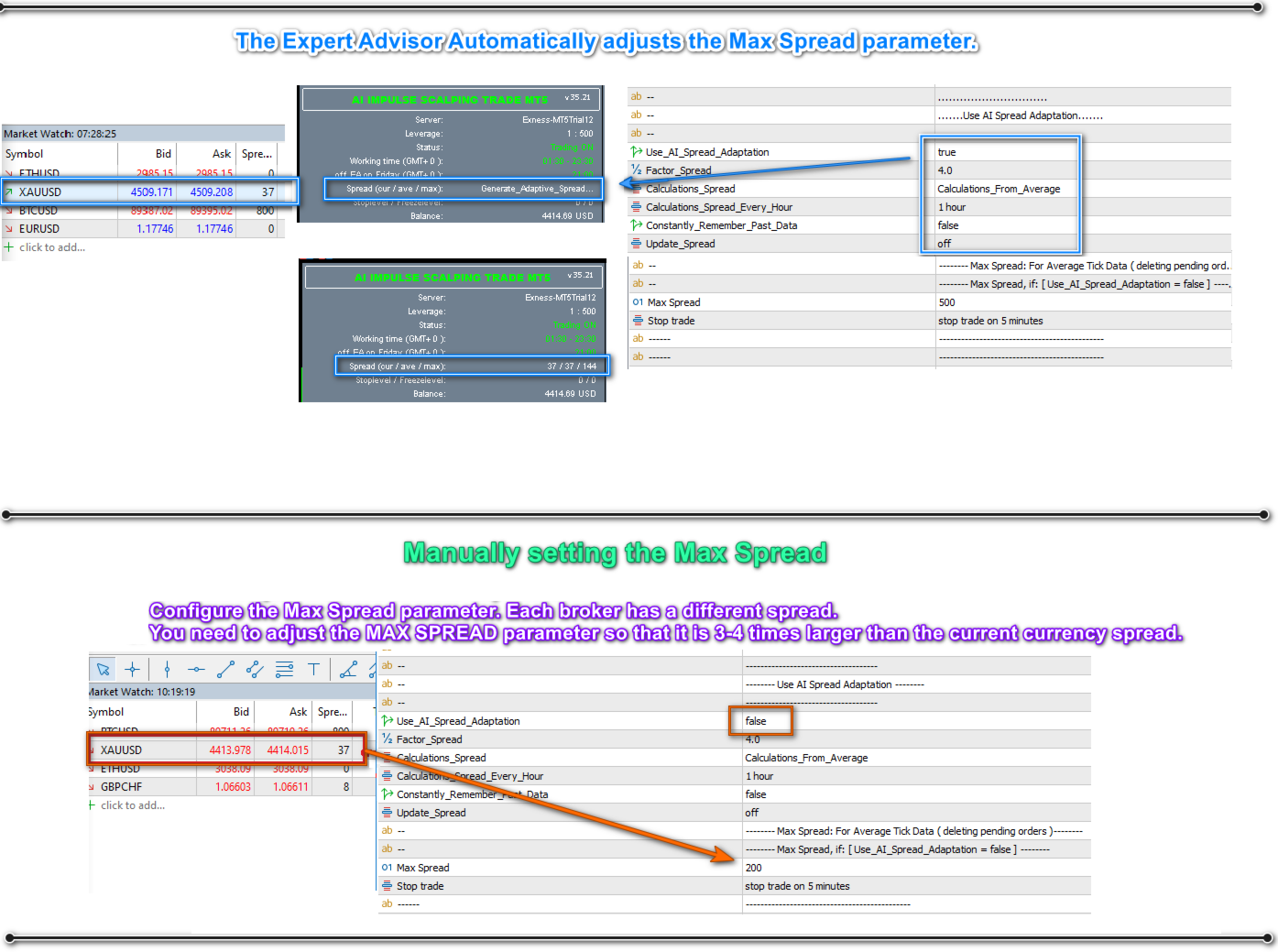
Automatic spread adaptation has controls for calculation data, update intervals and memory of earlier spreads. Manual Max Spread remains available. The original guide demonstrates both approaches. Before optimising thresholds, measure the ordinary and stressed spreads for your chosen contract. A threshold that blocks every entry and one that accepts expensive bursts are both plausible misconfigurations; a better-looking test curve alone is not enough to choose between them.
Hidden stops and execution protection solve different problems
Adaptive stop loss, take profit, break-even and trailing decide how an open trade is managed. Optional hidden exits move part of that responsibility to the terminal. Gap checks, negative-slippage handling and error pauses address separate execution conditions. None guarantees an exit at the exact intended price. If you use hidden management, include terminal interruptions and reconnection behaviour in the operating plan rather than assuming a broker-side order remains in place.
What the original images can show
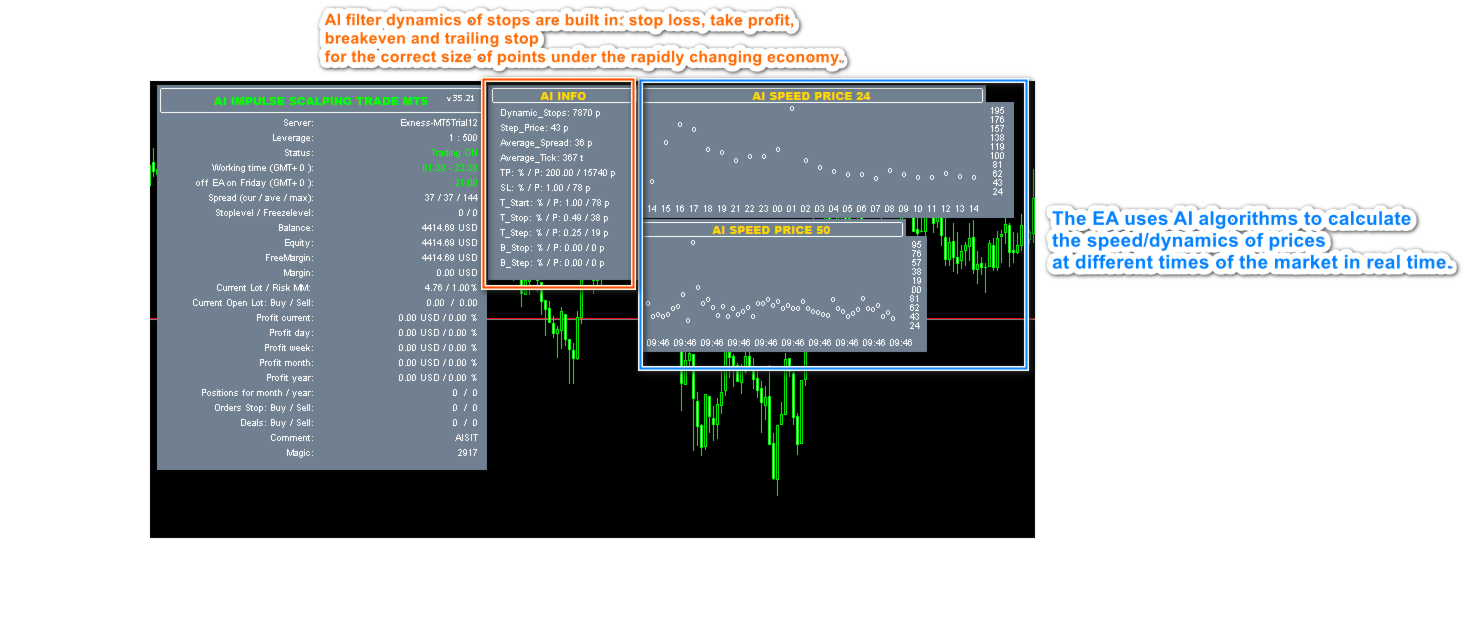
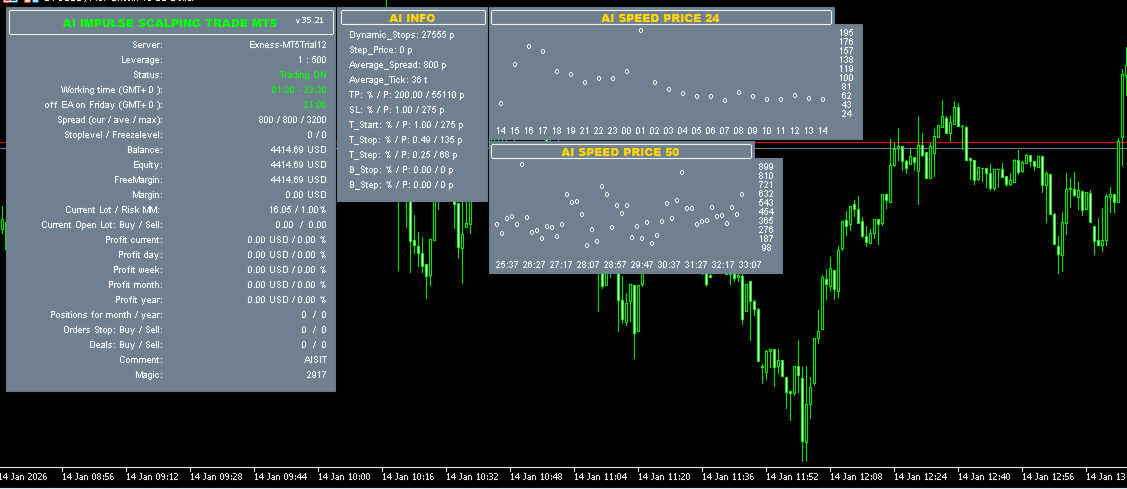
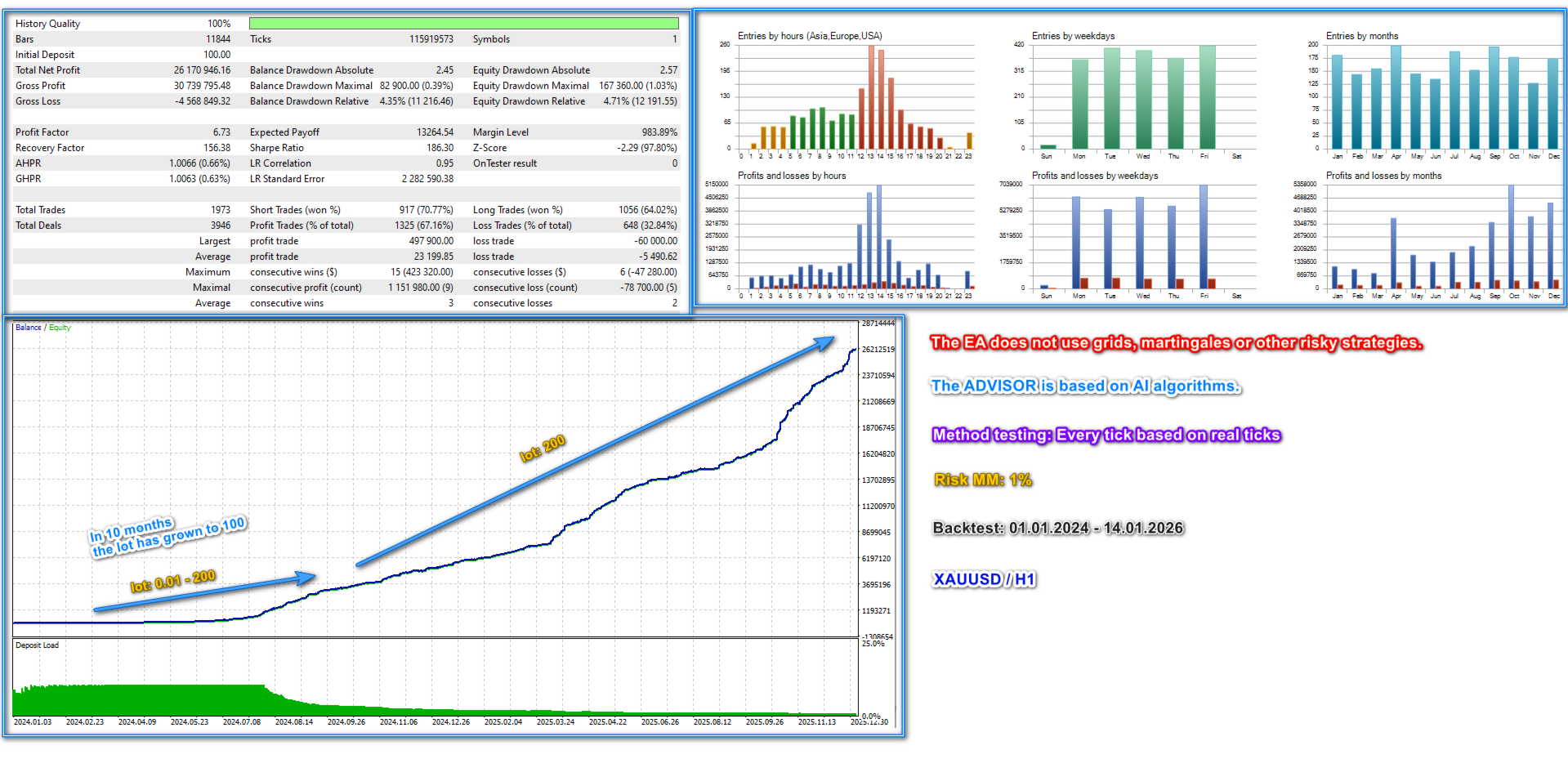
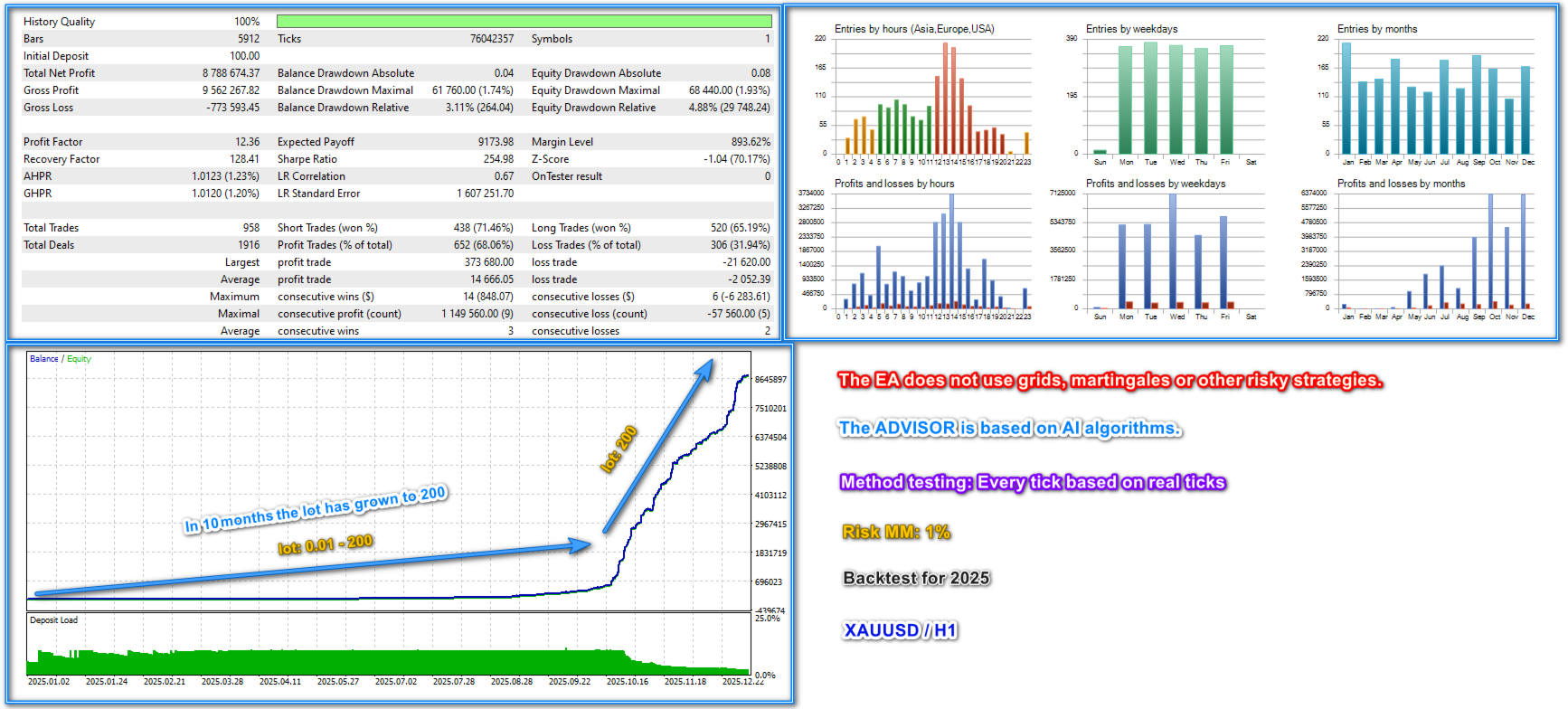
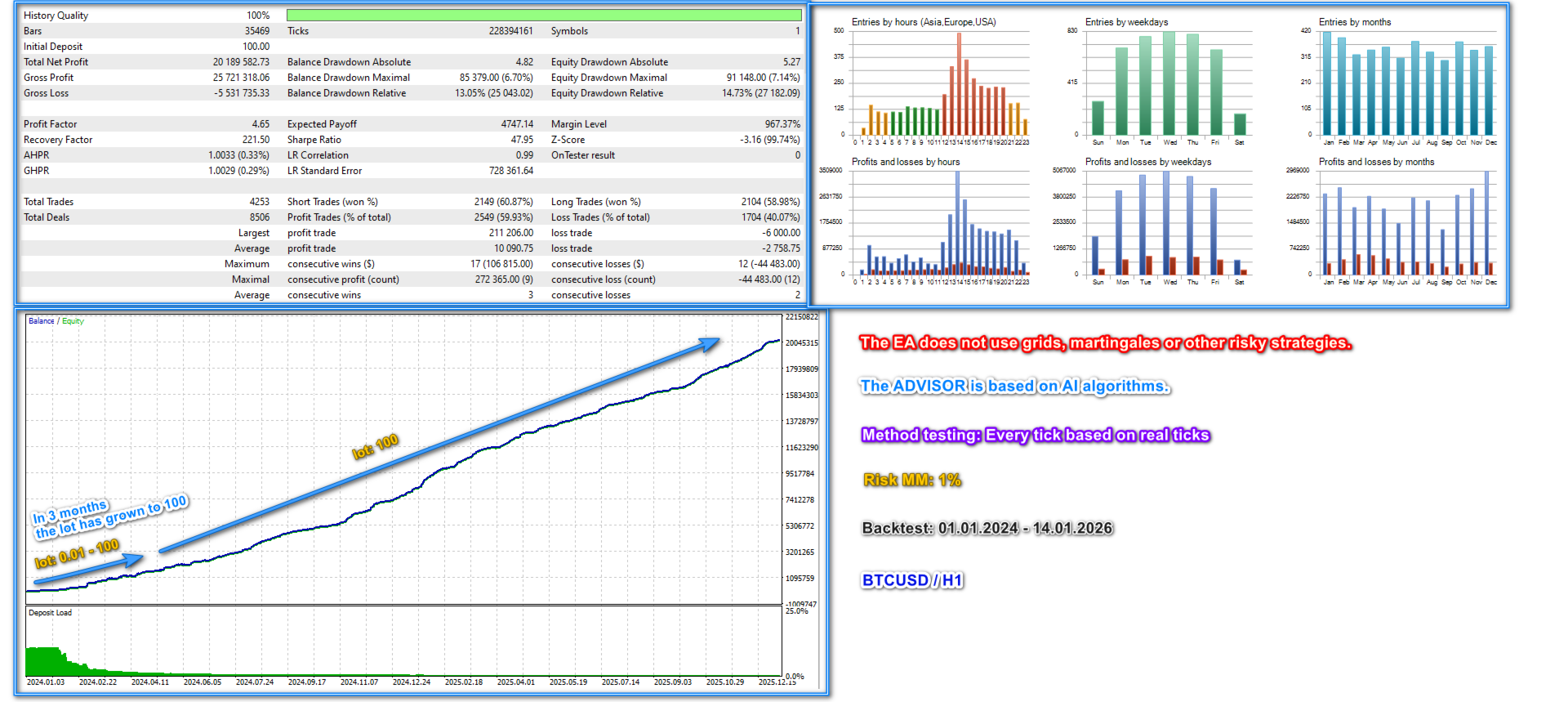
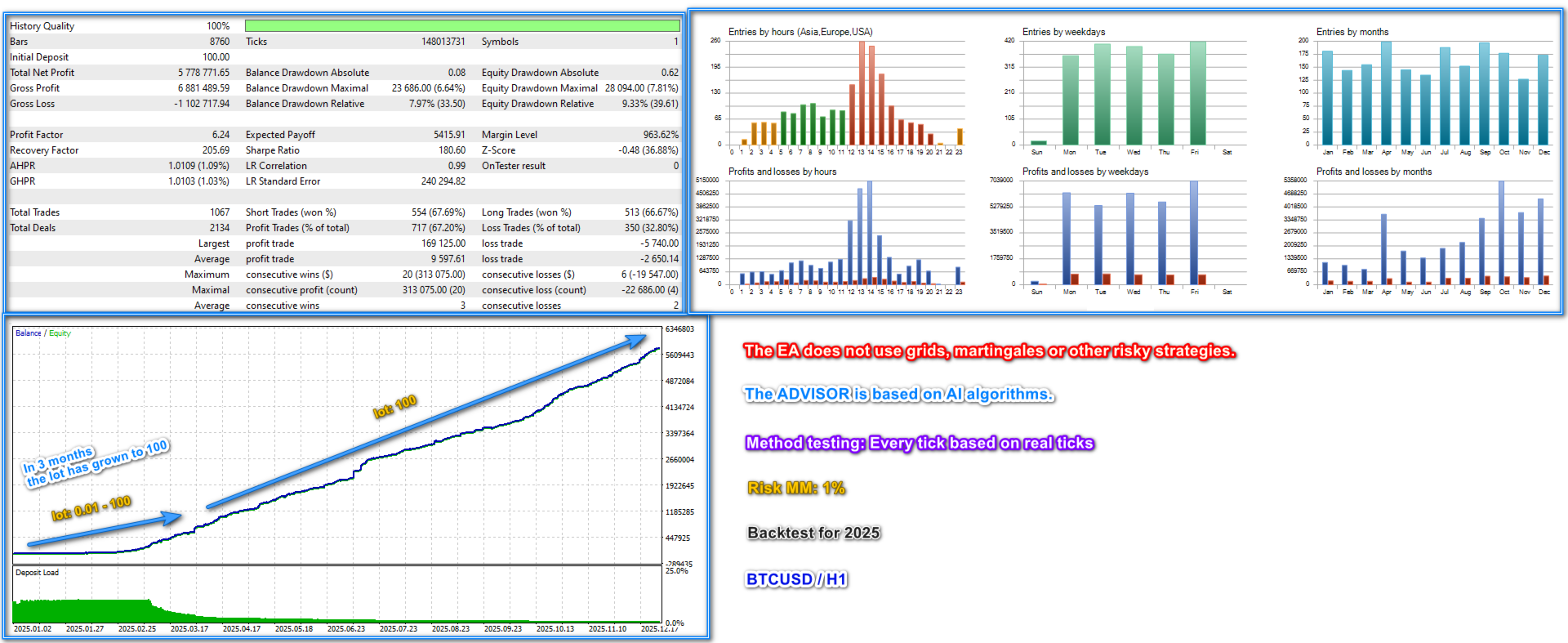
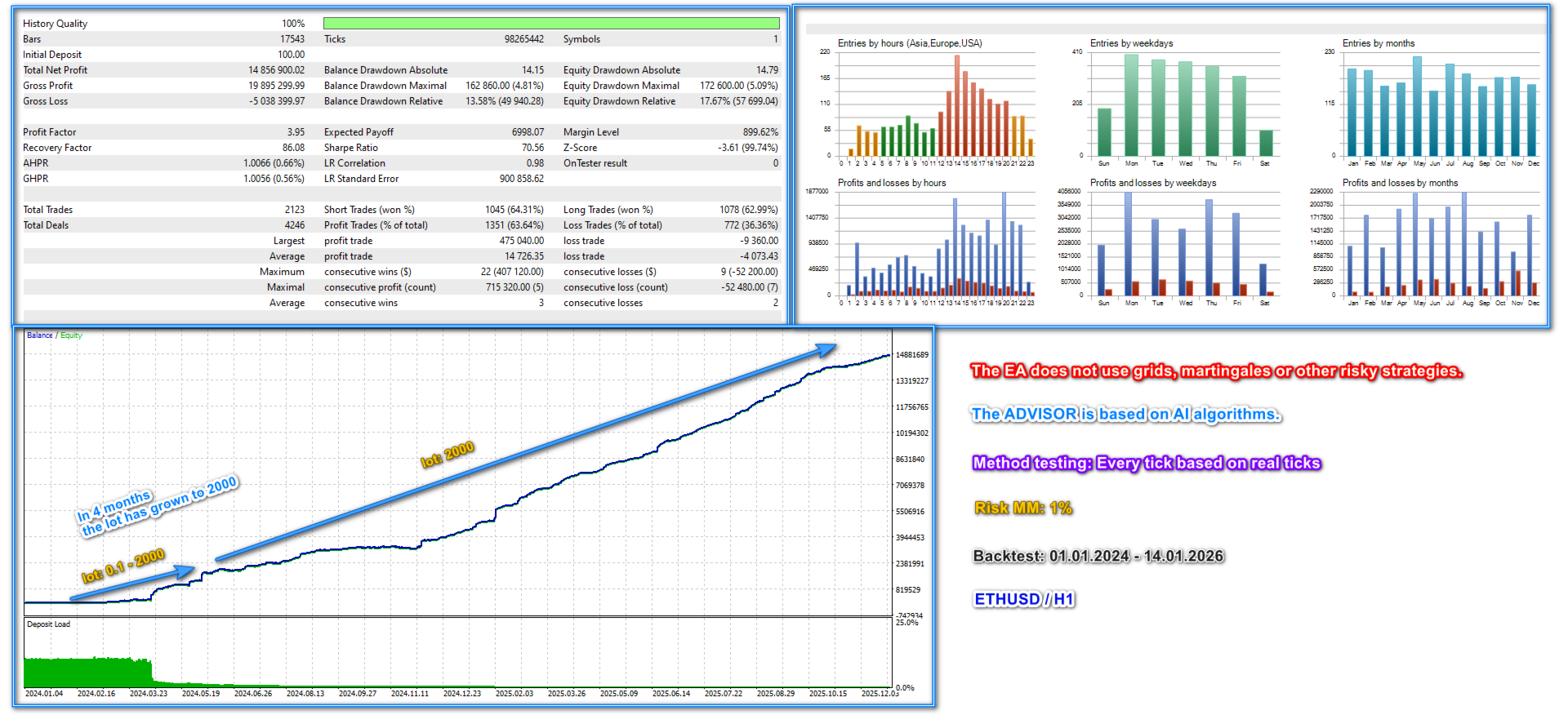
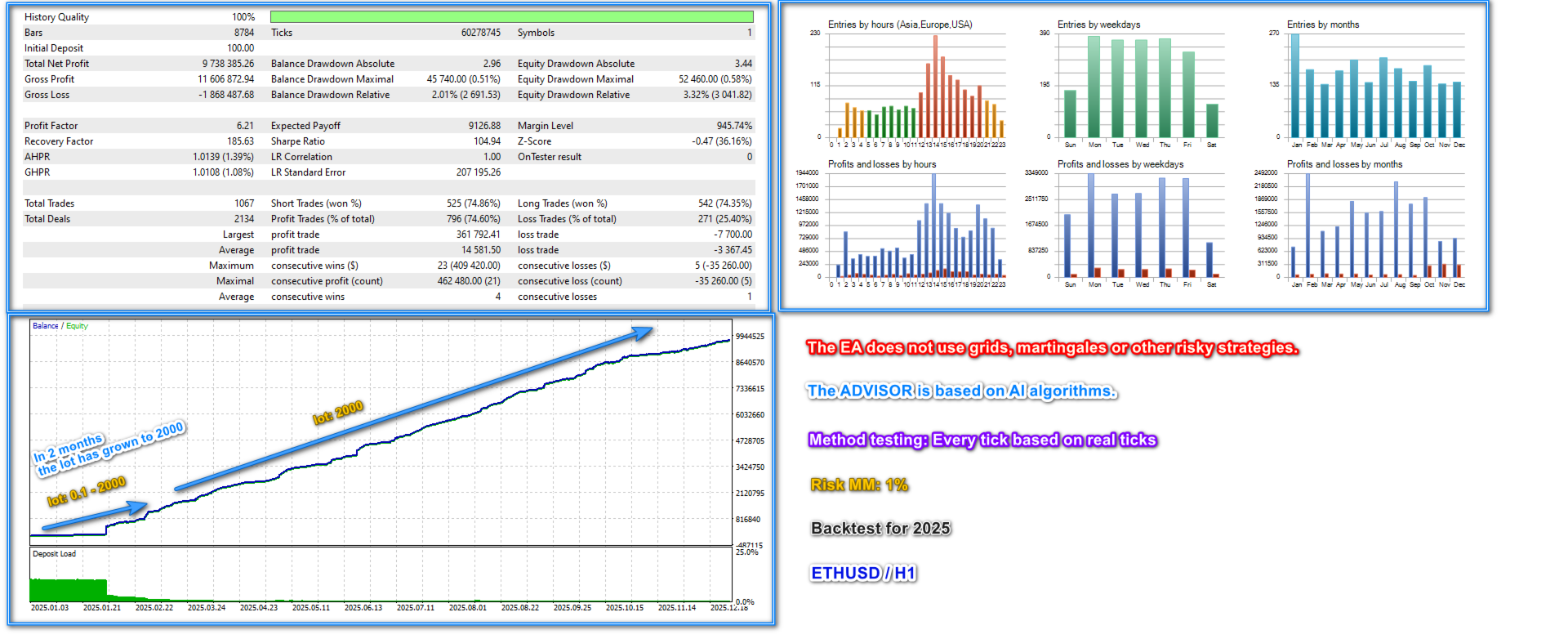
The dashboard and input screenshots show price-speed plots, dynamic stop values and configuration groups. The historical reports show simulated outcomes for selected markets and periods. We keep these source images intact and dated, with their old build labels, because they help explain the implementation. The live offer uses latest-version wording; an old screenshot is not a claim that its build number or results describe the file supplied today.
Why the disabled signal is not a live-performance claim
The listing still links to XAUUSD H1 Set 2, but its destination currently says the provider disabled it. The seller page and older gallery can retain earlier figures after that happens. We therefore do not repeat the old growth percentage as an active record. Disabling a signal alone does not establish why it stopped; without its accessible history, the result and risk analysis cannot be refreshed reliably.
MT4 and MT5: choose by operating environment
The two source pages describe the same core markets and controls, so inventing a different algorithm for either would be misleading. MT4 buyers should verify broker access to the gold/crypto contracts and the supplied MT4 preset. MT5 buyers can inspect the MT5 dashboard and tester configuration directly. Contract values, points, minimum lots and session hours may differ even when both brokers call the instrument XAUUSD or BTCUSD.
A focused evaluation plan
Start with one intended symbol and fixed sizing, confirm the spread and stop-level units, then test entry mode and adaptive settings separately. Read the journal for gap restrictions and execution errors. The developer recommends low latency, a lightly loaded terminal and sufficient free margin; its stated $100 minimum is not proof that a small account will tolerate the chosen setup. If accessible live evidence is essential to your decision, the present signal status is a reason to seek additional confirmation before trading.
More original developer test images
These are historical simulations. Open each image for its original report and period; they are not additional live accounts.
Sources and further reading
MT4 developer listing · MT5 developer listing · Release history
- Developer source link: AI Impulse Scalping Trade MT5 on MQL5
- Live signal link: XAUUSD H1 Set 2 — disabled by its provider at our 20 September 2026 check.
Compare other Ruslan Pishun systems
From the same developer: Project Evolution Breakout Scalper MT5 (review), EA Rx Five MT5 (review), EA Legendary Scalper MT5 (review). These are different strategies; results from one are not evidence for another.
Compare the AI Impulse Scalping Trade MT4 offer · Compare the MT5 offer