
Ghost Scalper EA MT5 combines four gold strategies with separately configurable sizing and trailing. The current controls distinguish automatic trailing adjustments from analysis-only optimisation advice. This review explains that distinction and the limitations of comparing older results across several brokers.
View Ghost Scalper EA MT5 features and current pricing
Ready to Buy Ghost Scalper EA MT5?
$199.99 with crypto · $249.99 by card
✅ Four Gold Strategies & Trailing
✅ Check the current offer and the platform requirements before purchase.
Official version · Instant download · Free lifetime updates · 7-day money-back guarantee
Review scope: current product documentation checked 24 September 2026. CheaperForex sells this EA. This is an editorial source assessment, not a claim that we have independently run a live trading test. Older images below retain their role as historical evidence.

Separate optimisation advice from automatic changes
The distinction between LiveOptimizer and AutoOffset matters for reproducibility. One reports information; the other can adjust trailing offsets within defined bounds. When reviewing a run, record the trailing method and the AutoOffset setting as well as the entry strategies. Otherwise two nominally similar tests can differ in their exit behaviour without an obvious change to the entry rules.
Stop protection has several states
An initial broker stop, an accepted modification, a rejected modification and a terminal-side fallback are not equivalent. A useful demo check is to inspect the real order fields and log messages while observing the dashboard. Retaining a previous broker stop is better than silently assuming a new level was accepted, but it does not make the intended updated level guaranteed.
The multi-broker screenshots are a comparison, not a ranking
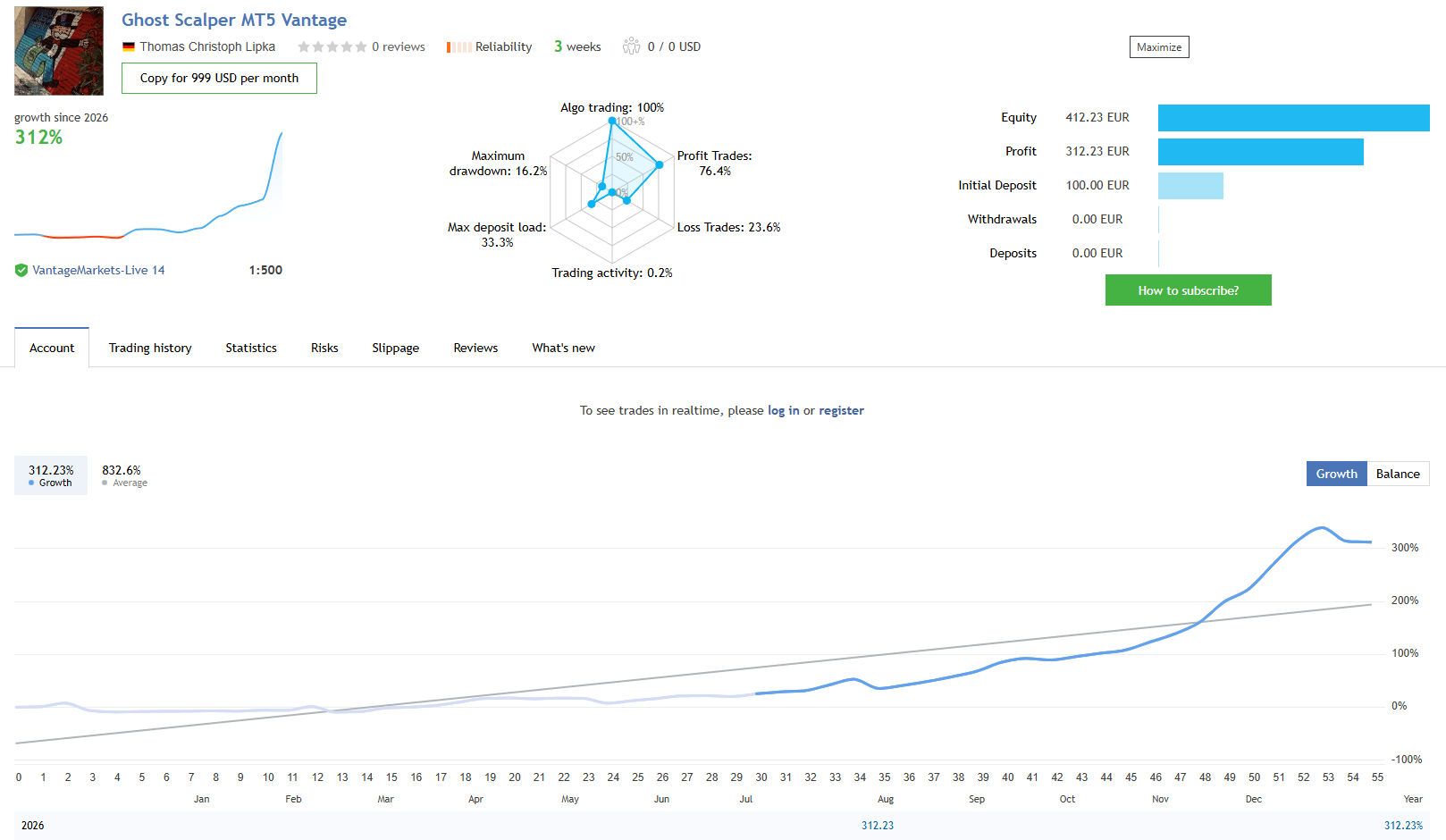
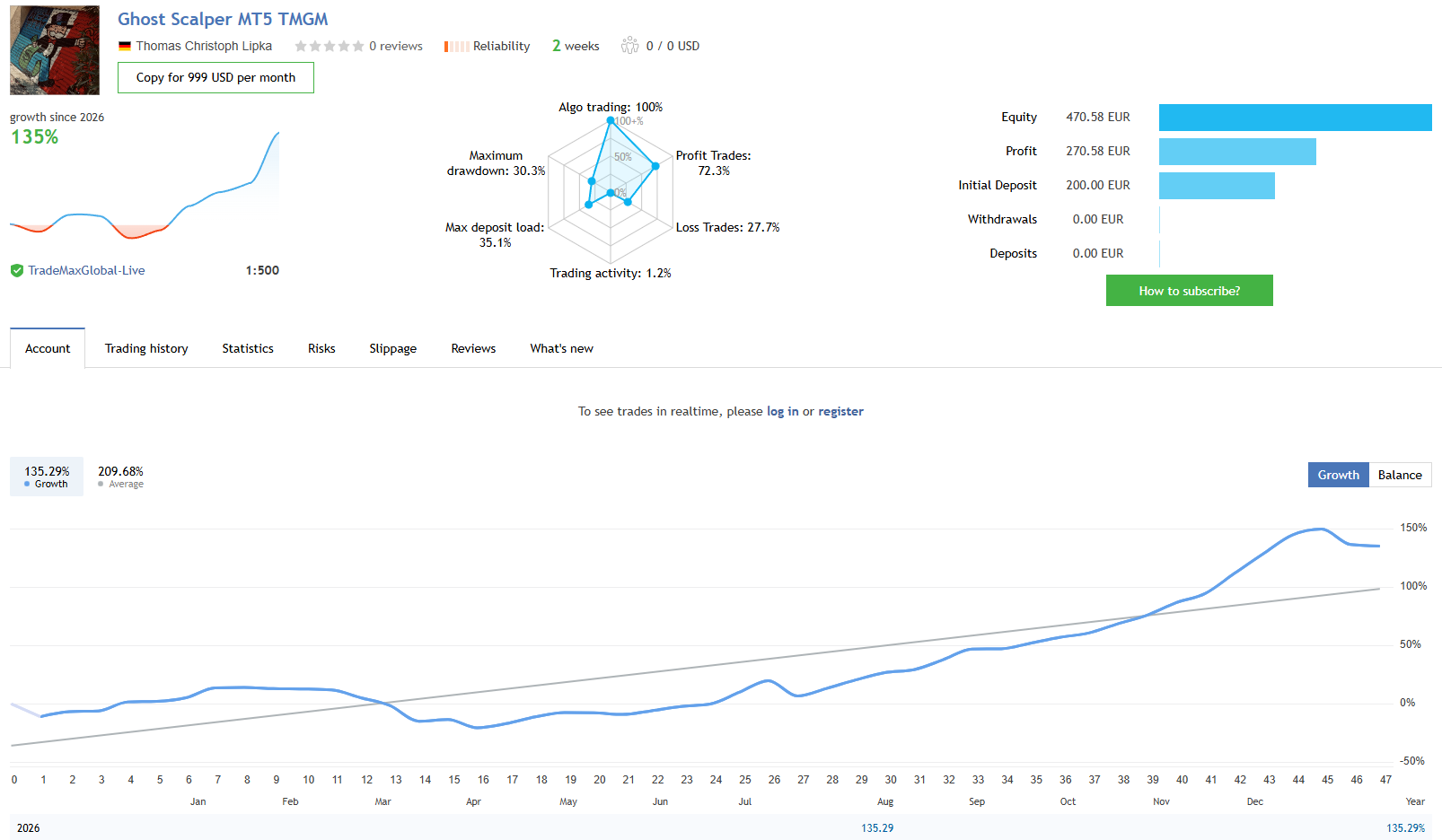
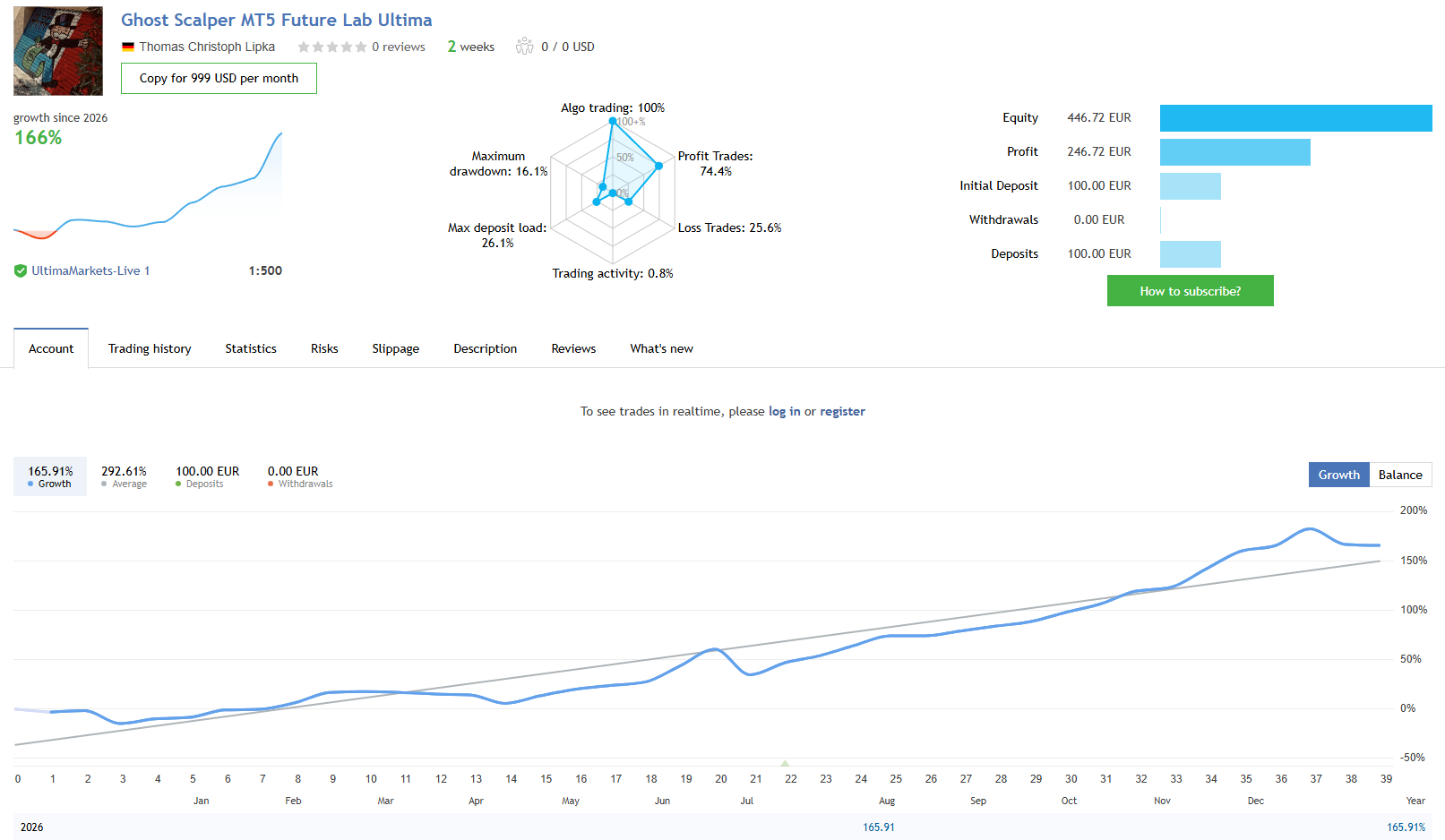
Older captures for Vantage, TMGM and Ultima show markedly different growth and drawdown. Those differences can reflect settings, dates, risk and execution as well as the broker. Deposits and withdrawals should be examined without replacing MQL5’s growth calculation with a crude profit-to-deposits ratio. No single screenshot proves that one broker will deliver the best future result.
Use the older tester period honestly
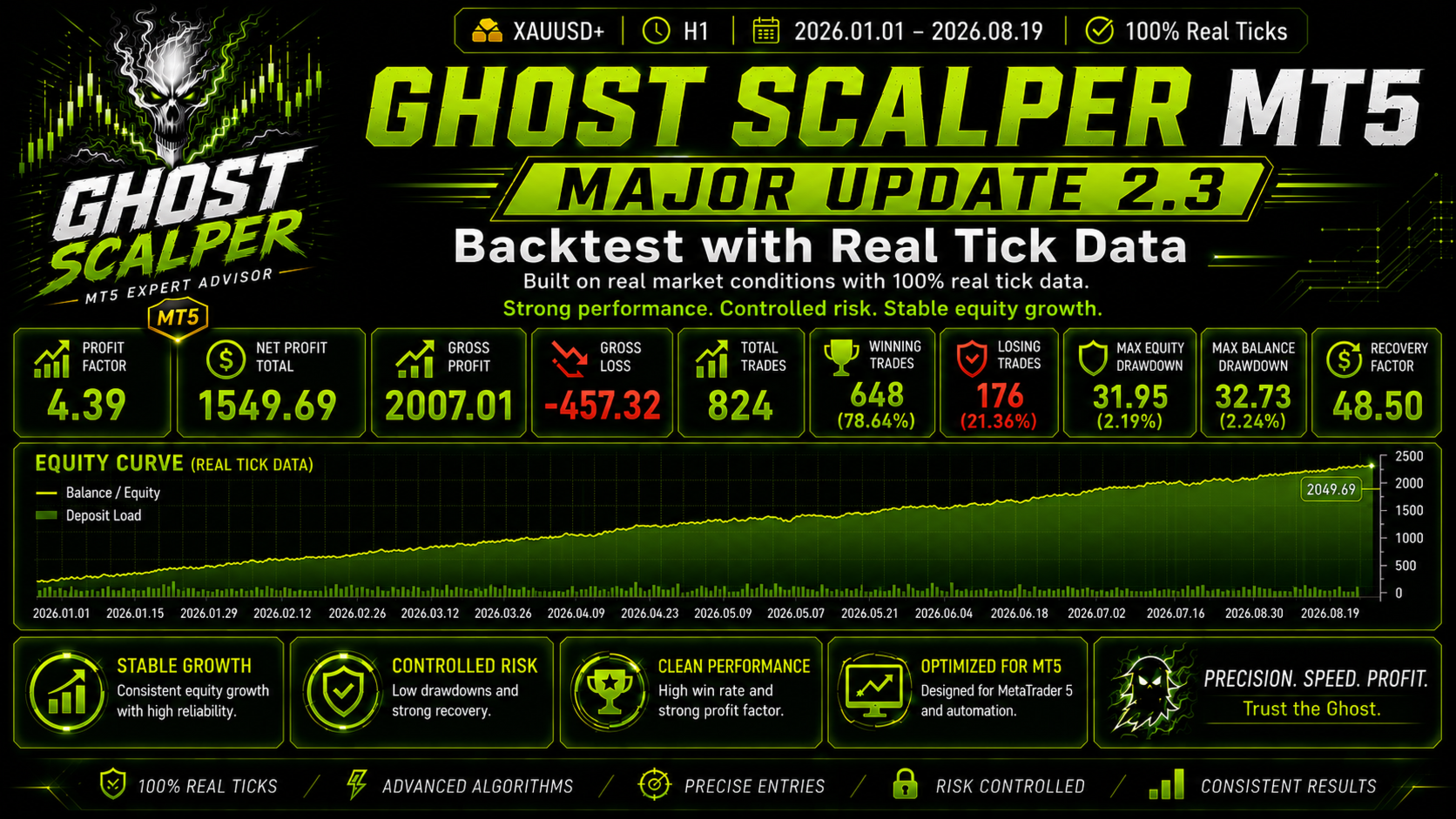
The archived test covers a limited 2026 interval. A low drawdown over that slice is not a cap on live losses; the older TMGM capture itself showed a much larger drawdown. Testing a broader range of gold conditions and inspecting simultaneous module exposure is more informative than selecting whichever account has the highest headline percentage.
What the retained evidence can establish
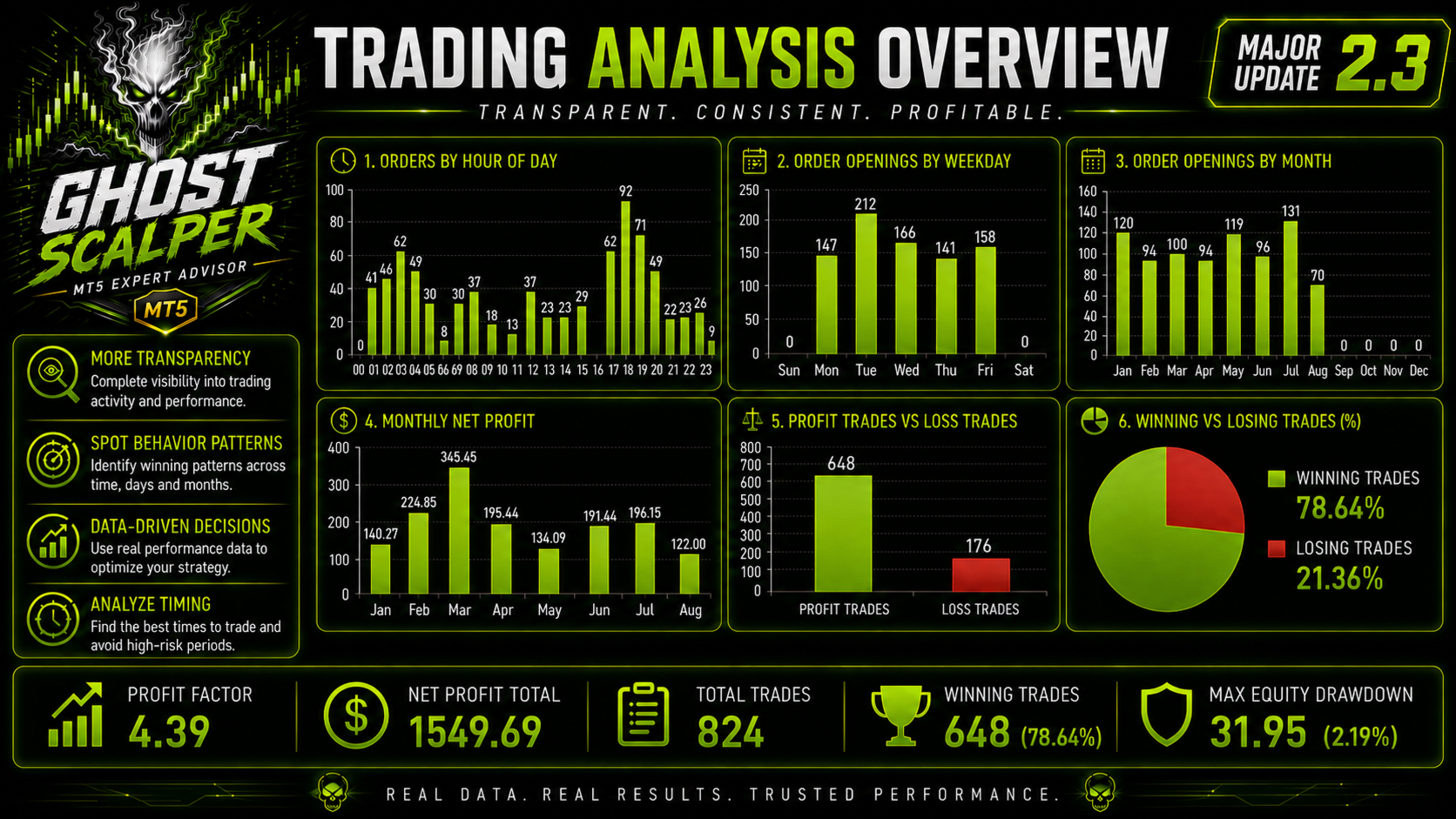
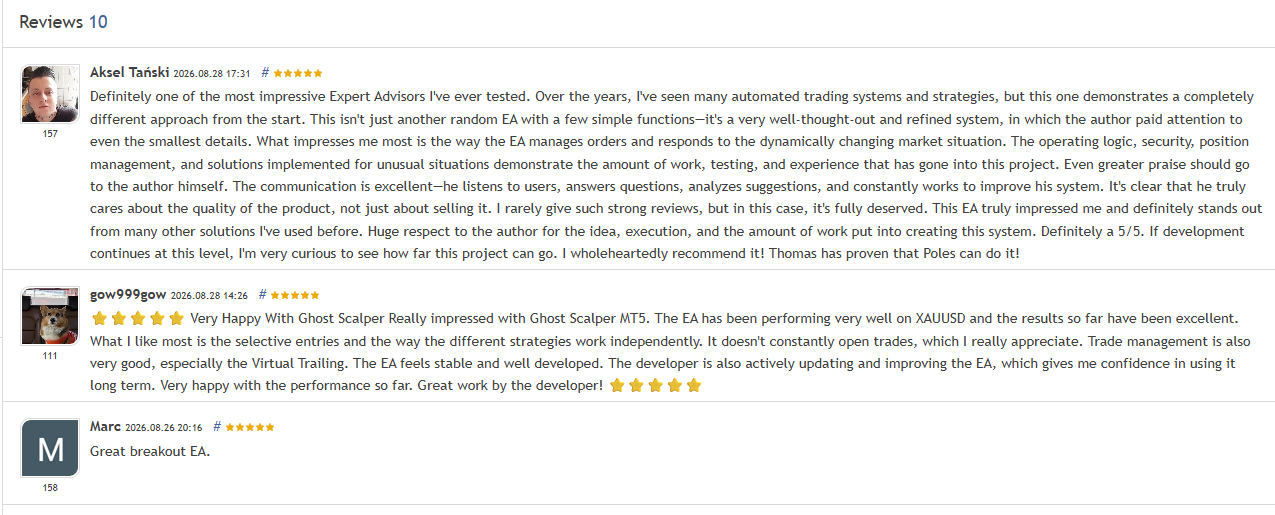
The gallery retains the earlier test report, trading analysis, three provider accounts and customer feedback. Figures such as 312.23% growth or 30.3% drawdown describe those archived images only. Current developer-linked accounts are listed below. Neither the current controls check nor the presence of several accounts constitutes our own live forward test.
A practical evaluation before increasing exposure
Keep the exact build, preset, broker symbol specification and dates with the result. Check permissions and the operating status first, then compare a sequence of trades at the same monetary risk. Record spread, commission, slippage, floating equity and simultaneous positions. A configuration change starts a new comparison; it should not silently rewrite the explanation of earlier trades.
Our verdict
Ghost Scalper EA MT5 combines four gold breakout and momentum strategies with separate direction, sizing and trailing controls. It suits traders who want to choose which modules run and inspect execution quality. No. The documented LiveOptimizer analyses performance. AutoOffset is a different feature that can make bounded trailing adjustments from closed-trade information.
Verify it yourself
- Developer source link
- Release notes
- Developer-linked signal
- Developer-linked signal
- Developer-linked signal
- Developer-linked signal