
SomaOil is a WTI breakout portfolio for MT5 with 20 strategies, selectable risk allocations and oil-specific spread handling. The appeal is a single-chart portfolio with unusually visible research and execution controls. Its public accounts are positive at this check, but short histories and a sizeable drawdown on the original allocation keep the evidence provisional.
View product details and current pricing.

Our assessment
SomaOil makes most sense for traders who want oil exposure alongside gold or Bitcoin, and who are willing to inspect sizing and contract details. The conservative allocation has the milder public drawdown so far, but it also started later. Neither account establishes how the portfolio will behave through several years of different oil conditions. This is a source-based assessment, not our own forward test.
Live signals: two allocations, two different histories
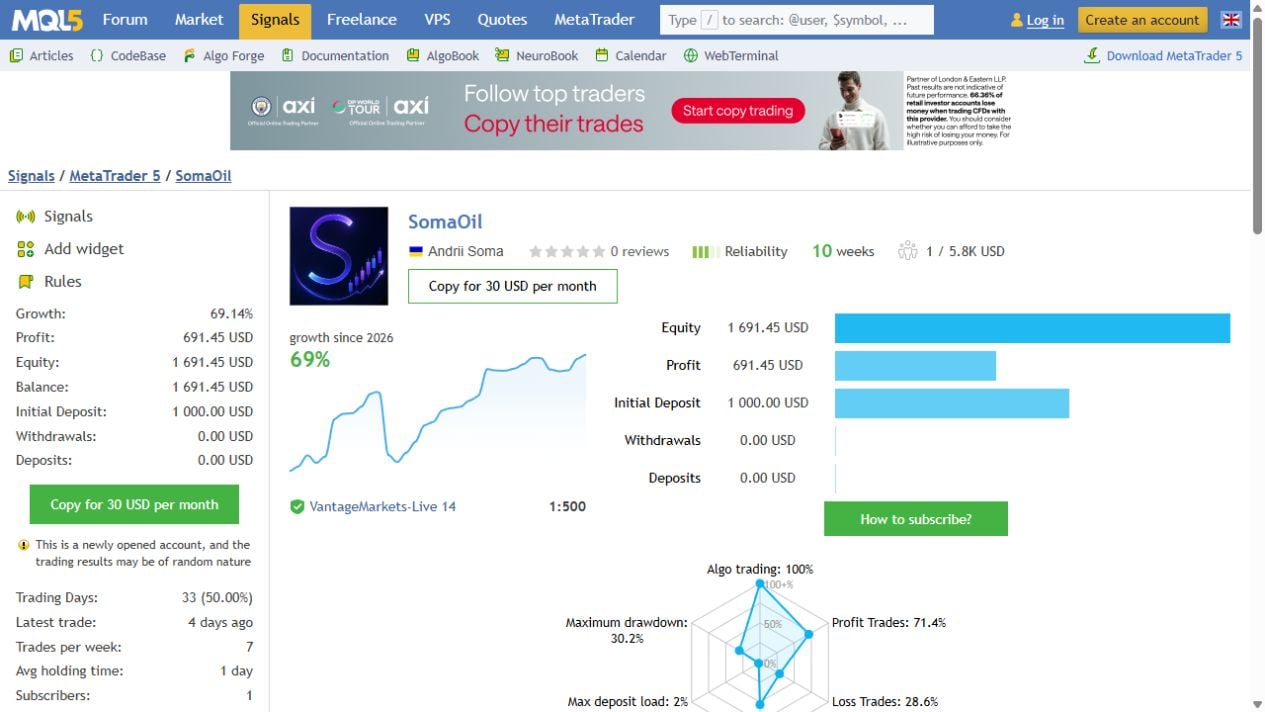
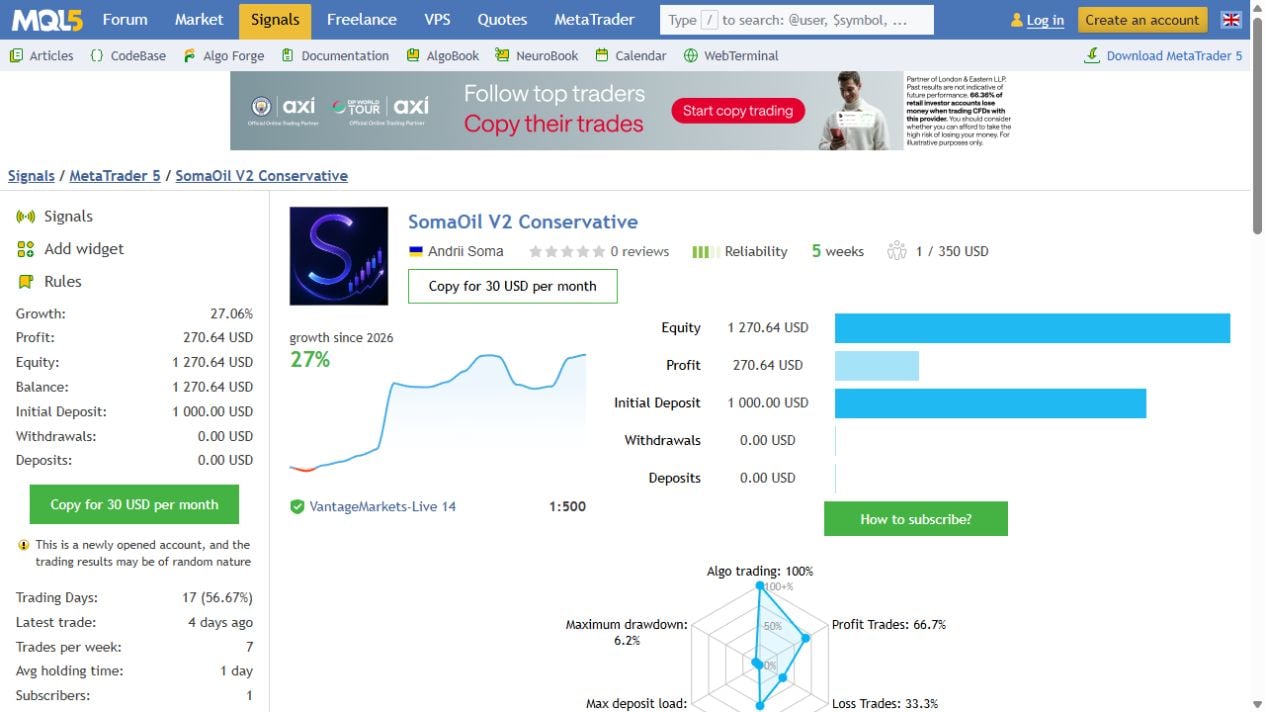
Figures below were read on 14 September 2026. MQL5 identifies both as real accounts on VantageMarkets-Live 14 with 1:500 leverage. Each began with $1,000 and showed no additional deposits or withdrawals. That observed starting balance does not replace the current $2,000 default-risk recommendation.
| Original allocation | 69.14% growth; $691.45 profit; balance/equity $1,691.45. Ten weeks of history, starting 3 July 2026. |
|---|---|
| Original drawdown | MQL5 reports 30.20% maximum balance drawdown and 23.41% relative equity drawdown. |
| Conservative allocation | 27.06% growth; $270.64 profit; balance/equity $1,270.64. Five weeks of history, starting 10 August 2026. |
| Conservative drawdown | MQL5 reports 6.20% maximum balance drawdown and 5.72% relative equity drawdown. |
Conservative allocation signal
The original account showed 91 trades, a 2.12 profit factor and a 71.42% winning-trade share. August contributed 55.14% growth, making a large part of the cumulative gain dependent on one month. Both pages showed their latest trade four days before the check and carried MQL5’s young-account warning. Balance and equity drawdowns above are reproduced as separately labelled measures; they should not be substituted for one another.
How the 20 strategies were selected
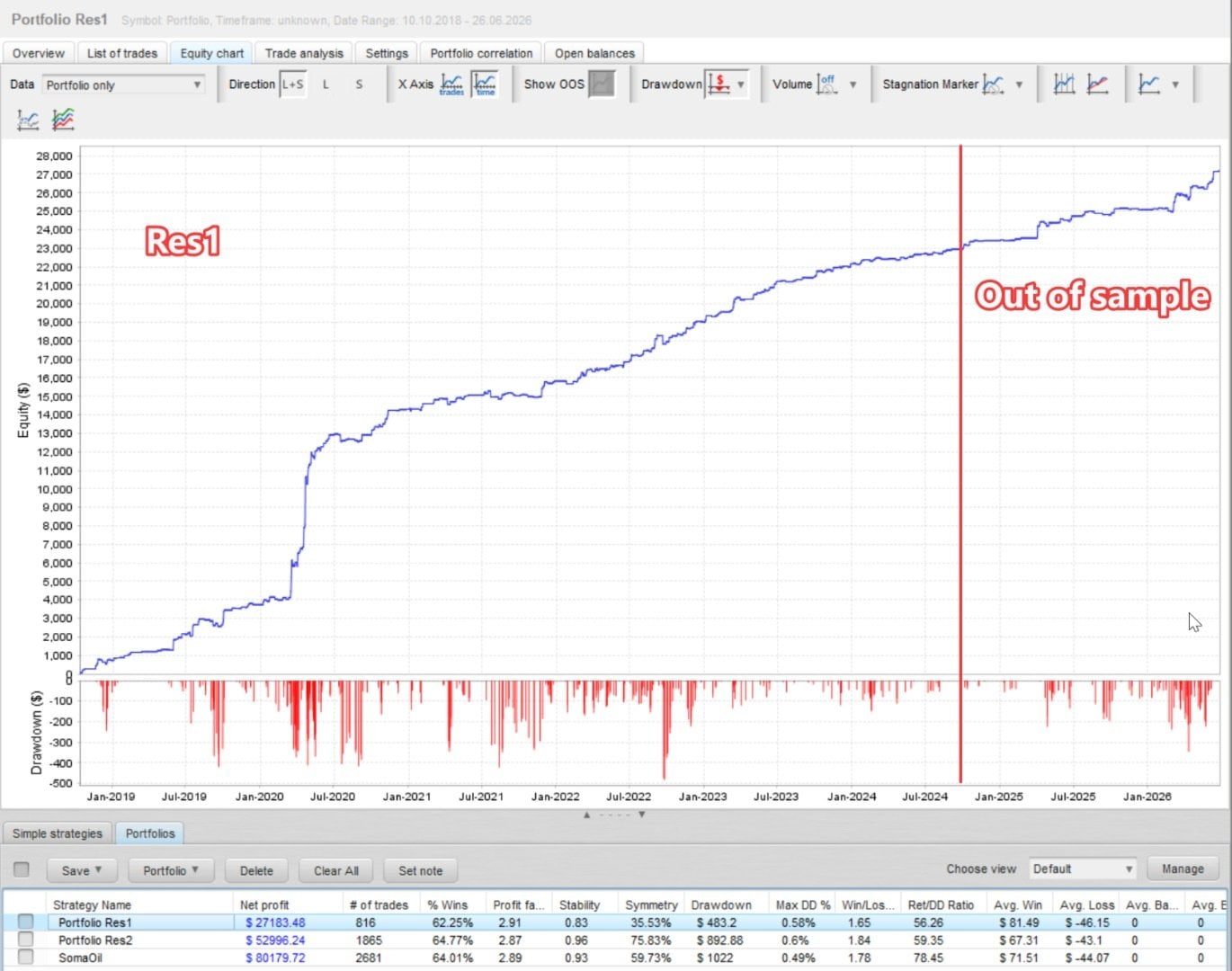
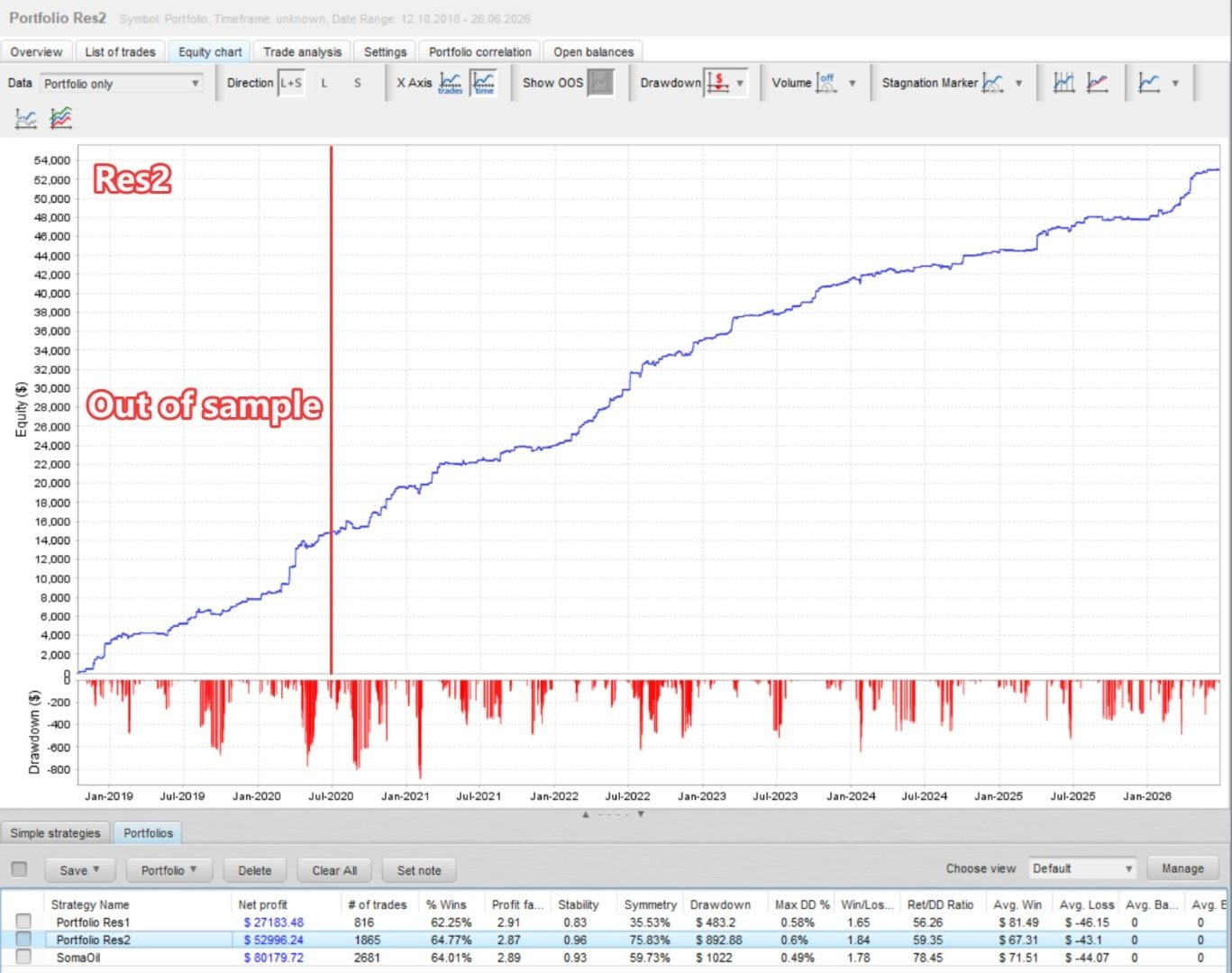
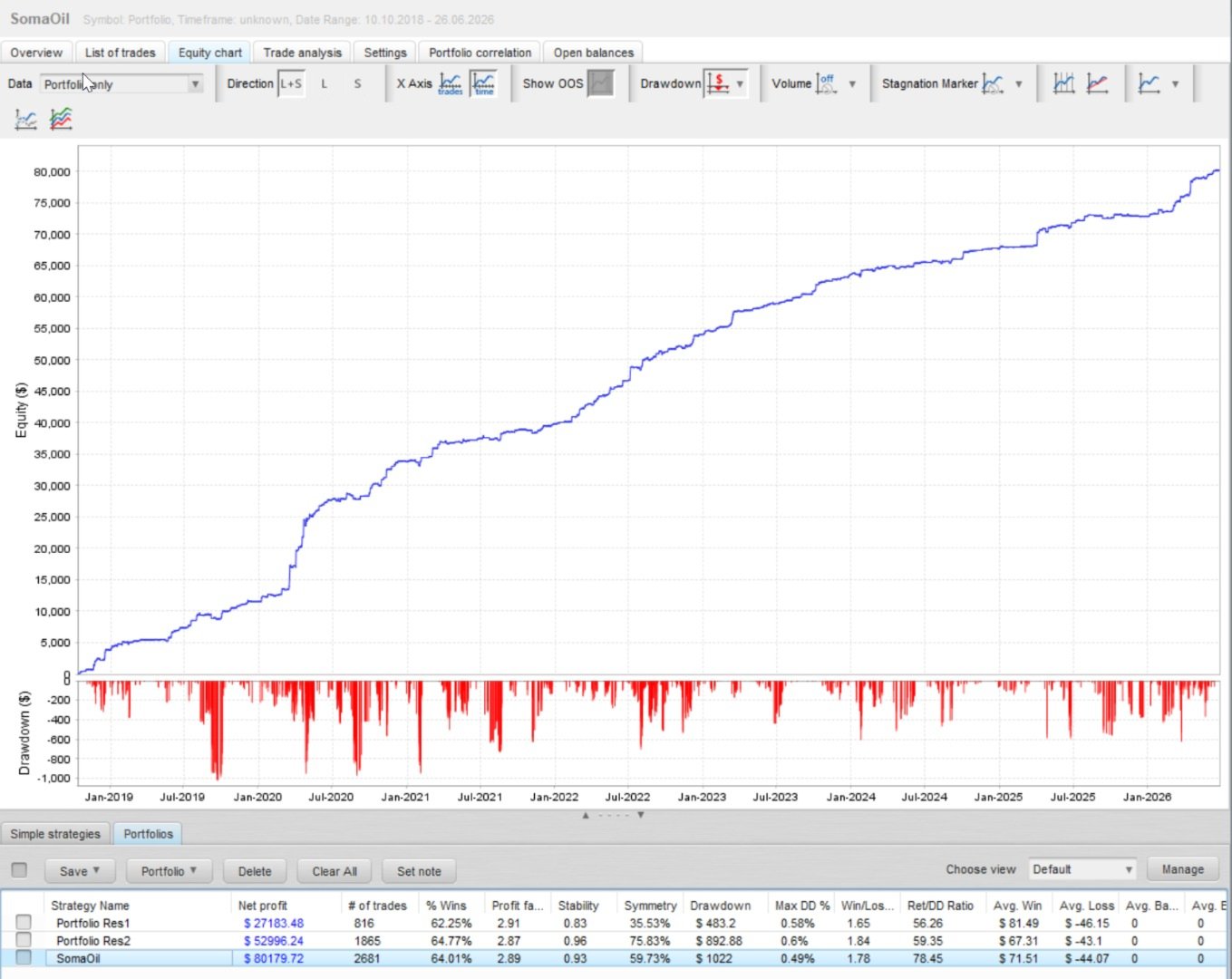
The portfolio combines seven strategies from one research group and thirteen from another, spanning D1, H12, H8, H4 and H1. Each has its own entry breadth and exits. The first research group trained from October 2018 to October 2024, then tested later history through June 2026. The second trained from June 2020 to June 2026 and tested the earlier period. These complementary windows reuse parts of the same history; the final combined portfolio is not an entirely untouched holdout test.
Backtests: useful detail, different runs
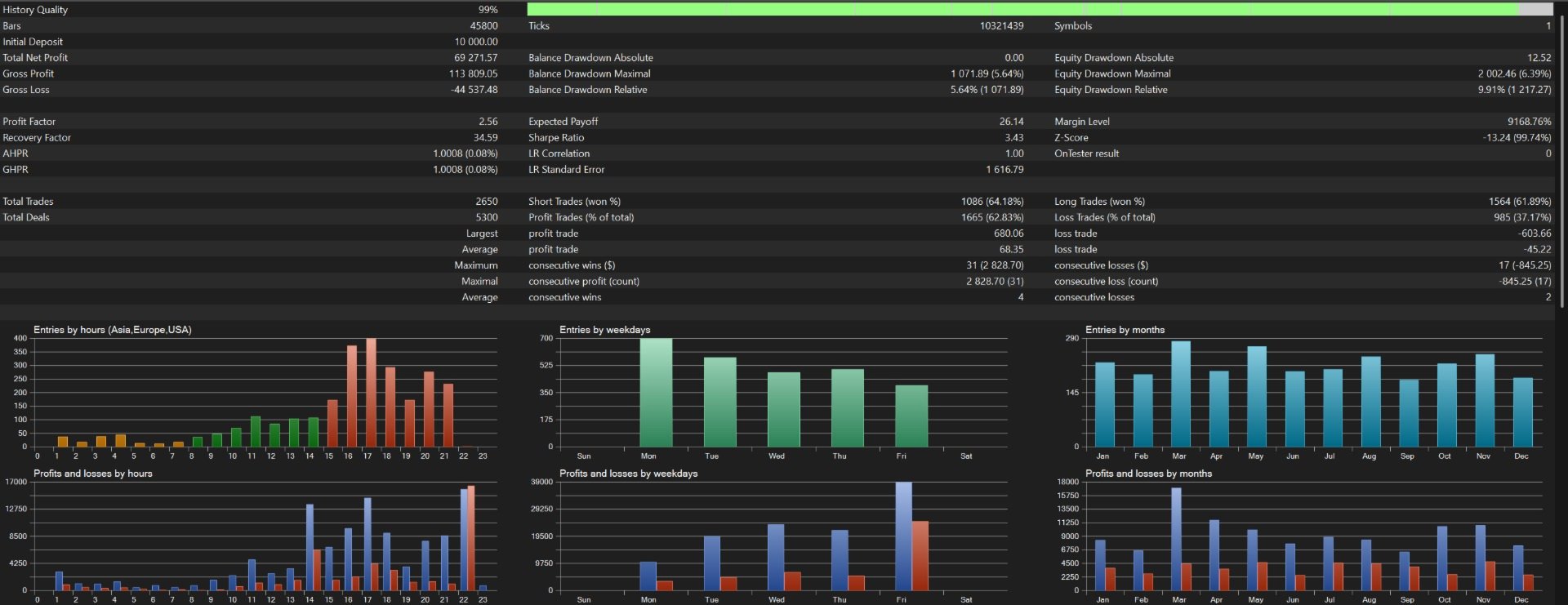
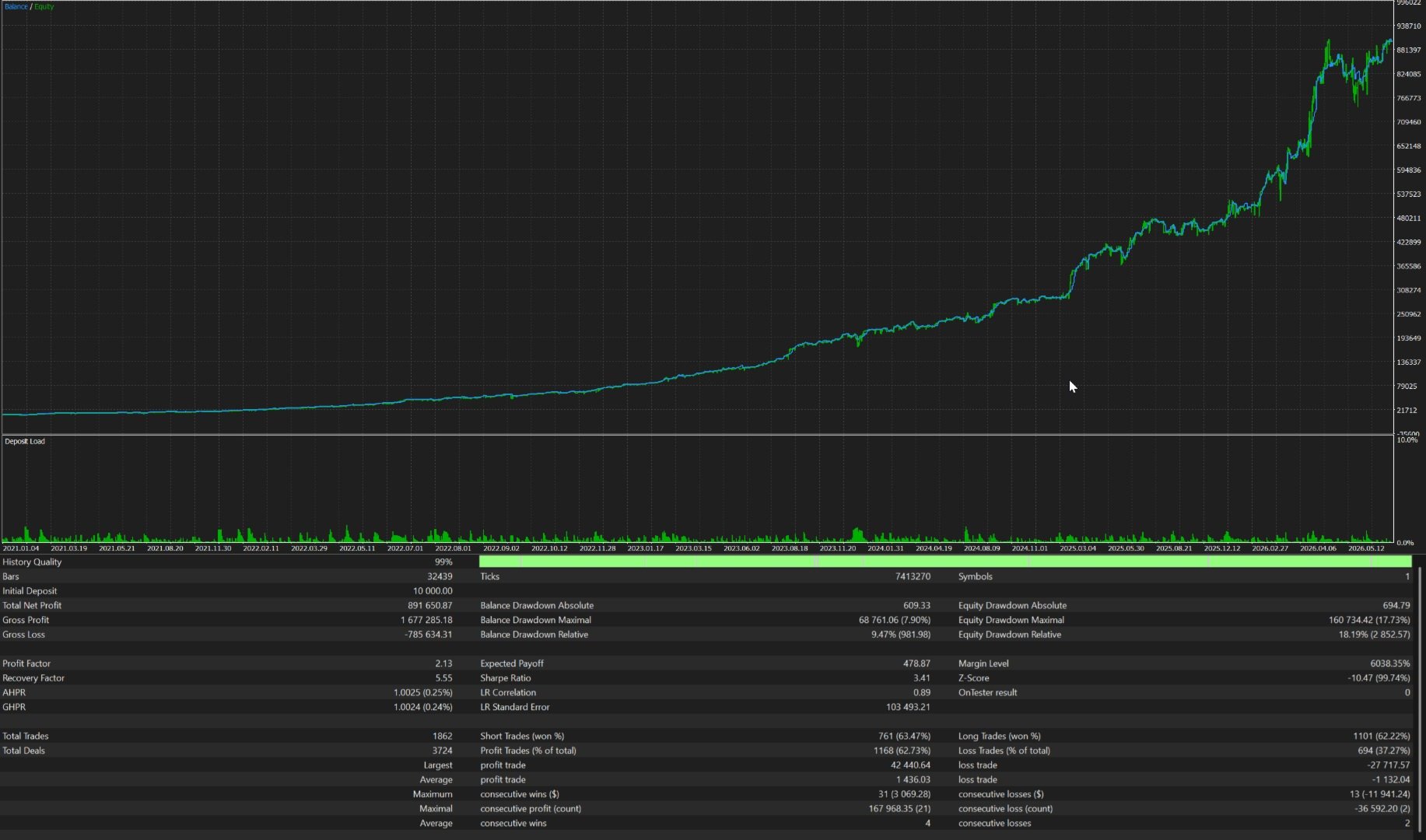
The supplied reports show more than one allocation and test configuration. One report has 2,650 trades, a 2.56 profit factor and 9.91% relative equity drawdown. The separate compounded run shows a 2.13 profit factor and 18.19% relative equity drawdown. Those figures belong to different tests, and neither is a promised account outcome.
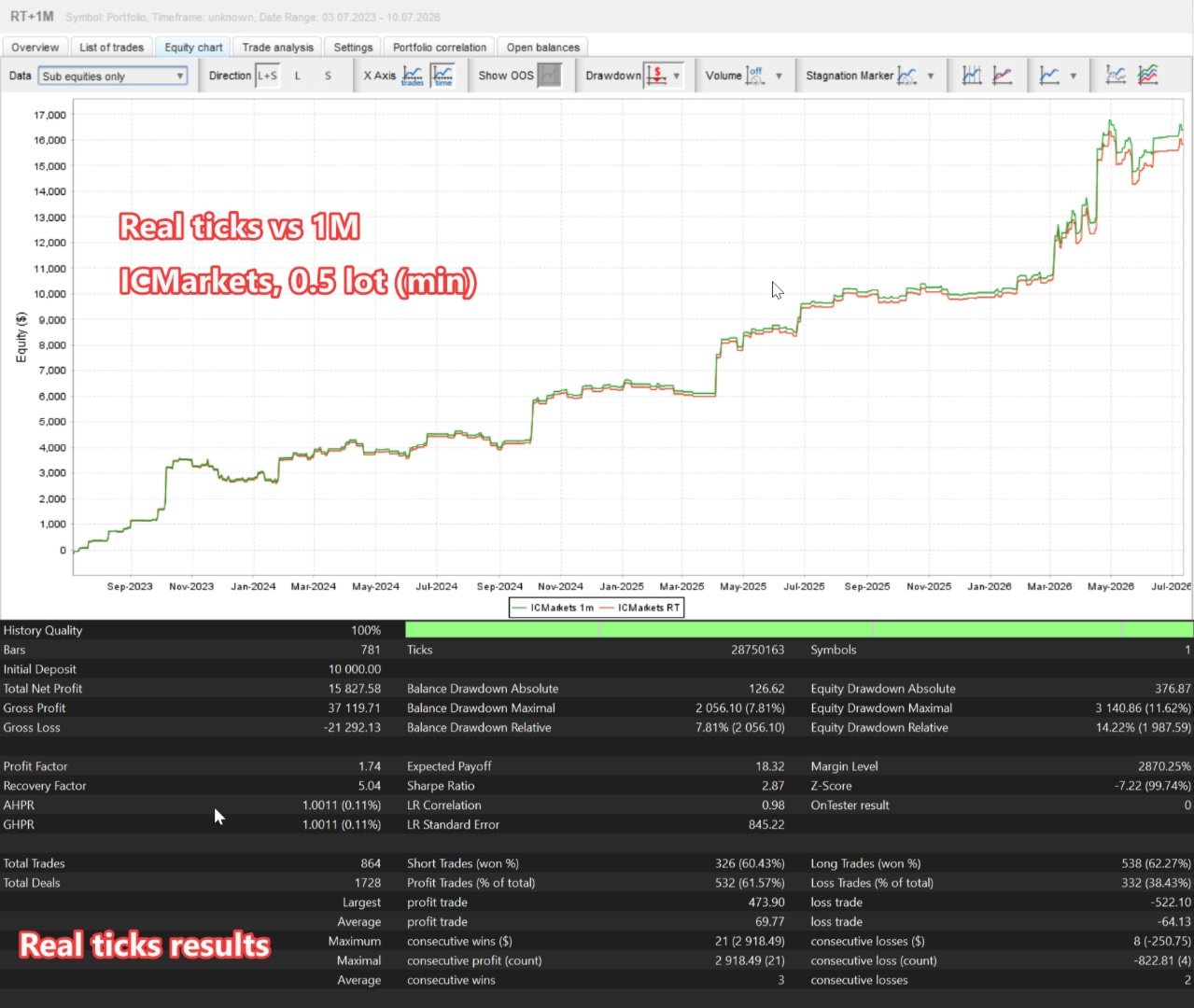
The IC Markets comparison is particularly useful because it contrasts one-minute modelling with real ticks. Its report shows a 1.74 profit factor and 14.27% relative equity drawdown. The image also labels a 0.5-lot minimum for that contract: broker specifications can prevent an account from scaling down as smoothly as an optimiser assumes.
Allocation, trailing stops and execution controls
Conservative, medium and high presets retain the same strategy collection but change the capital allocation. The older balance-drawdown allocation is also available. Selecting fewer strategies creates a different portfolio and can change its exposure and diversification. OnlyUp can keep sizing tied to peak capital even after losses; combine it with a considered maximum-lot setting rather than assuming equity-based sizing always reduces risk.
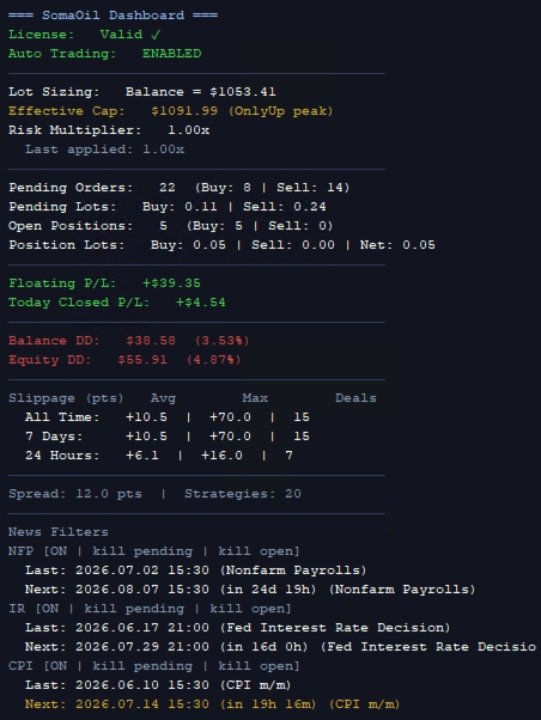
A July customer question asked why trailing had not activated. The developer explained that exits differ by strategy: most use trailing or breakeven, while some rely on fixed targets or a weekly close. That is a useful distinction when reading individual trades. A separate set-file question was answered by pointing to the built-in defaults and risk multiplier, rather than requiring an additional portfolio file.
Pending-order spread protection is separate from the news calendar. It can block new pending entries immediately and cancel existing pending orders after a sustained spread increase, but it does not itself close open trades. The calendar covers NFP, CPI and rate decisions; oil inventory surprises and geopolitical events remain separate sources of risk.
Do the strategies diversify each other?
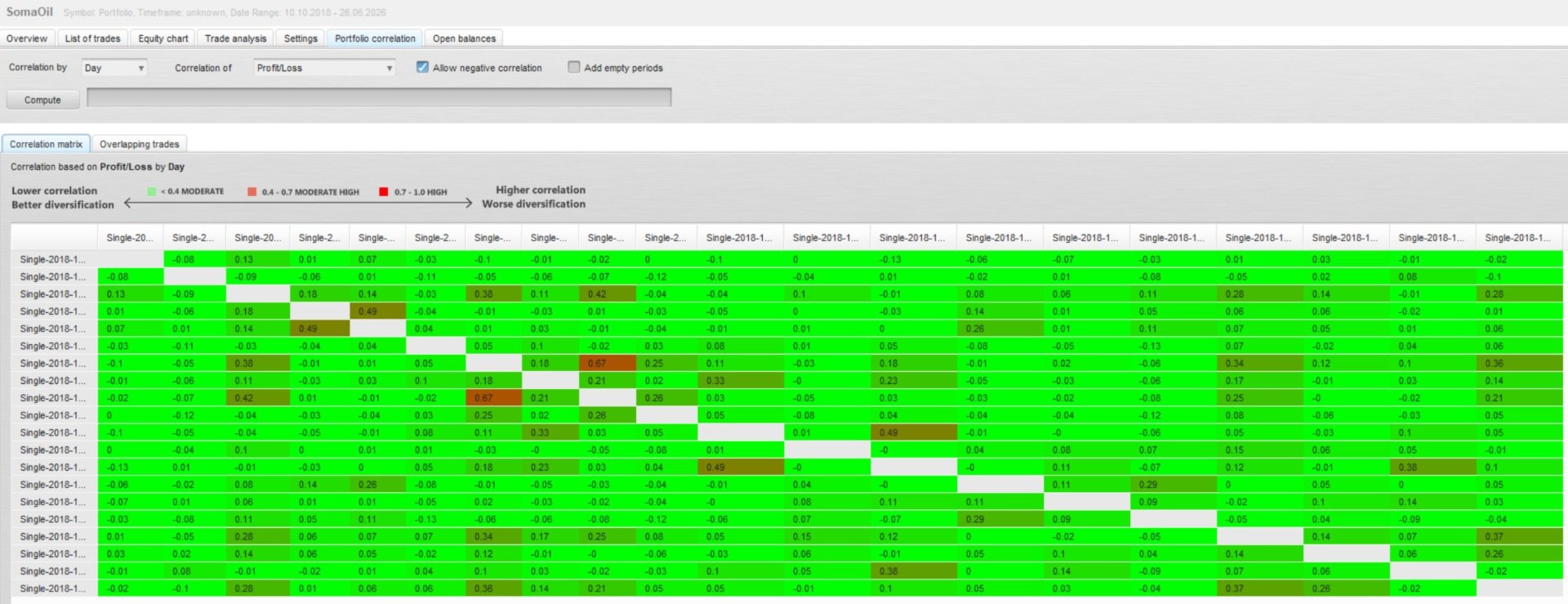
The matrix shows relatively low historical daily profit/loss correlations for many strategy pairs, but some are materially positive. Twenty strategies still trade the same oil market. A sharp shared move can affect several at once, even when their normal trade timings differ.
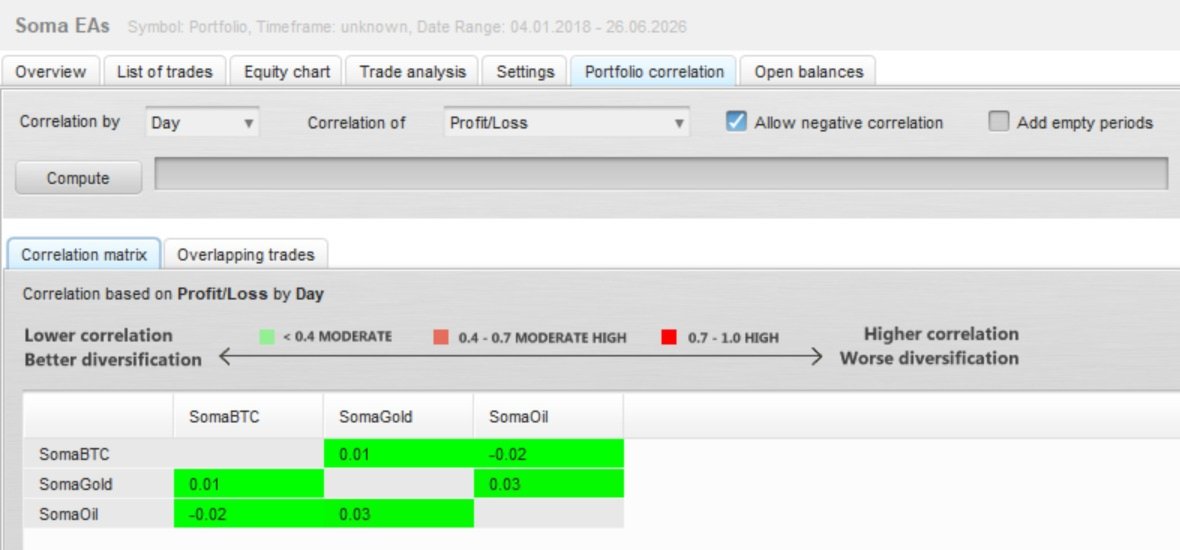
The cross-market research image gives correlations close to zero between the developer’s oil, gold and Bitcoin portfolios. It is a reason to investigate the combination, not evidence that live losses cannot overlap.
MQL5 customer reviews
There were two product reviews at the check. Ukrit Khonglao’s longer July review praised the visible methodology and broker testing, while acknowledging that losing months remain possible. The shorter russham111 comment is cautious praise rather than a quantified account report.

Neither review supplies enough account detail to verify profitability independently. We keep these opinions separate from the live signal figures and from CheaperForex customer ratings. Read the full MQL5 reviews; read the settings discussion.
Setup and maintenance points
The developer recommends WTI on an ECN/RAW account, any chart timeframe, a stable VPS and $2,000 at default risk. Supported oil names include XTIUSD, USOUSD, USOIL and WTI with common suffixes. Confirm the actual contract, lot minimum and symbol in your own terminal. Oil setup also lists two permitted WebRequest addresses: https://ea-license-server.somatrade.org and https://www.worldtimeserver.com/.
Dated release notes describe late-August false-breakout exit fixes and early-September margin-allocation and non-USD sizing fixes. This history matters when comparing older screenshots with present behaviour. Optional daily-loss and no-hedging controls do not automatically make the EA acceptable to every prop firm. Read the developer’s release notes.
Other EAs by Andrii Soma
Each is a separate system, sold on its own, with its own strategy, settings and results. Running several together adds to your total exposure.
Verdict
The strongest reason to consider SomaOil is its documented portfolio structure and practical execution controls. The positive oil accounts are encouraging, but the conservative and original allocations need longer, comparable histories.
View SomaOil MT5 pricing and product details
MQL5 developer listing · Release notes
Offer: standalone file, with free lifetime updates. See the linked product page for current pricing.